The Backworld Interview
Turn-based RPG The Backworld taps into surreal horror with non-linear adventure inspired by the internet-created horror urban legends known as “The Backrooms”. The title is a terrifying non-linear adventure inspired by the stories of internet-based horror urban legends collected in The Backrooms. As a cosmic war threatens reality there are a diverse group of companions that will use their diplomacy, environment, and combat skills to battle enemies from sci-fi and fantasy realms before the chaos consumes everything. Answering questions about the game for RPGamer is developer Numor Games’ owner Nathan Jennings. The developer’s first title, development started three years ago, with the game currently set to release in 2026 on Steam.
Ryan Costa (RPGamer): Blending survival horror and JRPG mechanics is quite ambitious, is there an inspiration on either side that helped influence The Backworld in a way that fans may not expect?
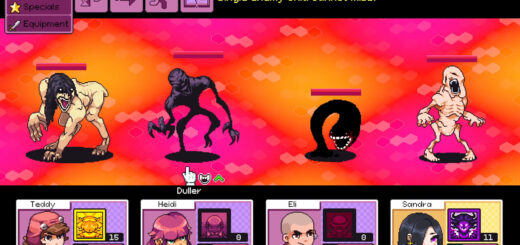
Nathan Jennings: One of the more unexpected parts of the game is how I have gone about creating status effects and abilities for monsters that you’d find in a typical JRPG. I often give them a more horrific edge; for example, rather than having a monster “stun” you, it may “swallow” a party member. A creature that simply heals itself may instead “consume” an ally monster for sustenance, killing it in the process.
Another off-topic answer to this question is that I was actually unexpectedly inspired by the collectathon genre when trying to bridge the gap between survival horror and JRPGs. I knew that for the monsters to be scary, grinding them could not be an option, or players would be encouraged to seek them out to defeat them for EXP.
I decided to go with a system where you must find and collect EXP in the environment to level up your party. This forces the player to explore down every creepy path they may want to avoid and turns encountering monsters into a risk-based assessment. Players will need to ask themselves questions such as, “Do I want to risk battling this monster, as there may be EXP nearby, or should I avoid it because my party will be at risk?”
RPGamer: How does the non-linearity of the title’s presentation factor in with the story? Are there story paths that can result based on what order clues or items may be found in?
Nathan Jennings: The structure of the game’s story begins quite linear, like a typical JRPG, but once you’ve completed the first act, paths really open up. This section of the game was inspired by Yume Nikki, where there are many doors you can open that lead off into many weird and creepy dimensions. As you unlock new abilities, you’ll be able to find even more elusive areas.
There is a “main” story that you are encouraged to follow as you explore these dimensions, but players will begin to notice that not everything is as it seems. If they really explore and delve deep into the world, there will be more story endings and secret paths for them to find.
RPGamer: What difficulties did you come across in getting the horror to stand out/work with such colourful character designs and backgrounds?
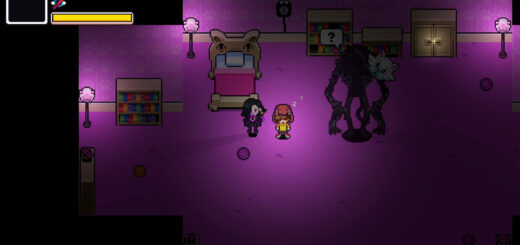
Nathan Jennings: One difficulty was creating the right contrast between the bright, colourful areas/characters and the horror areas. It’s taken a certain level of restraint to not have the more goofy characters constantly joking around or not taking the situation seriously. I’ve had to make sure this does not turn into a super humorous, lighthearted game like Undertale.
Over time though, I’ve actually found that the colourful characters work well with enhancing the horror. A majority of the companions and NPCs in the game are likeable, so seeing them put in horrific situations and being genuinely afraid really sells the horror of the areas and monsters.
In terms of the battle backgrounds, I have recently put a system together that chooses creepier and darker backgrounds while you’re in dark and horrific areas. As I do believe that the previous examples of bright red or green backgrounds did somewhat take away from the horror. Now they have a more “surreal” feeling rather than being colourful.

RPGamer: With the additional party dialogue interactions implemented recently, are there any characters that evolved in a way that pleasantly surprised you with how well they fit together?
Nathan Jennings: As I have been developing the characters, I’ve tried to give them bonus interactions that make them feel truly unique and potentially gameplay or story altering. Sandra is a companion that has spiritual powers, and sometimes she loses control of her body, especially when the horror becomes intense. These spirits will often give you small tidbits of lore or useful warnings about monsters that may be ambushing you.
She contrasts a character named Eli, who will often become overcome with rage and initiate fights without your consent if he can’t control himself. They are often a funny duo, as Sandra will be focusing on caution while Eli will be going out of his way to be abrasive and combative.
RPGamer: Does every enemy encounter feature multiple avenues of success, or are these alternative solutions primarily limited to specific situations, such as boss encounters?
Nathan Jennings: In the majority of encounters in the game, you can either choose to battle or find a way to avoid them through stealth. There are also some newer mechanics I have been adding that allow you to hurt or defeat monsters before combat even starts. There are these giant fans that will push you into holes, which you can also lure monsters towards. If you manage to do so, the monster will be launched into the hole, being instantly defeated, but it isn’t easy to pull off.
I’m also adding more options, such as allowing you to lure monsters into traps or hazardous terrain so they will be lower on HP by the time they catch you. Options beyond combat, such as diplomacy, usually come up during special dialogue encounters.

RPGamer: Was it difficult to incorporate so many different looking dimensions into The Backworld‘s art style? Is the map expansive and interconnected or will some of the dimensions be small by design as well?
Nathan Jennings: It took some effort to completely align the art style; as you’ll see in very old trailers of the game, it looked quite different. But at this point the artist I am working with has become an expert at adapting anything I throw at them.
The majority of the map is interconnected, with various dimensions becoming unlocked as you learn new traversal abilities. There are certain areas that are more focused and linear, especially when you are experiencing the main storyline. The first act of the game is quite linear and not connected to everything else.
RPGamer: Will there be a way for players to use the RPG mechanics to overpower themselves in a way that downplays the fear of survival?
Nathan Jennings: I would say that the type of “horror” the player encounters across the game will change as they become more powerful. Earlier in the game you will be afraid of most “physical” threats, such as basic monsters. Naturally they will not be as scary once you get much stronger and overpowered. As this happens, I will increase the intensity of the surreal and “unknowable” threats inspired by concepts such as Lovecraft and cosmic horror, similar to Giygas from Earthbound. You may be physically powerful, but your mind will always be vulnerable when facing certain horrific universe-ending entities.
RPGamer: How deep are the action-based boss combat sequences? Can players find ways to alter how they play out?
Nathan Jennings: These boss battles are usually straightforward and won’t have tons of options like you’d see in a full action game. The boss sequences go between “offensive” and “defensive” stages. During the defensive stages you’ll be focused on avoiding the boss’ onslaught of attacks, such as using various projectiles. But sometimes you’ll need to take a more aggressive approach, like deflecting projectiles back at them or luring the boss into traps. Once you’ve survived long enough or dealt enough damage, they will initiate the “offensive” stage, where you’ll defeat the boss using the turn-based combat system.

RPGamer: Does opting out of sanity and hunger alter any other aspects of the game? Are there any consequences to disengaging with these mechanics?
Nathan Jennings: The sanity mechanic has actually evolved over the past couple months, becoming very in-depth, and I am considering making it mandatory. You will miss out on some unique content and ambience if it isn’t enabled, as well as creepy hallucinations. For example, there are unique cutscenes and dialogue that can play when your party members are going insane. It does require extra resource management, though, so I’ll need to see what players who don’t enjoy that type of gameplay think of it. I do make it clear at the start of the game that the sanity mechanic is the “intended” experience.
The hunger mechanic is pretty simple and just lowers your stats and sprinting stamina if it gets too low. This is just an option for more hardcore players that want even more resource management and difficulty in the game. You really won’t be missing anything if you opt out of hunger.
RPGamer: There’s an eeriness present in all of the soundtrack samples heard so far, are the characters likely to face a sense of dread everywhere they go?
Nathan Jennings: The game is separated into creepy horror areas and more classic non-horror areas like you’d see in an Undertale or Earthbound-type game. Finding your way to these non-horror areas and solving some problems in those dimensions is a big part of the main quest. I’d say there is about a 70/30 split between horror and non-horror, so you won’t always be feeling a sense of dread and will often be given a breath of fresh air in these less horrific places.
RPGamer: How kind is The Backworld‘s restarting/save system?
Nathan Jennings: The saving system is going to grant you multiple save slots that you can use. It won’t lock you into a single save. It is possible to soft-lock yourself if you manage to run out of resources like in other survival horror games, so I always want there to be an option to return to earlier saves if you get stuck.

RPGamer: Do the unique battle resources for the companions refresh after each combat?
Nathan Jennings: The unique battle resources don’t refresh after each combat; they are constant throughout the game. It depends on the character, but most resources are partially replenished at checkpoints. But at the end of the day you usually need to do something in combat to increase them. For example, Heidi increases her special resources when she expends energy points, and Eli increases his resource by a percentage of the damage he takes and deals.
RPGamer: Is equipment for the party shared or is each piece geared towards specific party members?
Nathan Jennings: Every character in the game can use any piece of equipment. It does not make much logical sense, but to me it is the most fun way for the system to exist.
RPGamer: Do diplomacy attempts differ based on character knowledge or items collected up to that point?
Nathan Jennings: Most diplomacy will be based on choices that you make, but sometimes your party can help you or hurt you in certain ways. If a party member is angry or going insane, they might just start a fight even if you don’t want to. An example of a party member helping you would be Sandra having the ability to detect if a friendly character you’re talking to might secretly be a monster through soul examination. Items can also come up, like offering some food to a more friendly monster can allow you to take it in as a pet.
RPGamer: What is something that you would love to share about the game not discussed above?
Nathan Jennings: Translating the concept of “The Backrooms” into the game has been very fun. There are giant fan wikis out there of lore with hundreds of monsters and dimensions. I’ve taken the time to really delve deep into them and use that lore for the story, while adding my own twist to everything. It’ll be interesting to see what fans of the classic Backrooms concept think of the version that I’ve created within The Backworld.
RPGamer would like to thank Nathan Jennings for their time in answering these questions about The Backworld as well as Sarah Blackwell and Stride PR for making it possible. The horror-inspired JRPG is aiming to release in early 2026 on Steam.




Recent Comments