Harvest Moon: Echoes of Teradea Review
Harvest Moon Yumia
Full disclosure: having not played a Harvest Moon title since the Nintendo 64 era, back when the title still referred to Marvelous’s Bokujō Monogatari (Story of Seasons) series rather than Natsume’s in-house efforts, my experience with the genre has primarily leaned toward Rune Factory and other combat-infused farming sims. After spending time with Harvest Moon: Echoes of Teradea, however, it might be time to rethink the personal requirement that farming games need combat to remain engaging. Much like how Atelier Yumia blended signature crafting with expansive open-world exploration, Echoes of Teradea executes open-world exploration brilliantly without sacrificing core farming and relationship-building mechanics. While the occasional wolf or polar bear might trigger a quick urge to swing a sword, the overall experience proves deeply rewarding without one.
This Harvest Moon game takes place in the titular land of Teradea, where a creeping mist separated the land into four regions while the local Harvest Goddess slept. Every region contains a town evocative of one of the four seasons, and each is undergoing localized disasters thanks to the dormancy of its local Spirit Tree. The gameplay loop sees players tasked with running a farm starting in Bloomtown, raising crops and farm animals while getting to know local NPCs and completing their requests. This slowly but surely builds up enough Happilia for the Spirit Trees to revive, the mist to retreat, and the player to move on to the next town to do it all again. The formula sounds simplistic, but there are plenty of unique elements to each town’s story and a level of interconnectedness that arises as the game progresses to make the narrative work very well. While each town has multiple chapters that can be worked through, progressing through the first of each is enough to roll credits on the main story, while those looking for dozens of additional hours of content can gladly delve deeper.
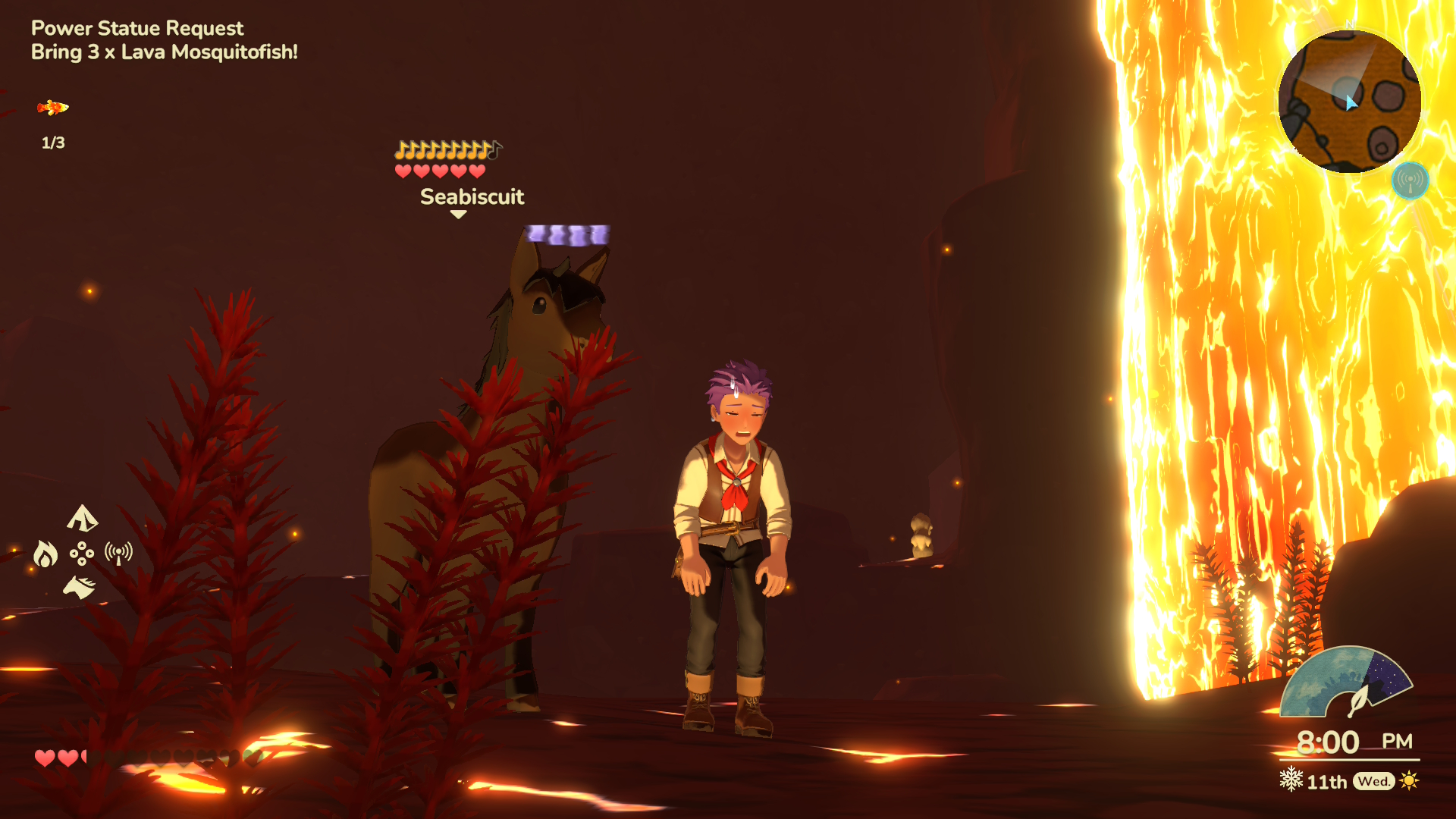
The horse held up better than the protagonist in the lava caves.
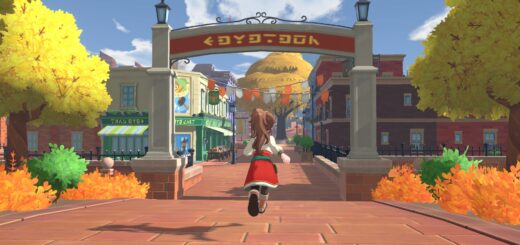
While helping the Harvest Goddess revive the Spirit Trees to recover her memories provides a solid overall motivation, the narrative highs truly come from the individual storytelling in each region. Each town features a plethora of NPCs with their own side stories to discover. While most interactions remain relatively surface-level, every town features standouts—particularly among the 10 romanceable candidates—that offer welcome narrative depth. Though several towns are plagued by standard environmental threats, the autumn-themed town of Maplehill proves uniquely fascinating in both its architecture and story beats. Maplehill feels more akin to the city blocks of Lumiose City in Pokémon Legends: Z-A than a traditional rural setting, complete with a population poised for a musical revolution. It serves as a refreshing change of pace from typical rural landscapes and standard “save the town” tropes.
Romance in Echoes of Teradea is very much a slow burn. Each named NPC displays empty musical notes beside their name during dialogue. Speaking with townspeople daily, fulfilling requests, and giving gifts gradually fills these notes and raises friendship levels. The menu conveniently tracks all discovered characters, clearly detailing their likes and dislikes as relationships grow. During the main story, building friendship is the primary goal. Once the main campaign is complete and credits roll, the option to date opens up. Players can court, date, and eventually marry any of the ten candidates (five male and five female), regardless of their chosen character’s gender. The system operates with total transparency, removing any frustrating guesswork regarding gift effectiveness or relationship milestones.
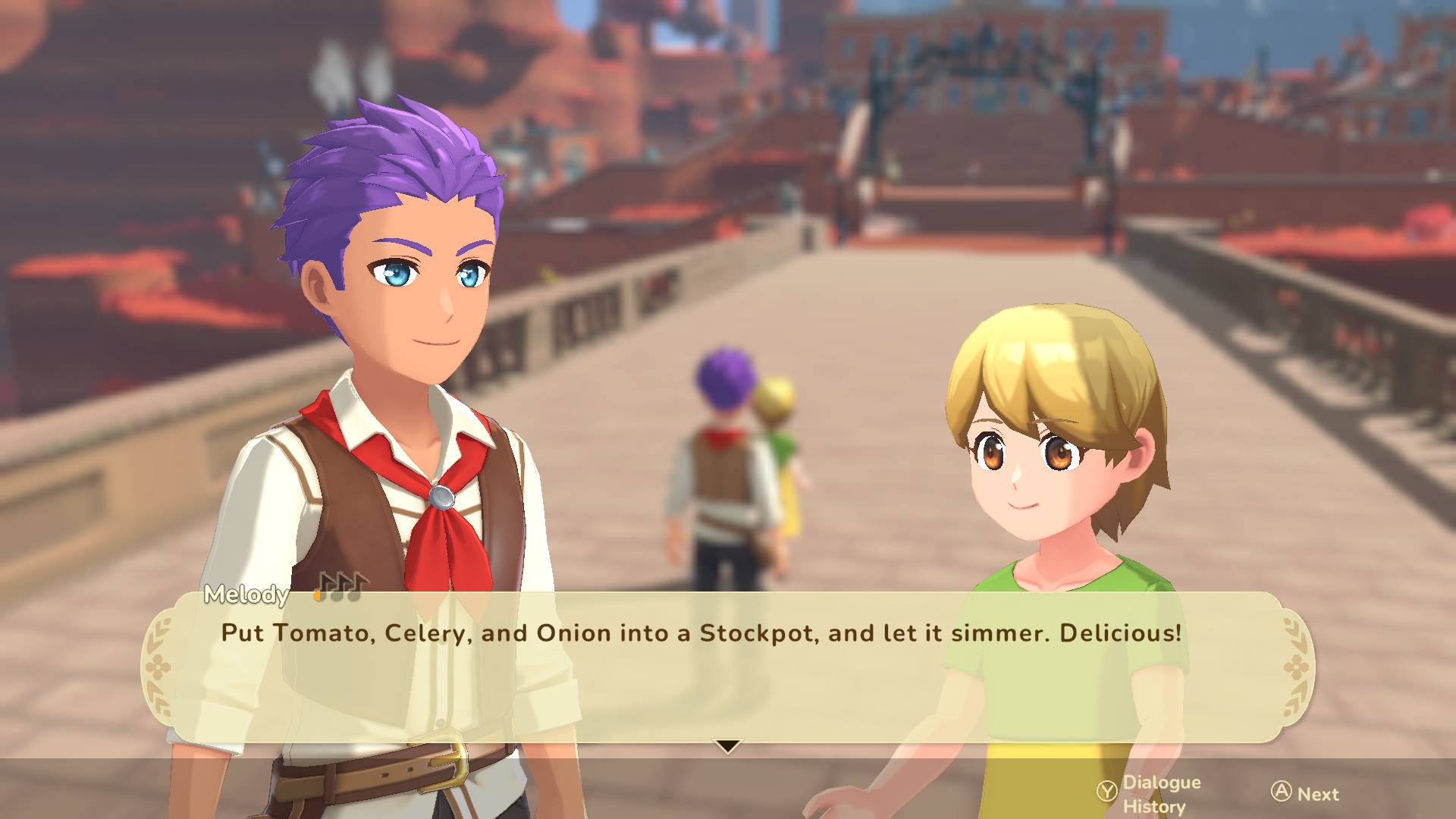
Best not to make eye contact if there’s no intention of cooking that dish.
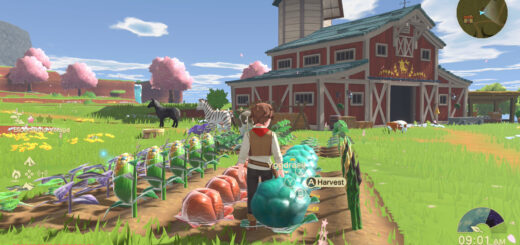
Farming in Echoes of Teradea strikes an interesting balance between depth of features and ease of execution. On the surface, growing crops on players’ farms is exceptionally accessible. Pressing a single button three times tills the land, plants the seed, and waters the plot. There is no need to manually swap between farming tools or memorize button mappings; the contextual action is always correctly selected. Players can upgrade farming skills and tools as the game progresses to expand actions over larger areas, but the core loop remains effortlessly simple. However, soil quality degrades over repeated harvests, encouraging players to rotate crops or apply fertilizer to yield higher-quality produce. Managing soil quality becomes essential as story requests begin requiring higher-grade crops. Additionally, crop mutations can occur when planting species in non-native climates, adding a fun layer of experimentation. Even dozens of hours in, small mechanics like these keep the farming loop consistently fresh.
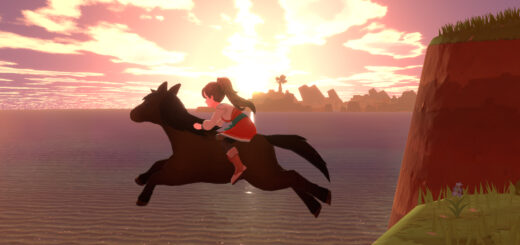
Agriculture in Teradea extends far beyond crops, with animals playing a vital role in both daily farm management and world exploration. Cattle, sheep, and poultry supply essential resources for cooking and clothing production, requiring consistent care to stay healthy and productive. For exploration, players can rely on pets and mounts to navigate the world. Standard horses, dogs, and cats are available at local shops, whereas exotic beasts—such as wolves, camels, and reindeer—can be befriended in the wild. Mounts and pets develop distinct skills through use, aiding in stamina recovery, hazard navigation, and predator deterrence. With pets trailing close behind and mounts available at the blow of a whistle, animal companions make traversing Teradea remarkably smooth.
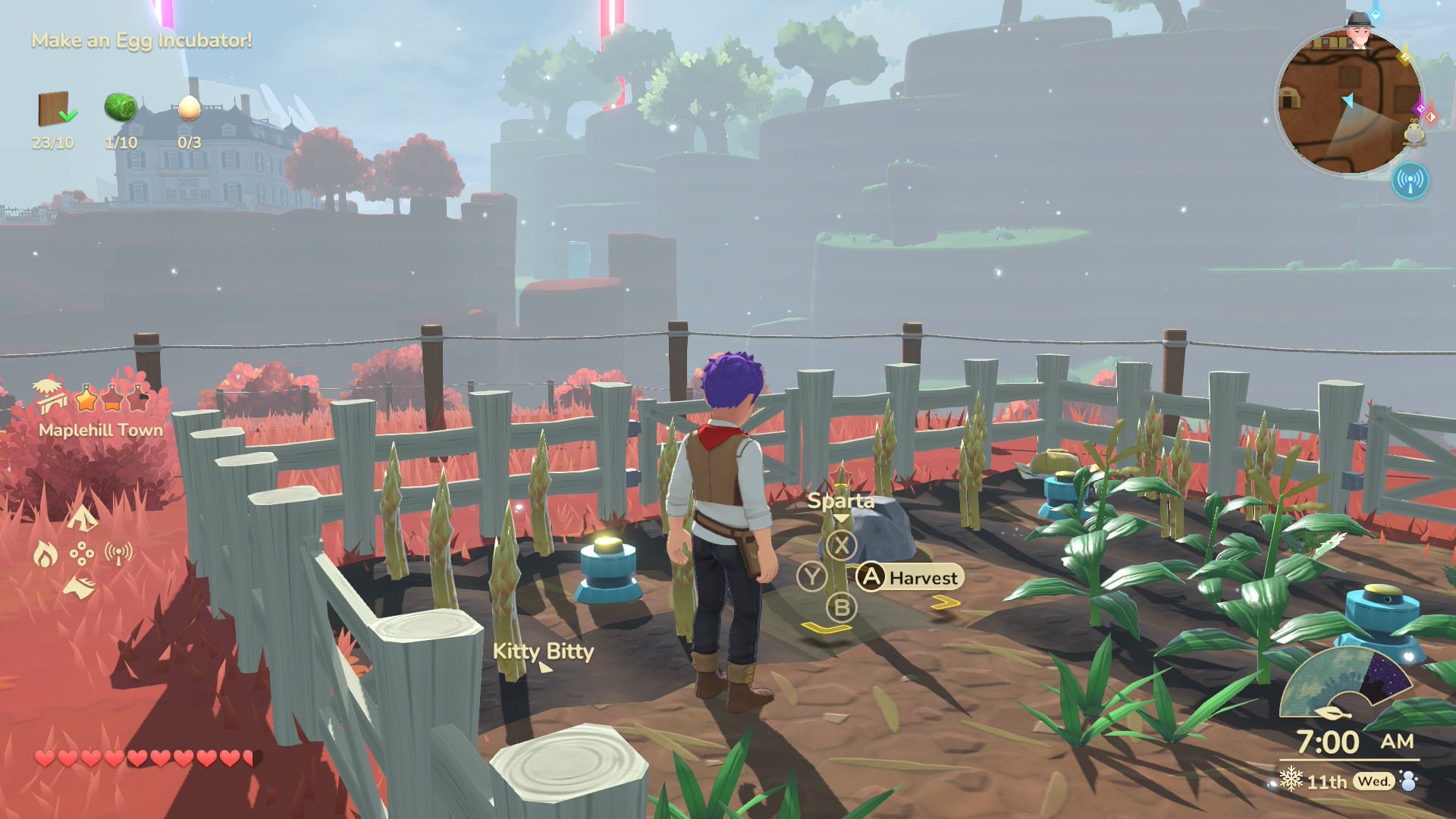
This is Sparta!
Given the vast scale of Teradea’s open world, remarkably smooth traversal is precisely what players will want. The land features not only incredible acreage, but impressive verticality, ranging from the dizzying mesa heights of Maplehill to more than a dozen caves and mines scattered across the continent. Unfortunately, the changes in elevation can occasionally feel quite frustrating. Since players cannot manually jump, an incline of just a few pixels can block passage to an area that visually appears easy to cross. However, even these minor obstacles serve as a great excuse to explore every nook and cranny. The maps of newly visited regions are revealed when players discover warp statues, though numerous other stone monuments are scattered throughout Teradea. Most small statues immediately award Power Wisp Fruits, which can be traded for perks like easier fishing, increased stamina, or various skill boosts. Other statues require light puzzle work—such as snapping specific photos in photo mode, finding hidden Power Wisps, or using the lantern to light nearby torches. Much like the farming mechanics, new puzzle types and traversal methods continue to unlock dozens of hours into the campaign.
Despite these strengths, a few persistent issues hold Echoes of Teradea back from reaching its full potential. While most main story quests and NPC requests are intuitive, the game occasionally hits abrupt progression roadblocks requiring obscure recipes or rare items. Certain side quests linger indefinitely in the journal without any guidance on where to start, with only a fortunate few later revealing they require over twenty hours of main campaign progress to complete. Loading screens present another major annoyance. Entering and exiting buildings regularly triggers three-to-five-second load pauses accompanied by repetitive hint screens. During story-heavy sequences, frequent loading screens interrupt back-to-back cutscenes, disrupting narrative momentum and making pivotal moments feel like watching a YouTube video interrupted by frequent ad breaks. Finally, the auto-save feature is all but a bust. The game prompts players to save each night before bed, then seemingly only auto-saves a moment later upon waking each morning. This left game days that stretch twenty-to-thirty minutes completely devoid of restore points. This became an issue and cost the reviewer hours of gameplay after a few late-day game crashes. Given the huge warning screen about auto-saves that appears each time the game is launched, this feature should have triggered far more often.
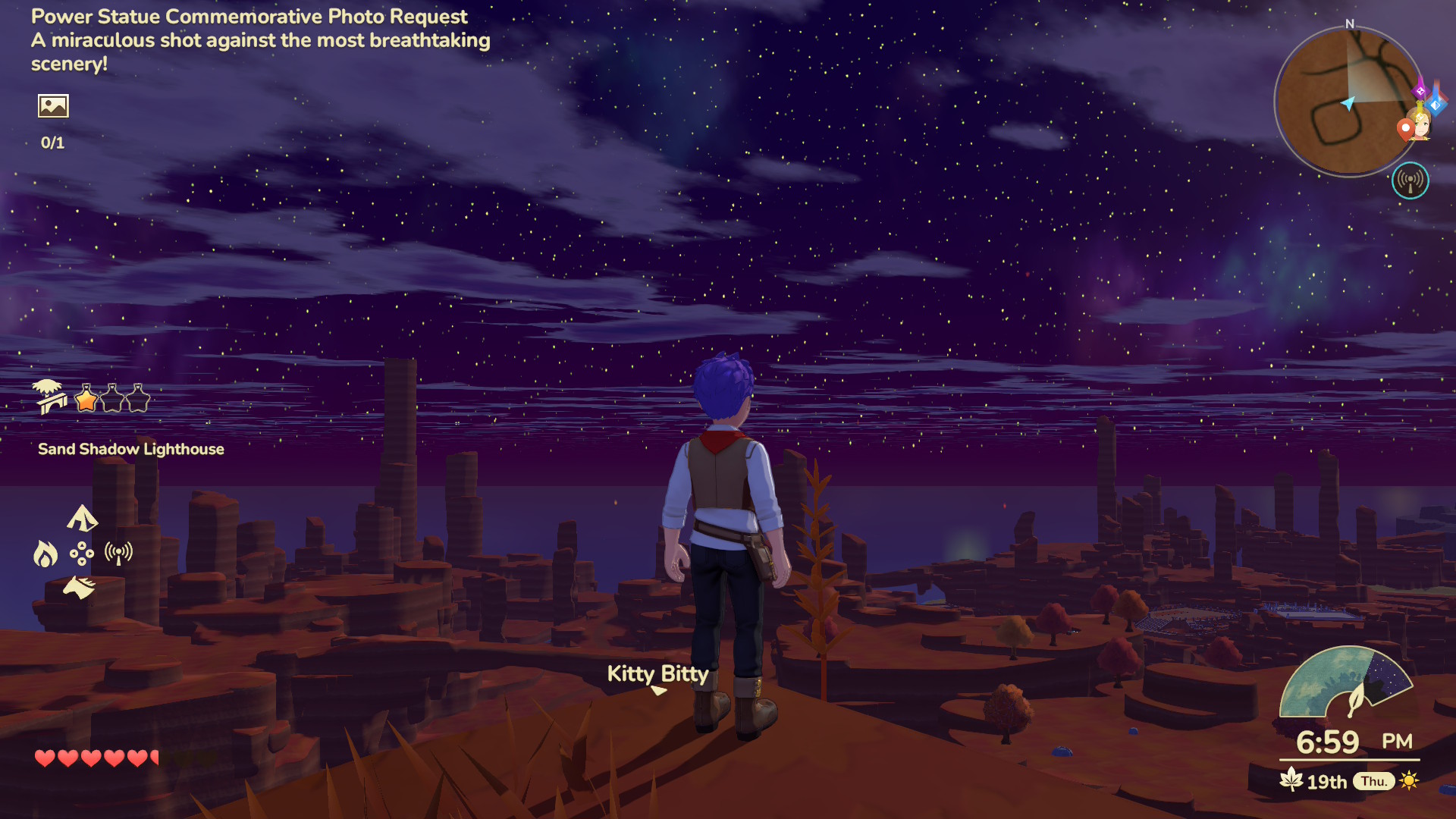
Both the depth of view and night sky were equally impressive.
Graphically, Echoes of Teradea straddles the line between stunning overworld vistas and lackluster character presentation. Moments like standing atop Maplehill’s towering mesas at night—gazing over the sprawling landscape under a star-filled sky—showcase an impressive visual scale in the game’s stylized aesthetic. Conversely, watching the silent protagonist cycle through stiff, repetitive pantomimes during NPC conversations makes character interactions feel a console generation or two out of date. While the vibrant environments compensate for the flat, unshaded character portraits, the visual gap between the world and its inhabitants is hard to ignore. Sound design similarly falls short; while ambient overworld tracks and town themes provide pleasant background noise, emotional story beats—particularly Maplehill’s music-centric narrative—fail to deliver the dramatic musical payoff they demand.
I was initially hesitant to step back into a straight example of the cozy farming genre, but I thoroughly enjoyed my time in Teradea. The open-world setting was a clear highlight, and finding exploration to be as deep and rewarding as the farming and relationship-building mechanics kept me far more invested than I expected from a game without combat. Echoes of Teradea provides a compelling gameplay loop with multiple goals always just a couple of in-game days away, constantly tempting me to play “just one more day.” For fans of the cozy farming genre—and anyone seeking a massive, content-rich world to explore—Harvest Moon: Echoes of Teradea delivers an excellent blend of both.
Disclosure: This review is based on a free copy of the game provided by the publisher.

Deep and rewarding open-world exploration
Exotic mountable beasts and pets compliment exploration well
Effortless farming controls
Transparent relationship tracking
Excellent blend of town stories
Some character art and animations are quite bland
Music needed a punch-up at times
Unreliable auto-save feature




Recent Comments