Outcast Tales Interview
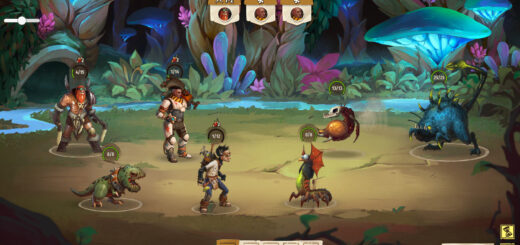
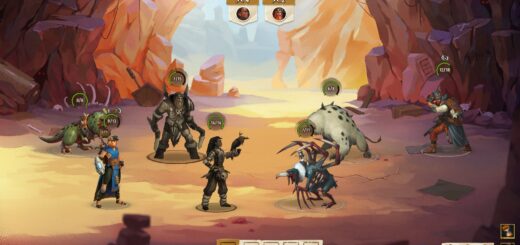
Available for free on Steam, Hardline Studio’s Outcast Tales deftly mixes comedy with turn-based roguelite combat to create an interesting title set in a post-apocalyptic future. Players follow a team of hapless treasure hunters following a map sold to them by another party that won it in a tavern brawl on a zany adventure where evolving inter-party relationships can change their dynamics. Narrative director Alexandra “Alphyna” Golubeva took some time to answer questions about writing for a roguelite, as well as some of her previous work, including as a writer for Pathologic and Heroes of Might and Magic and a translator for Disco Elysium.
Ryan Costa (RPGamer): Do you use a different approach when writing for a new IP as compared to an established universe?
Alexandra “Alphyna” Golubeva: Yes. A new IP means building a universe — and even if it was pre-built by someone else, you’re free to change it however you want. For an established IP, you also inevitably add your own voice (no one does perfect ghost writing, and neither do people need it, really); but identifying and following the IP’s pillars are crucial. For a new IP, I honestly sometimes just go with the flow, wherever inspiration might take me. For an existing franchise, the approach is more analytical.
RPGamer: Are there any characters who significantly changed from conception to actualization during the development of Outcast Tales?
Alphyna: Some personalities shifted quite a bit! For example, the Eye Catcher used to be a glutton, but became more of a 4th-wall-breaking jester (inspired by my love for a classic DnD webcomic Order of the Stick). Prophet became more about passion and inspiration (because simply preaching fictional religion isn’t all that interesting). And Antihero became… well. THAT thing.
RPGamer: How much does the tone vary across the game and how hard is it to keep things balanced? Are there any particularly strange combinations or encounter opportunities that you needed to account for?
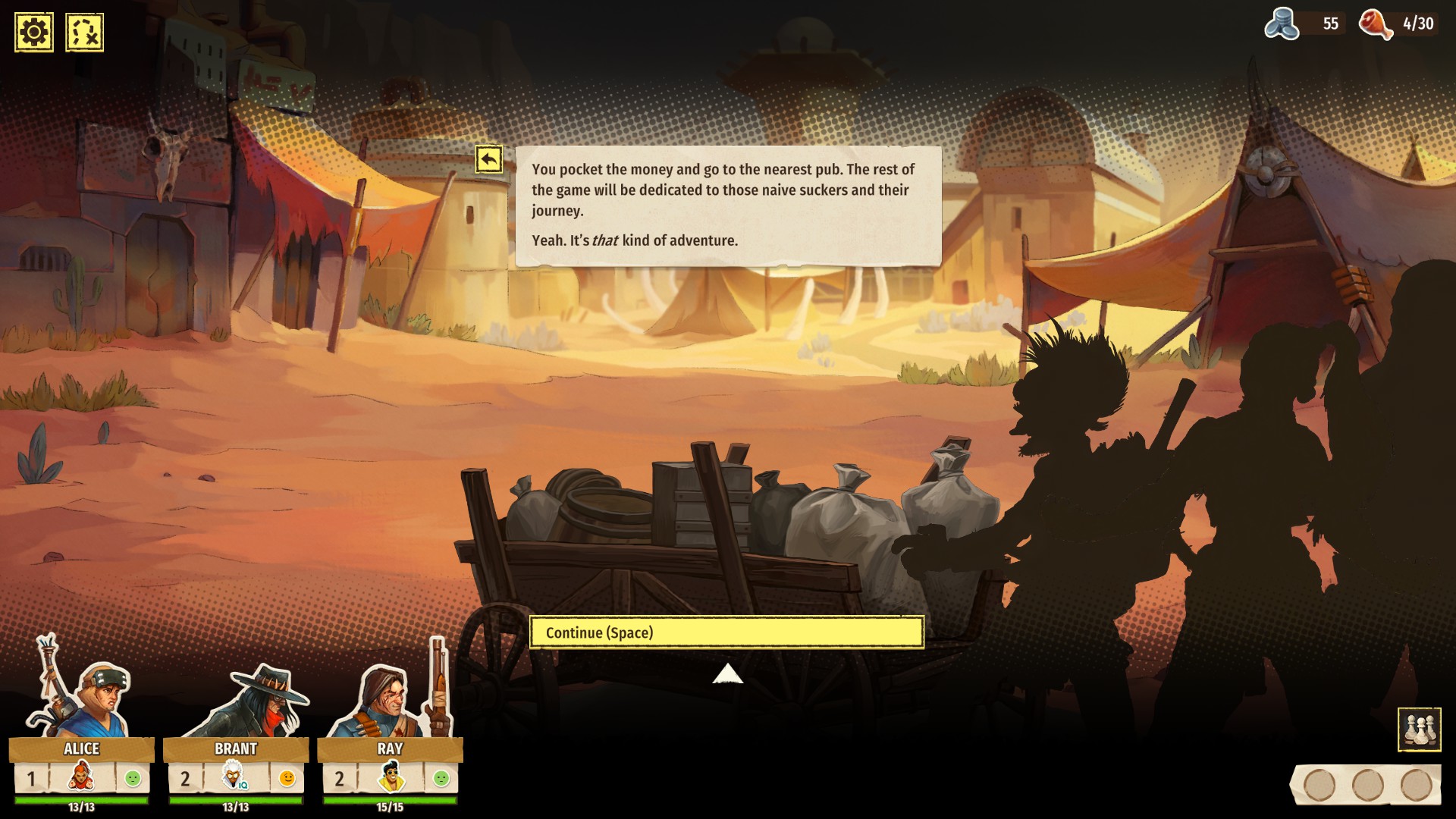
Alphyna: We tried to keep it coherent — thankfully, the combination of outlandish sci-fi and comedic tone makes it possible. But some combinations are indeed unusual, like making an Egghead Savage (a huge buff dude who doesn’t look particularly intellectual, if judged stereotypically). Therein lies the fun! For some events, I came up with reasoning as to how a guy like this could get brilliant education, and how specifically it would unfold in the world. Like, he’s probably not a hacker (even though an Egghead Technomancer could be), but he could be very savvy about tactics or understand biology on a deep level.
Then there’s the pacifist Hermit and the more aggressive personalities like Daredevil or Antihero. Having both on the team would not go well — they’d keep bickering — and coming up with scenarios where it would at least be funny (and maybe even dramatic) was a blast.
RPGamer: In your prior work as a translator for titles such as Disco Elysium, Hollow Knight, and Heroes of Might and Magic: Olden Era, there is a lot of nuance that can be hard to keep true to the original writer’s perspective. What are the main challenges in making sure everything aligns in the new language and culture with the original vision?
Alphyna: The toughest to translate are jokes, poetry and quotes. For example, in Disco Elysium, characters sometimes would quote songs. These songs don’t have canonic Russian translations, but you can’t keep them in English either for obvious reasons (you need the translation to make sense to a player who doesn’t speak English). But translating them would ensure the player misses that a quote was there at all. A tough one. (I kept the quotes in English and THEN translated their meaning, like the character would be musing, repeating the phrase. Best I came up with.)
Another challenge people struggle with often is keeping the flow of your target language natural. B-movies used to be translated awkwardly into Russian, and to this day some turns of phrase are associated with them to such a degree that making characters in such movies speak naturally would almost be weird. But generally speaking, you want the language to flow as though the game (or movie!) was originally written in Russian, and not feel like “American phrasing borrowed.”
RPGamer: Does getting the chance to recreate a story from a new perspective, such as the opportunities presented by working on Pathologic 2, cause more or less stress when comparing it to translation work?
Alphyna: Translation definitely comes easier to me — it’s something I’m good at naturally and could do unfocussed or sick, while writing or crafting narrative design takes all I have. But I don’t think this is universal for everyone.
Both localization and narrative design feel like this curious combination of pure inspiration and engineering, you need to feel what you’re doing while also working with a bunch of constraints.
RPGamer: As someone with a wide breadth of character work in their writing catalogue, are there any surprise influences for any of the cast of Outcast Tales?
Alphyna: Like I mentioned above, Elan from a webcomic called Order of the Stick is a DnD bard who knows he’s a character in a story — just like our Eye-Catcher.
Another pleasure of writing for fun is that you’re not bothering asking yourself whether something is in good taste or maybe you’re overdoing it — so I think I quoted like a dozen of Pink Floyd songs there. Not my fault they’ve been playing in my head for 20 years!
RPGamer: Given how many variables go into the dialogue for each character, how much effort was it to add someone new to Outcast Tales?
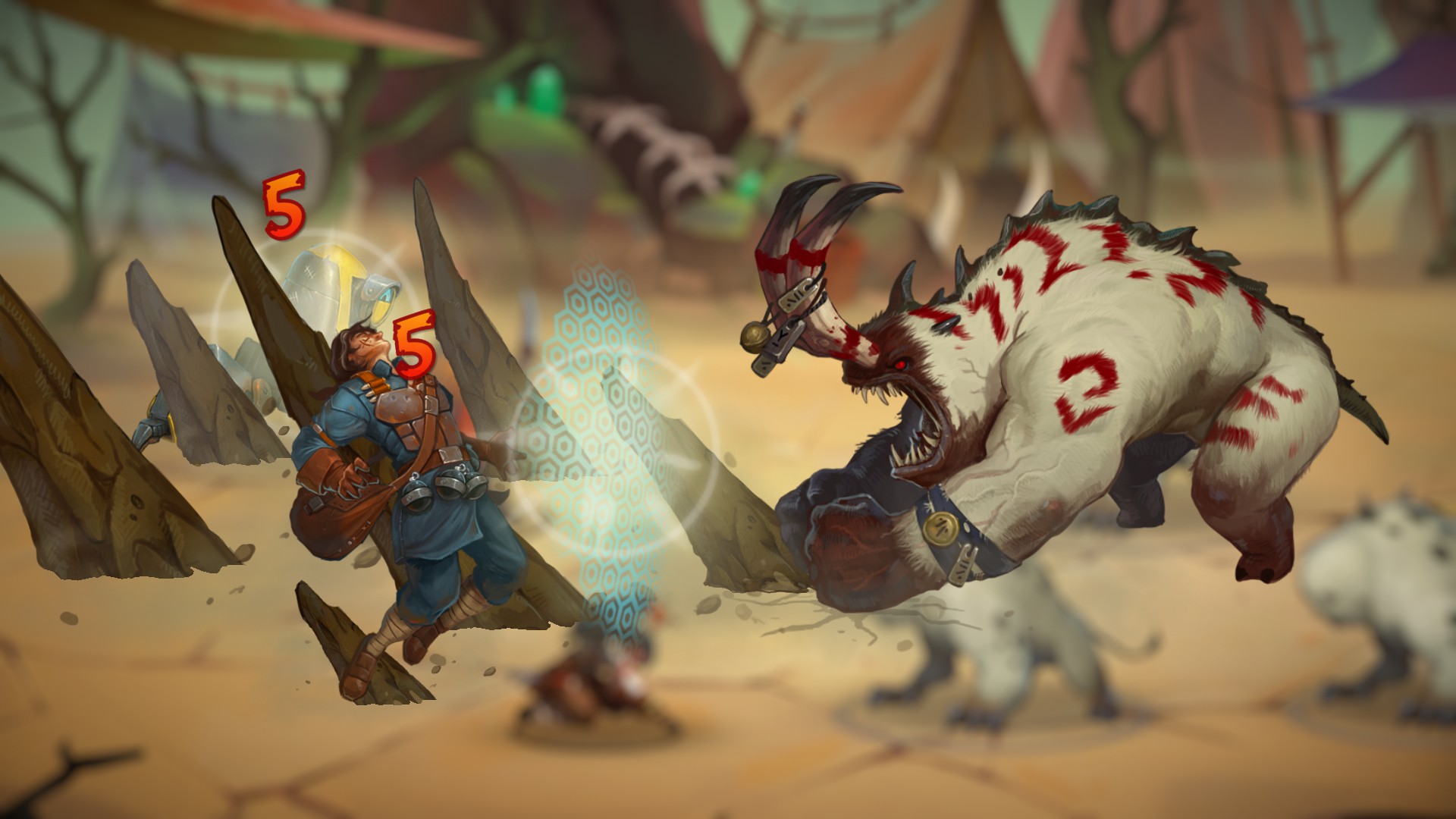
Alphyna: Thankfully, the roster has been glued very early on! But adding important events that account for every permutation (8 backgrounds and 7 personalities, so 56 total) was a lot of work. But! I enjoyed it greatly — an opportunity to “act out” every possible reaction to a certain event is like a mini-RPG in your head. It’s delightful.
RPGamer: Are any of the game’s endings only reachable with certain classes or combination of character traits, or is everything attainable with any possible character combination?
Alphyna: The former. Most endings depend on the series of choices you’ll make in the final stretch of the game — but the options provided will depend on your roster.
Note that every personality can also go through a character development arc over the course of a run, changing somewhat, and that can influence endings too!
RPGamer: Outcast Tales had a bit of a release limbo period; was there any aspect to the plot or character work that was readdressed after or during it? Were you still iterating on the narrative and writing during that period?
Alphyna: During that period, we mostly worked on presentation: visuals, voice over, UIs, some game design tweaks. It was an opportunity to add more events as well. For example, the strange man who seems to know more than he shows and changes on consecutive runs.
In this industry, people rarely get a chance to polish a game for as long as they want to — so this was a rare opportunity. I don’t think the game would have worked as well without those finishing presentation touches. But they’re less about narrative.
RPGamer: Is there anything that you have learned from the development of Outcast Tales that you aim to carry on to the next narrative you craft?
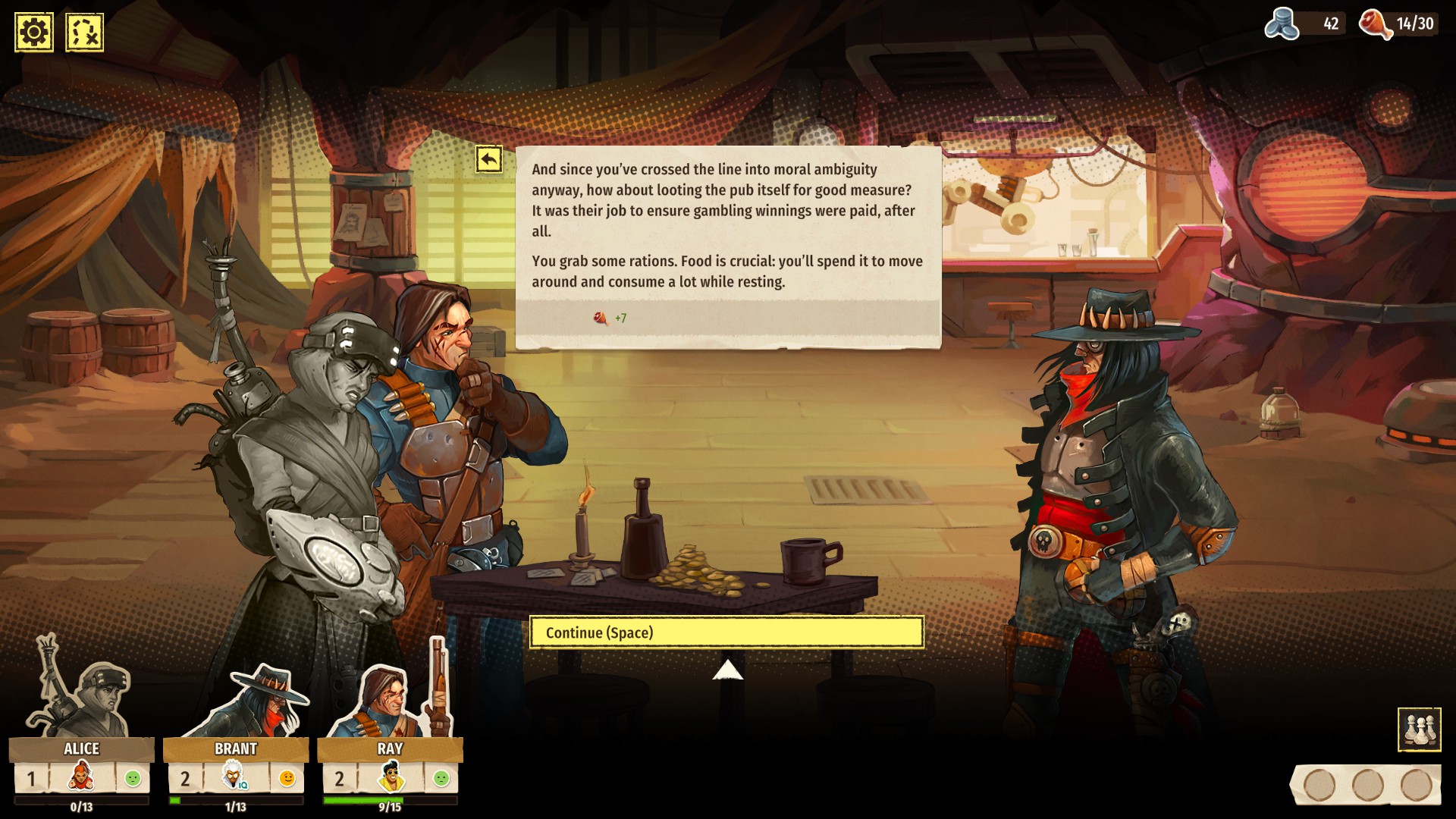
Alphyna: I think I got much better at writing snappy, witty dialogue that people would actually read and not skip. It requires a lot of finesse — for example, few of the numerous Disco Elysium successors match the original’s laconic and aphoristic nature. It’s easy to write sweet prose OR short prose; but to make it short AND sweet? Takes skill. That I now have more of.
RPGamer: Is there any that you would love to share about the game or your writing that we haven’t discussed?
Alphyna: Vers libre is a type of poetry that relies on neither rhyme nor meter, very popular in modern American poetry and has a tradition in Russian as well. I despise it; while great vers libres do exist, more often than not they lack the pull that form-fitting word-weaving has for me. I like poetry that maintains poignancy and gravitas while also preserving stricter form (see above; once again, I appreciate the combination of inspiration and engineering).
So I wrote a whole event about how stupid vers libre is. Hope this remains my cultural heritage.
RPGamer would like to thank Alexandra “Alphyna” Golubeva for their time answering these questions as well as Jasmine James of Two Frogs In A Trenchcoat for making it all happen. Anyone interested in trapsing through this comedic post-apocalyptic wasteland can do so now, as Outcast Tales is available for free on Steam.




Recent Comments