The Adventures of Elliot: The Millennium Tales Review
Adventure in Every Corner
Square Enix’s HD-2D games have always been some of my favorites. Whether it’s Octopath Traveler, Triangle Strategy, or the many projects that have followed, the visual style has consistently helped these titles stand out among today’s increasingly realistic games. The Adventures of Elliot: The Millennium Tales takes that presentation and applies it to something very different. Rather than another turn-based RPG, this is a top-down action-adventure inspired by classics like The Legend of Zelda, combining real-time combat, puzzle-filled dungeons, and exploration with light RPG progression systems. It is an ambitious shift for the HD-2D formula, and it pays off remarkably well. The Adventures of Elliot creates a world whose sense of depth and scale often feels far greater than its top-down perspective would suggest.
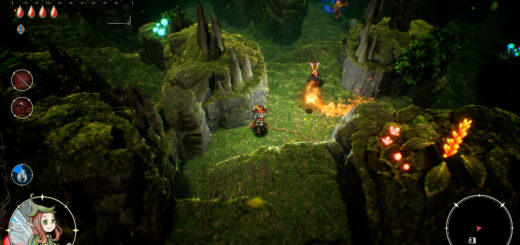
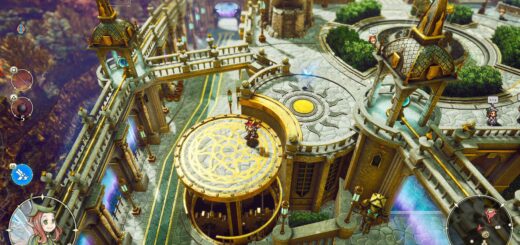
The visual presentation is stunning. HD-2D has always been attractive, but The Adventures of Elliot feels even prettier than anything that came before it. Towns are majestic, forests are dense, and dungeons often appear surprisingly expansive thanks to the game’s clever use of lighting, perspective, and environmental layering. Many locations feel three-dimensional despite the camera angle remaining largely fixed. The result is a world that constantly invites exploration, helping every new area feel distinct and memorable, and making each new location visited a visual reward in its own right.
The act of exploring is just as rewarding. Dungeons are filled with secrets, optional paths, collectibles, and puzzle shrines that grant additional health upgrades. These shrines are never difficult enough to leave players confused, but they consistently provide enjoyable diversions that break up combat nicely. Exploration only becomes more satisfying as the adventure progresses. Unlockable map upgrades eventually reveal collectible locations and important points of interest, removing much of the frustration often associated with searching for hidden items. The maps themselves deserve special praise as well, being easy to read and packed with useful information.

The shrines are some of the best content in the game.
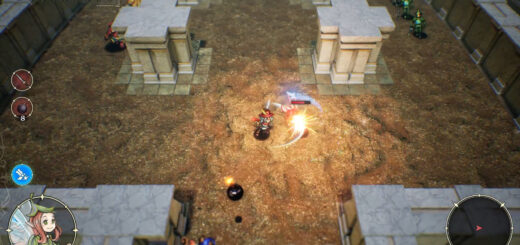
Combat is highly polished, and anyone who grew up with classic 2D Zelda games will immediately feel at home. Elliot’s movement is responsive, and attacks connect with satisfying impact, while a healthy selection of weapons helps keep battles engaging. The chain scythe offers useful mid-range coverage, the hammer delivers powerful strikes capable of knocking enemies backward, bombs excel at crowd control, and the bow serves as a reliable ranged option. Every weapon also has charged attacks, which add another layer of strategy, while many of these tools pull double duty outside of combat as well. Various puzzles and traversal challenges require creative use of specific weapons, encouraging players to think about their arsenal beyond simply dealing damage. There is a sense, however, that the game could have pushed this idea even further. Most enemies can be defeated easily regardless of weapon choice, meaning experimentation often feels optional rather than necessary. More encounters designed around individual weapon strengths would have added additional variety to combat.
The game’s strongest progression system comes through Magicite. Rather than functioning as simple stat boosts, Magicite pieces can dramatically alter how weapons behave. Charged bow attacks can fire multiple projectiles. Enemies defeated by the hammer can explode and damage nearby foes. Bombs can freeze enemies before detonating, creating devastating chain reactions. Other Magicite options introduce meaningful tradeoffs, rewarding increased power with reduced defenses or other drawbacks. The system provides considerable flexibility, allowing players to tailor combat to their preferred playstyle. In many ways, Magicite serves as the game’s primary RPG system, taking the place of traditional experience points and character levels.
Elliot is not alone on his journey. His fairy companion, Faie, plays a major role in both exploration and combat. Various fairy abilities become essential throughout the adventure, with Sprint and Copy standing out as particularly useful examples. These powers shine brightest during puzzles, where creative use of Faie’s abilities often leads to gratifying solutions. Managing both characters simultaneously during combat can occasionally feel hectic, especially during more chaotic battles, but the system generally works well. Players who found Faie overly chatty in the demo will also appreciate the ability to adjust how frequently the companion speaks through the settings menu. It is a small quality-of-life feature, but a welcome one nonetheless.

Watch your step!
While the standard enemy roster begins to feel repetitive over time, the bosses remain consistently excellent from start to finish. Each introduces a unique gimmick or mechanic that prevents boss encounters from blending together. Some battles focus on positioning and pattern recognition, while others embrace outright chaos in the best possible way. Regardless of approach, boss fights regularly rank among the game’s most memorable moments. The story itself is enjoyable, even if it never really provides any big surprises. Many of its major twists are easy to predict well before they occur, and experienced RPG players will likely see several revelations coming from a distance. Fortunately, the strength of the narrative comes less from its central mystery and more from the world surrounding it. Collectible manuscripts add significant depth to the setting, fleshing out its history, characters, and mythology. Better still, Faie frequently comments on these discoveries, making them feel fleshed out rather than simple lore dumps. The manuscripts become some of the most rewarding collectibles in the game, though a bit more direction for tracking down missed entries would have been appreciated.
The side quests are similarly strong in terms of their lore. While some of them fall into familiar MMO-style fetch quest territory, they often expand upon characters and storylines in worthwhile ways. Many quests feel substantial enough to serve as miniature story arcs in their own right. Particularly welcome is the fact that the game warns players if they’re about to miss a side quest, encouraging them to complete them before continuing with the story. The Adventures of Elliot also has multiple endings. Additional exploration and optional objectives unlock more satisfying outcomes, rewarding players who fully engage with the world. The concept works well and reinforces the importance of exploration, though some of the requirements can feel a bit too obscure. Certain progression steps lack clear guidance, making it easy for players to miss important content. At the same time, that lack of hand-holding gives the game’s secrets a distinctly old-school appeal that fans of classic adventure games will appreciate. Furthermore, after reaching one of the game’s endings, players can reload a save before the point of no return and complete additional objectives to unlock a different conclusion.
Enemy variety is The Adventures of Elliot’s most noticeable issue. New enemy types appear throughout the adventure, but not frequently enough to prevent encounters from occasionally feeling repetitive. The soundtrack also fails to leave a lasting impression. To be clear, the music is consistently pleasant and complements the adventure nicely. There are no bad tracks here, but there are also no truly memorable tracks and for a Square Enix RPG, this stands out more than it normally would. The soundtrack performs its role effectively, but it never reaches the heights achieved by games like Octopath Traveler.

The sense of exploration is incredible.
Fast travel could also be more convenient. While the maps themselves are excellent, moving between dungeons and different time periods often requires additional menu navigation and loading screens that gradually become tedious. Players cannot freely teleport directly into or out of dungeons, often requiring multiple transitions just to reach the next objective. Individual load times remain relatively short, but the cumulative effect becomes noticeable during longer play sessions. Platforming presents a similar issue. Movement generally feels great, particularly after obtaining the Flutterer’s Cape, but the accessory almost feels too essential. The ability to float improves both navigation and platforming significantly to the point where the cape never left the equipment slot in the review playthrough. Making a similar movement option a permanent upgrade would have freed players to experiment more freely with other accessories.
The Adventures of Elliot: The Millennium Tales proves HD-2D works brilliantly as the foundation for an action-adventure game. Its engaging combat, rewarding exploration, clever customization systems, and gorgeous visual presentation combine to create one of Square Enix’s strongest action-adventure games in recent years. The story may be predictable, and the enemy variety is rather lacking, but neither issue detracts from an experience that consistently rewards exploration. The Adventures of Elliot shows the HD-2D formula can thrive well beyond the realm of turn-based RPGs. If this is where the style is headed next, the future looks incredibly promising.
Disclosure: This review is based on a free copy of the game provided by the publisher.


Rewarding exploration design
Tight, responsive combat
Fairy abilities add depth
Stunning HD-2D graphics
Interesting puzzles
Predictable story
Travel occasionally feels segmented
Limited enemy variety



HD-2D action-adventure that trades turn-based combat for real-time Zelda-style exploration — sounds like a bold shift for the formula. Anyone played it yet, and does the combat/exploration loop hold up past the first few hours? Curious if the repetitive enemies are a dealbreaker or just a minor gripe.