Lunar 2: Eternal Blue Remastered Review
A Beautiful Blue Star
Lunar: The Silver Star Story is one of my most replayed RPGs, as it was a childhood favourite. However, when it comes to the game’s sequel, Lunar 2: Eternal Blue, I can say up until recently that I had only played it once. I want to stress that it had nothing to do with the quality of the game; it’s more that I didn’t connect with it the same way as Lunar: Silver Star Story. It seems fitting that with last year’s release of the Lunar Remastered Collection, it was time to revisit Lunar 2: Eternal Blue and rediscover this classic.
Taking place a thousand years after Lunar: The Silver Star, Eternal Blue introduces players to a young explorer named Hiro, his loud-mouthed red dragon companion, Ruby, and a visitor from the Blue Star named Lucia, who has come to meet with the Goddess Althena in hopes of stopping the resurrection of the villain Zophar from engulfing the world in darkness. While on this quest, Hiro is joined by Ronfar, a priest and gambler; Jean, a dancer with a mysterious past; and Lemia, the shrewd and money-hungry future leader of the Magic School of Vane. Along with Lucia, Hiro and his companions must face their individual fears, save the world, and find hope in the darkness.
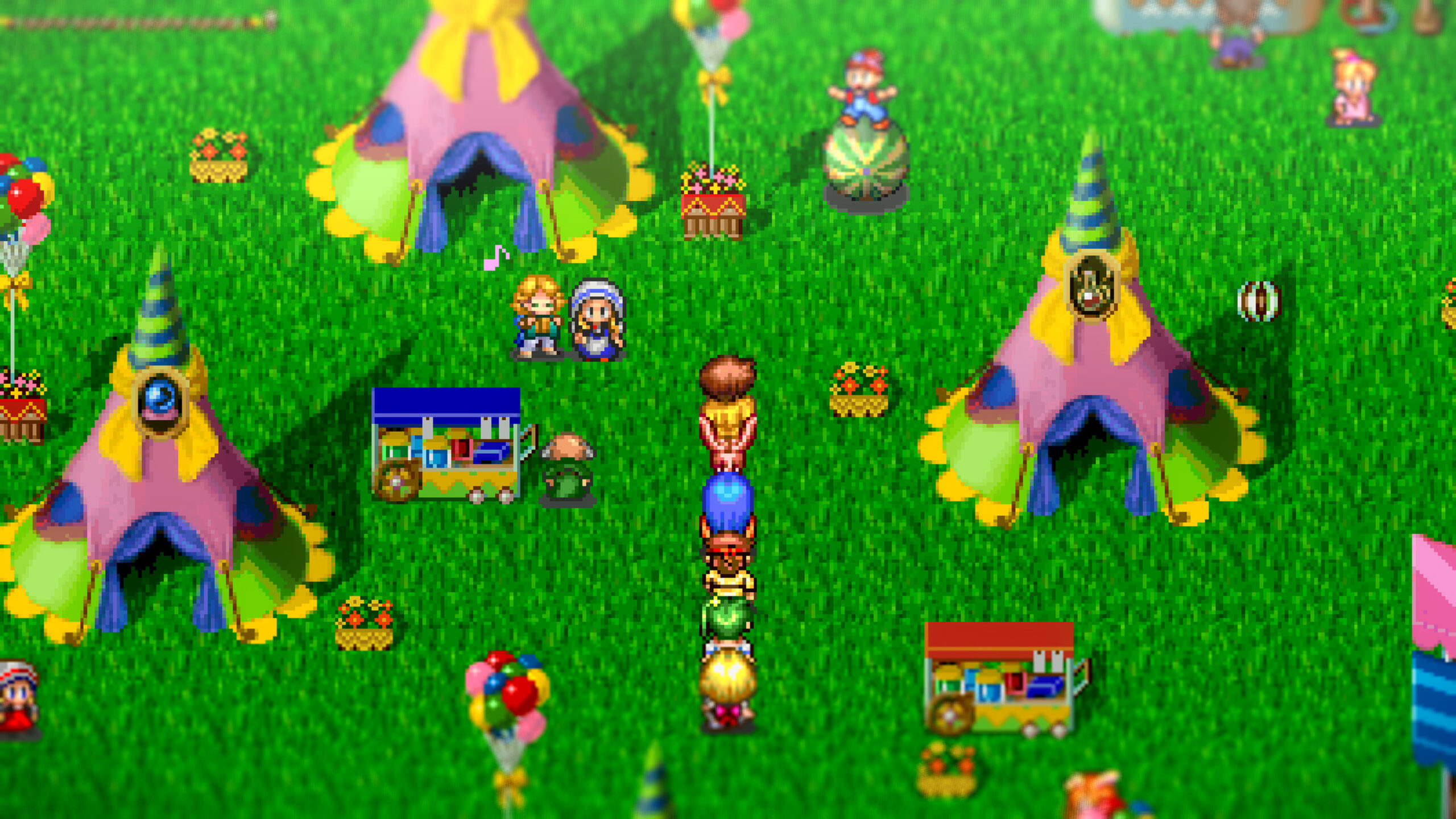
We are visiting a caravan!
The narrative of Eternal Blue is wonderfully crafted, chock-full of comedic moments and emotional beats. Hiro’s love for Lucia and her quest to find Althena take the forefront, offering a journey that is never dull, and the game’s cast of characters does a phenomenal job of supporting our romantic couple, as well as sharing their stories. From Jean’s traumatic past before becoming a traveling dancer to Ronfar’s exit from the priesthood because he failed to save the woman he loved, everyone’s growth throughout the game’s runtime is exceptional. Eternal Blue‘s story is wonderfully constructed until the game’s end, where it falters at the finish line due to the game’s bare-bones epilogue, which will net the player the game’s True Ending, but there’s very little story that makes pursuing this ending worthwhile.
Combat is a standard turn-based affair, wherein the player will input commands for each character. It’s a simple and intuitive system, but doesn’t offer much in the way of uniqueness. Characters can attack, defend, use items and skills, or have the AI take over. New to the Remastered Collection, players can now speed up the battles if they prefer to. While the combat system is serviceable, Lunar 2: Eternal Blue is an older game with a very high difficulty, meaning grinding is a must, especially late game. Characters often feel quite squishy, and without proper gear, can be one-shot even in regular battles. The difficulty spikes can be absolutely frustrating, and the final boss in particular has some nasty tricks up his sleeve that even the most prepared player will need to keep their guard up and ration healing items accordingly. The game can be punishingly hard, but beating a difficult battle is very rewarding.
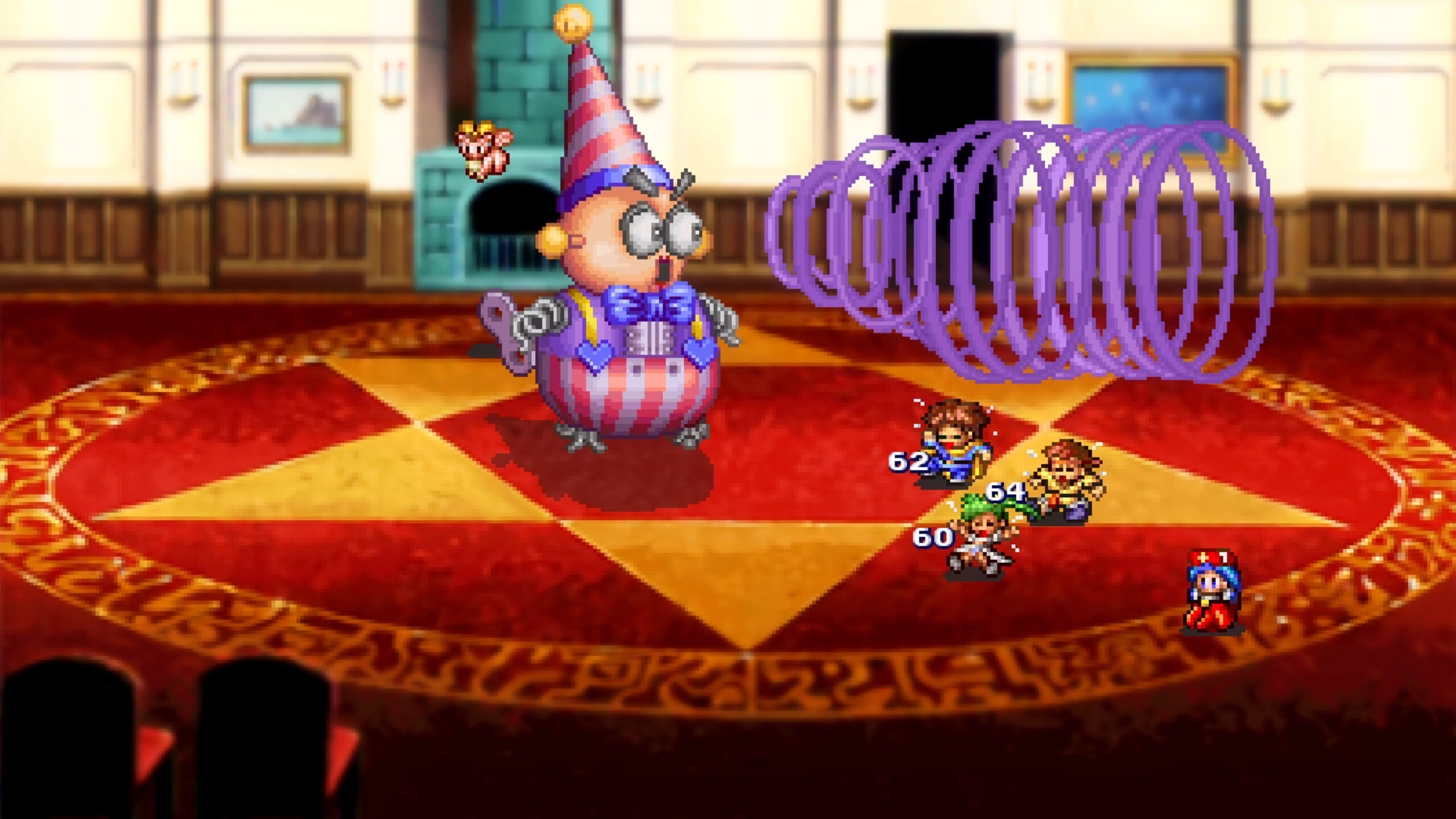
Can’t sleep; toy will eat me.
Since this is a remaster, it’s important to discuss the features added to the experience, which are very few in Lunar 2. Unlike The Silver Star, which had multiple features and adjustments, Eternal Blue got the short end of the stick, with the only features being the ability to speed up battles and characters sharing a joint inventory. There are some graphical enhancements in Remastered Mode, mainly that the game has been updated to a widescreen layout, enhanced sound and graphics, and updated character portrait sprites, and while these are nice to have, the graphics still look very dated. There is also a Classic Mode where players can experience the game as though it were on a CRT television set, complete with its original cutscenes and graphics.
Eternal Blue shines its brightest in the sound department. The new voice cast breathes new life into the characters, with many of the characters, especially Hiro, offering fantastic performances. The game’s soundtrack, composed by Noriyuki Iwadare, has also received an upgrade, with many of the songs remastered for this release. Eternal Blue‘s music is a beautiful mix of idyllic and upbeat, with songs never outstaying their welcome. The only element missing from Eternal Blue is more vocal tracks, but the few that are there are decent, though they don’t reach the level of The Silver Star.
The Lunar Remastered Collection is a great way to experience these two classic games. However, there isn’t enough to really call them Remastered, as the efforts of GungHo are fairly minimal. That being said, Lunar 2: Eternal Blue is classic in its own right, even if it never matches the love and nostalgia its predecessor constantly receives. The music and voice work do a fantastic job of complementing the game’s already fantastic story and characters, but the game always feels as though it’s in the shadow of Lunar: The Silver Star.


Fantastic soundtrack
Wonderful cast of characters & story
Solid battle system
Visuals are dated
Difficultly spikes galore
Less Remastered features compared to Lunar: The Silver Star





Recent Comments