Elden Ring Nightreign Review
Set Fire to the Reign
Excepting the Armored Core series, modern FromSoftware has always had an odd relationship with multiplayer. The method by which players interact with others has, since Demon’s Souls, always been at odds with contemporary perceptions of online compatibility. What was initially novel and harmonious with the design of that game and its successors has, for many, slowly become a point of contention as FromSoftware’s popularity and audience grows. It stands to reason that the existence of something like Elden Ring Nightreign is not too surprising. Taking the language of the greater Souls series and applying it to an intentional cooperative experience was always going to result in some unusual outcomes, although they are sometimes as fun as they are weird.
In a parallel world to Elden Ring‘s Lands Between, the Shattering ushered in a cataclysmic event known as the Nightreign. Perpetual rains douse the land, populating it with monsters from beyond time and space and making it uninhabitable for most. Eight Night Lords rule, casting the world into an eternal night. Eight warriors, known as Nightfarers, come together to defeat these Night Lords, but their tenuous alliance is undercut by hidden, and sometimes sinister, motives. These expeditions are repeated in a manner befitting a roguelike, but this conceit harms the way FromSoftware often tells its stories. The continent of Limveld is little more than a playground, a space that is fun to interact with but not one that coheres to a point like the company’s worlds from their other games. An effort is made to give each of the Nightfarers a backstory and interesting pathos through personal sidequests known as Remembrances. While occasionally providing a few unique challenges to progress, these largely consist of a few paragraphs and cutscenes that progress as players complete runs as a specific character. Somewhat evocative, but slight.

Limveld will be filled with plenty of familiar sights for returning Elden Ring players.
Fortunately, Nightreign‘s core appeal lies not in its story. Rather, the meat of the gameplay is in the game’s aforementioned expeditions. Replacing the meticulously-crafted worlds FromSoftware is known for, Limveld is a giant, semi-static map populated with different points of interest. Players drop onto the map and must clear as many of these points of interest as possible in the game’s allotted time, gaining levels and accumulating gear to become more powerful. After a set amount of time, the current day ends, and the players must face a boss. After surviving two nights, the end of the third night sees players facing a final battle against a Night Lord. Night Lords are chosen ahead of time so players have some idea of what they will be up against. It’s a straightforward premise that’s easy to grasp once actually playing it, but players are onboarded with minimal assistance. This hands-off approach works better in FromSoftware’s single-player outings but clashes with Nightreign‘s hectic pace.
At its heart, Nightreign is a cooperative boss rush. In stark contrast to FromSoftware’s usual style of play that rewards slow, considered progression and a careful approach to combat, the breakneck pace means players must constantly on the move. Instead of scouring the map for secrets, players instead navigate the map to optimize routes for the most effective and efficient means of powering up. Fully clearing the map in the allotted time is infeasible, and on-the-spot decisions must be made and play into the general flow of a session. This leaves Nightreign a surprisingly one-note experience, and without alternative modes of play or more meaningful exploration all that is left is unrelenting combat. Fortunately, the combat is as strong as its ever been. Even at an accelerated speed, the core of encounters still follows a tried-and-true mixture of stamina management, spacing, and reflexes. The satisfaction is bore out in the power progression of a run. An in-sync party will clear mobs with ease and slowly come to effortlessly overcome even challenging enemies.

As the second day continues, these giant figures begin to fill the skyline. For more information on these guys, please refer to any number of thirty-minute lore videos.
There is also a surprising lack of randomization between runs. Players will quickly see the same variations of enemies and boss fights over and over again. Aside from several unique events, the only major shakeups to the map are the Shifting Earth events, which transform an entire portion of the map to a new biome with unique rewards. Even these play out almost identically each time, meaning that the game has very few surprises for the player after the first few runs for each Night Lord. As a roguelike experience, there is much to be desired. However, this lack of variety does not extend to the Night Lords, who are a wildly creative collection of boss fights that combine visual spectacle and the expanded design space of assumed multiplayer. Like the Nightfarers, these lords are all built around a gimmick, but those gimmicks benefit from a greater complexity. These fights are better suited to dealing with three players at once and often utilize large, sweeping attacks and field-altering abilities that makes it so the even those who aren’t the focus of attention are not entirely safe.
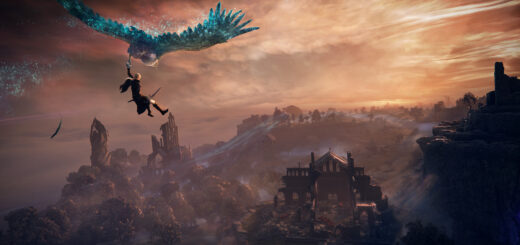
Aiding in the appeal of combat are the changes made to facilitate the new structure of the player characters. Rather than creating a character from scratch, Nightreign features eight playable characters, and each represents a different playstyle. Beyond having certain types of equipment weighted towards them and unique stat spreads, each Nightfarer is built around a gimmick. Some, like the Wylder, utilize borrowed mechanics from other FromSoftware games such as a grappling hook reminiscent of the one from Sekiro. Other characters have wholly new mechanics built for them, such as the Recluse and her innate ability to recover mana by absorbing the last type of non-physical damage dealt to an enemy. This simultaneously fills one of three slots that, once all three are filled, casts a unique spell based off of the elements absorbed. These new mechanics are surprisingly varied and offer a well-rounded variety of playstyles for people while also show promising directions for changing up FromSoftware’s traditional style. There are also a few ideas that feel ideal to bring back over to the company’s single-player games, such as casting implements coming with specific spells prepared attached, giving those specific items a more distinct feel.

Not featured in this screenshot: the other half of the boss fight.
As a multiplayer experience, it’s a mixed bag. In a group of known friends with some outside method of voice communication everything operates ideally, but playing all alone is a different story. For starters, the game does not feature crossplay between separate platforms, which feels very out of step in this day and age. This is an odd absence in the more single player-focused titles, but is a baffling omission from a predominantly multiplayer game. Additionally, there is no form of in-game communication beyond a general ping, meaning that playing with random players can be a chaotic nightmare where no one is on the same page. This spirals into the full session length, which run from forty-five minutes to an hour. They are certainly not the longest runs in the world, but don’t lend themselves well to practicing against the more difficult boss fights. In a standard Souls game, being stuck on a boss doesn’t require an episode of a TV show to get back to that fight to try again, but in Nightreign, it ends up making the repetition feel more apparent. Players will end up fighting dozens of giant trolls and Crucible Knights before getting another opportunity at each night’s boss.
There are slight meta progression elements present, but it’s another element that feels only half-considered. The first are Relics, a series of items unlocked through play that can be equipped to characters to give them passive bonuses while in game. A few of these provide interesting changes, such as altering a character’s unique ability or starting equipment to better suit a playstyle or specific boss. Most of the time, they are very minor, flat bonuses to specific stats or types of weapons and are not really interesting considerations. The second is Murk, a general currency also gained at the end of a run that can be spent to purchase mostly cosmetic items like emotes and new skins for characters. The alternate costumes are quite nice and features nice callbacks to the Dark Souls games but don’t really help alleviate the feeling that Murk only exists to serve as a gate to give some form of progression to players. In the months since the game’s release there have been several updates that have added content to the game, namely more challenging versions of the Night Lords and a two-player mode. The former will mostly appeal to the hardcore while the latter should have been there to begin with, neither of which really address the repetition that runs can settle into. One hopes that FromSoftware’s continued support of the game will lead to a more expanded playspace even beyond the already announced upcoming DLC.

The Iron Menial on the right is the pleasant host of the Shrouded Roundtable Hold.
FromSoftware’s visual panache is still on full display here. Despite being composed of a lot of reused assets, the original designs that are present are up to the company’s usual standards. The Nightfarers and Night Lords are particular standouts, each a memorable design in their own right and the bosses especially have a wonderful visual flourish. Even with the diminished storytelling there still manages to be vivid imagery that matches anything from Elden Ring. Given that this is built on the bones of that game, the technical aspects are largely similar: far from the best-looking game but able to hold its own. Musically, it does sound a bit more forgettable, though that could be because the most distinct themes, the boss fights, are trapped behind a whole run and not quickly repeatable, making it harder for the tracks to stick.
Elden Ring Nightreign is not the most unusual game FromSoftware has released in its modern era, but it might be the most dense in terms of experimentation. In the spots where the team got to push at the boundaries of what its games are capable of, it’s easy to spot the new, exciting ideas at play. As a roguelike, it can’t quite support the variety expected of the genre. And yet, the core of FromSoftware’s combat is still strong enough that the game is still a blast with friends and so is still somewhat successful at what it sets out to achieve — just don’t expect it to be a big RPG.
Disclosure: This review is based on a free copy of the game provided by the publisher.


Spectacular Bosses
Experimental elements of From's combat are largely successful
From's usual storytelling takes a backseat
Lack of multiple maps hurts variety




Recent Comments