Crisis Core -Final Fantasy VII- Reunion Switch 2 Review
Constrained Fanfiction
Being late to something so popular it’s ingrained in the zeitgeist has a host of positives and negatives. Without the layers of discourse on the popularity of a subject it is left more bare to stand on its own merits. Square Enix’s prequel, Crisis Core -Final Fantasy VII- Reunion, doesn’t quite reach the same heights as the base title that brought the gaming industry to its knees. Zack’s story has plenty it could draw upon to add to the Final Fantasy VII ethos. It does showcase some unique ideas in its action-based gameplay; however, the characters, story, and routine combat are all presented in the safest and most underwhelming ways.
Zack is an ascending member of SOLDIER, a special operations team out of the technological marvel of Midgar, which is primarily run by the Shinra Electric Power Company. Shinra has made the planet grow exponentially through its refining of the planet’s Mako life energy into a power source for use in modern technology. Expansion of this energy gets Shinra a lot of opposition when they move into a new area to build a Mako reactor. When the opposition grows too strong, SOLDIER is sent in. They are the charismatic, almost superhero faces of Shinra that the public adores, compared to the imposing and faceless army and the stylish but secretive Turks. Zack looks up to SOLDIER’s 1st-class elite: his mentor, Angeal, and his colleagues Genesis and Sephiroth. During the story, each of SOLDIER’s members encounter conflicts or situations that start to quickly unravel their lives. The potential to dig deeply is great with this setup, and instead it takes the route of a passive fanfiction that can’t touch anything beyond what’s already established through flashbacks in Final Fantasy VII. There’s a sense of hamstrung fear of breaking new ground, as it could potentially derail hypothetical future routes the devs would want to take these characters, instead painting broad bullet points for their plot development.
The pasts of series greats like Sephiroth and Cloud, as well as the role Zack plays in everything following his key mentions in the main title, are all rehashed here. There isn’t any growth to what is already known in the limited flashbacks established in Final Fantasy VII. The characters introduced here feel stuck in a time capsule, since they weren’t established enough to be known in Final Fantasy VII’s past, they shift and sway in their motivations to fit backstory without ever feeling real. For example, there’s a man selling wood in the Midgar slums, Zack buys some and in exchange names a bar he’s creating. This man is not given a name, or a personality, just sputtering out that Seventh Heaven will exist and then disappears, creating forced connections with established events while giving no heart or feeling, adding nothing that matters.
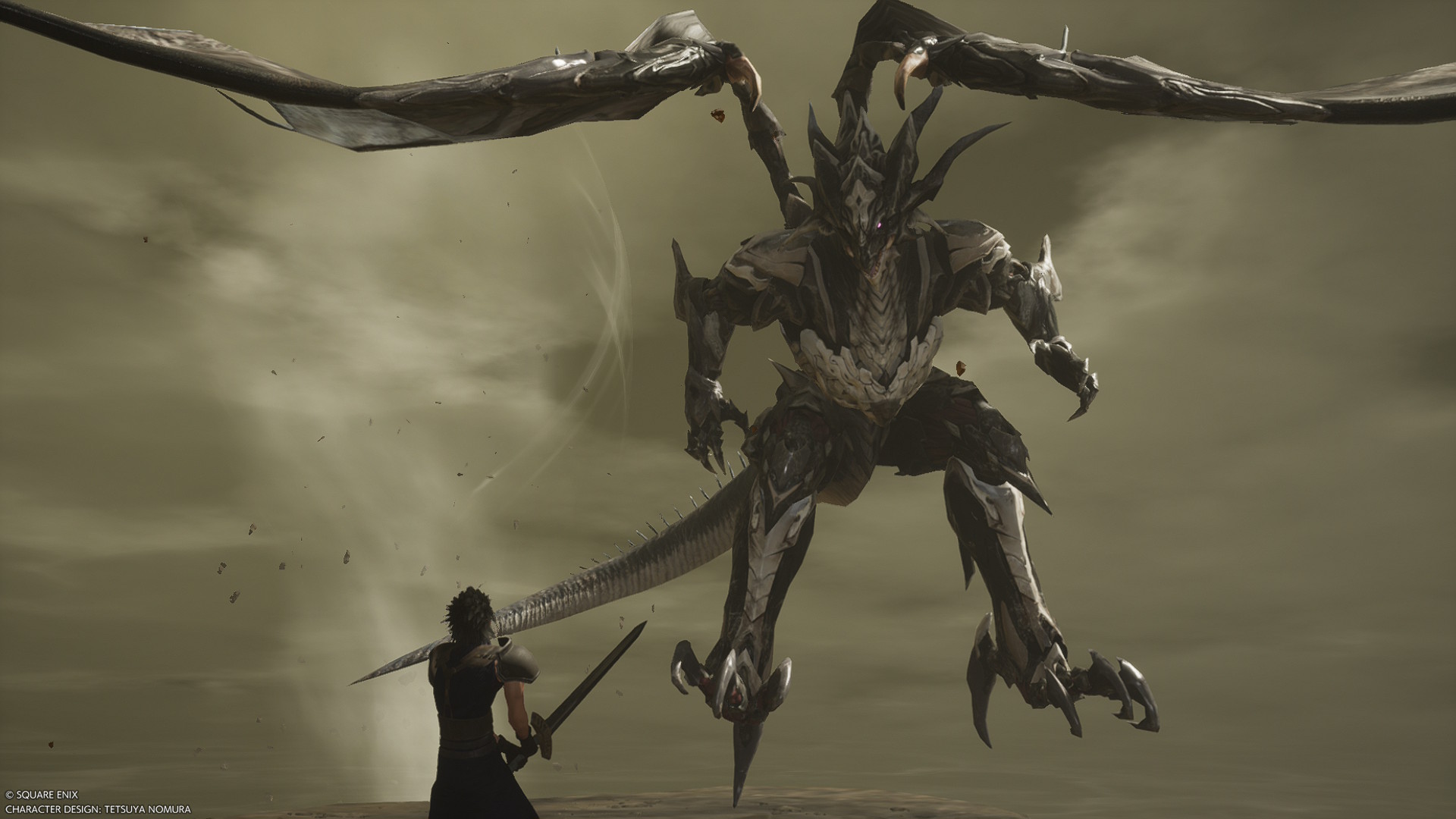
Don’t worry Zack’s got this.
By condensing everything through this narrow perspective, it leaves little for its own characters and story to explore anything that branches beyond minor events and flashbacks. This makes Zack a likable enough sponge, soaking in all this knowledge, but ultimately being naive and unimportant enough to not leave any lasting direct impact to the characters featured in his own game. For example, Zack learns about the villains’ motivations through throwaway lines, even when these characters are supposed to be close with him. It is like his agency doesn’t matter as a switch is flipped and suddenly everything crumbles around him. The dialogue is so nonchalant and dry that it uses flowery language that means nothing to try and shoehorn a pretext for these characters into changing without making any of it feel organic. Everything happens so suddenly it takes the urgency and excitement out of building to these climactic situations and leaves a hollow feeling of “that’s it” where it could be so much more.
There is little respect for player investment in Crisis Core -Final Fantasy VII- Reunion. Villain motivations, character backstories, and the worldbuilding in general are presented as matter of fact. Characters that shouldn’t know each other logically are suddenly friends, the former SOLDIERs shift personalities on a whim and will wax poetic rather than give any clear sentiment that can be followed as they learn something offscreen and are just antagonists now. The why of it all is still not explored, making it a whole lot of dialogue and character development that sheds no new light on any of the questions players would expect answered in a prequel. Zack and Aerith are given a chance to connect, and their relationship is the sole bright light in this as their relationship is given a chance to be explored through their natural chemistry together.
Exploration has its own issues, as the time between missions is mostly confined to a few locations within Midgar, which, after a while, gives a sense of sameness that it never grows past. Diving into the side quests of Crisis Core -Final Fantasy VII- Reunion does not give much respite from this feeling. There are a few new locales to explore, but they are mostly sectioned-off areas that are found in the main game before beating a specific enemy. Treasure chest amounts are shown onscreen during every mission, making it easy to zip around to collect more consumables or materia, little equipment stones that add spells or abilities that make for a stronger Zack.
Zack doesn’t even get the decency of straightforward power progression. Levelling up is done after an unknown amount of experience is gained and is based on the whims of the random DMW – Digital Mind Wave – slot reels that spin in the background during every combat and take a small bit of currency that comes from defeating enemies. If all three slots land on 7’s, then Zack levels up, and the pacing is so odd, it’s hard to tell if grinding actually helps improve Zack beyond levelling materia. The DMW slots otherwise can line up to provide buffs or limit break skills for Zack to use in combat.
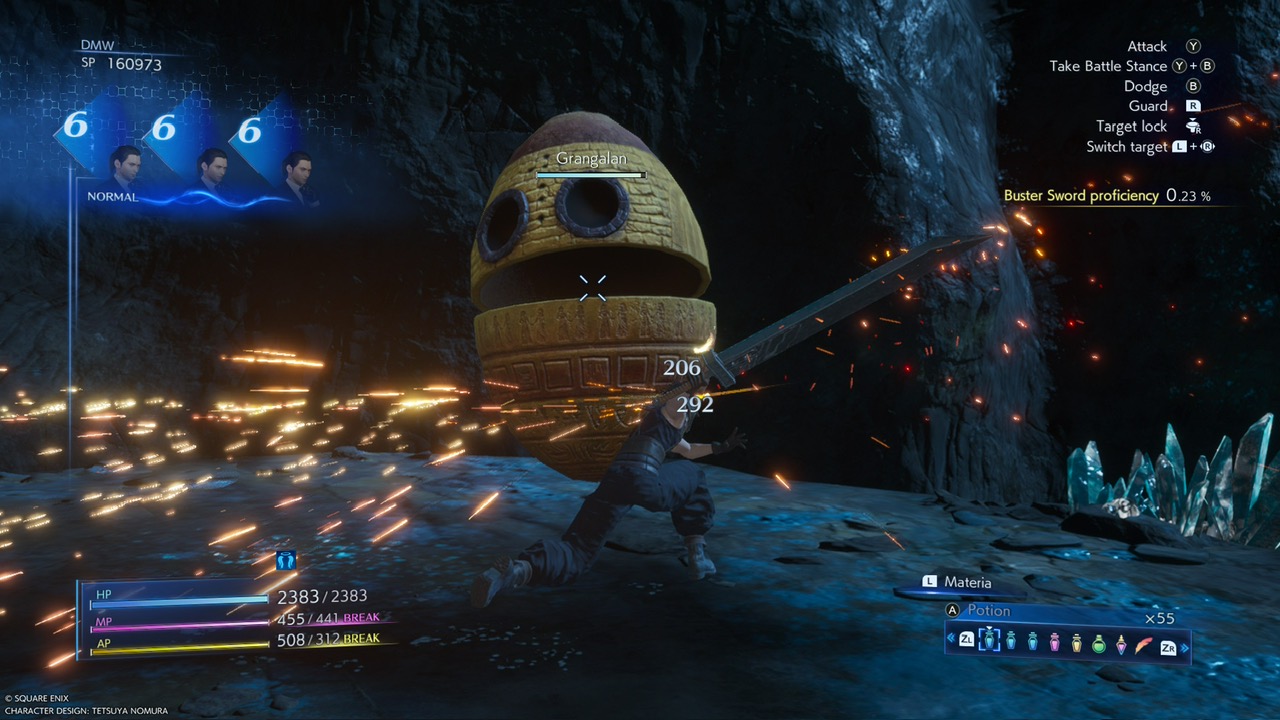
The detailed visuals and combat have their enjoyable moments.
Materia is the one way players can actively customize and strengthen their plucky protagonist. Zack is able to equip any four materia in the early game, with upgrades going up to six in total. Levelling these materia allows them to create easier fusions into stronger spells after they are mastered, which occurs as randomly as Zack’s levelling up. Fusing is a simple system to manipulate; especially if players are collecting the treasure found in missions, it will lead to an abundance of possibilities to make, which can be quite fun to see in action.
Zack is able to move quickly when combat begins; enemies feel like they take a few seconds to gather their bearings. This brief pause allows players to figure out options on how to approach combat based on the materia loadout they have equipped. Other than materia, Zack can mix in weak sword strikes while waiting for the DMW reels to align into special buffs like no MP or AP cost, or for powerful limit breaks. DMW can also land on nothing, so relying on it is a fool’s game, making consumables very important to stay alive, even though enemies do like to hit Zack as he stands still drinking a healing potion.
Once players start hitting weaknesses, most enemies just melt like heated butter, with the occasional difficulty spike making it so their strikes go through Zack in a similar fashion. There are guard and dodge buttons that help mitigate damage, but ultimately battles are over in a flash. This runs counter to the gameplay’s main attraction of the DMW slots, and for much of Crisis Core -Final Fantasy VII- Reunion the only real time its signature combat option gets used is when players purposely prolong the fight. Still, these limit break and summon animations are always a joy to see play out. Some of them, before the move is performed, come with cutscenes of Zack’s remembrances of the limit break’s associated character.
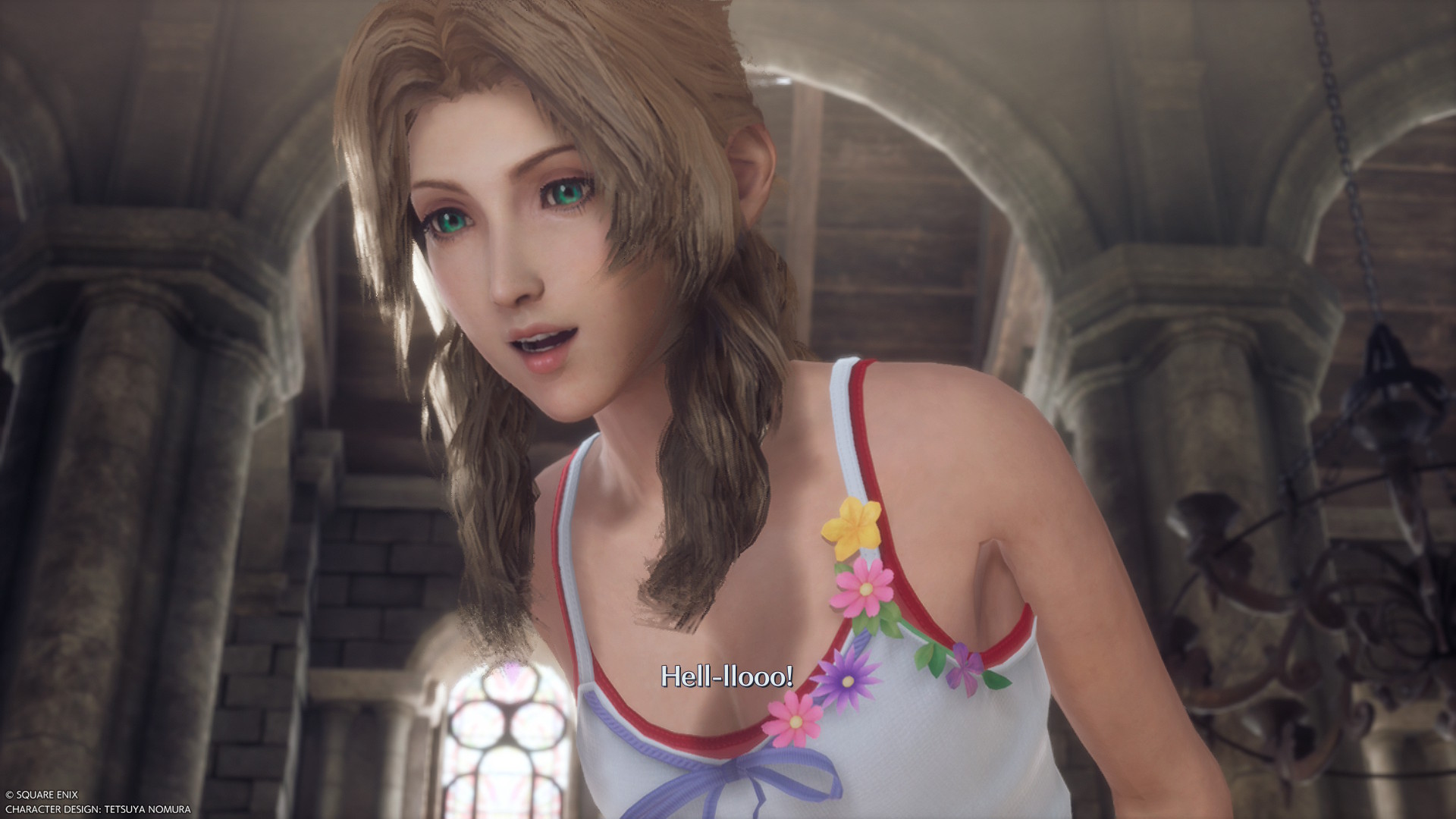
Aerith is always a joy to see onscreen.
The character designs and mannerisms of Crisis Core -Final Fantasy VII- Reunion are very stylish and fit well within the established franchise. The characters who have a role to play in the title all look like the embodiment of an edgy form of cool. Midgar is an impressive city, showcasing the contrast of the slums and the high-class buildings of Shinra that is best utilized when taking in sights from other rural locations. The wonderful visuals run flawlessly with few loading times even in handheld mode for the Switch 2.
The soundtrack stylistically adds a lot of personality to Zack as an extension of intent that makes the character grow beyond the dialogue on screen. The exploration of rising guitar mixed with synths and piano gives way to an idealistic and strong-willed young SOLDIER in interesting ways. It’s hard to fault the voice acting; the actors are given little to work with in the dialogue, though everything is delivered with over-the-top seriousness that is almost comical until realizing how little the lines mean. The cadence does add edge to the villains, sympathy to the whole cast as everything falls apart, and a playful sense of innocence to Aerith and Zack that makes them easy to root for.
Crisis Core -Final Fantasy VII- Reunion is a prequel that had a lot it could draw from, but whose execution was a total letdown. The visuals and music try to do their heavy lifting to add gravitas, but the poorly paced combat sections and a lackluster narrative that punishes player investment make it feel underwhelming. This is a prequel that added nothing of substance to the established lore and it is hard to justify its existence beyond the novelty of the DMW reels and the opportunity to spend more time with Aerith and Zack.
Disclosure: This review is based on a free copy of the game provided by the publisher.

Visually impressive
Soundtrack does a lot of heavy lifting in helping shape the story
DMW reels have their interesting moments
Dialogue feels like regurgitated fanfiction
Plot adds nothing to the franchise ethos
Uneven combat difficulty wildly varies, either way it's over too fast for much use of DMW reels mechanic





Recent Comments