Scale vs. Space: How Final Fantasy XVI Reclaimed the Cinematic Epic
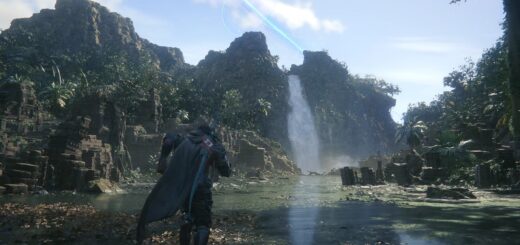
We currently live in an era of endless content and live services, where the value of a game is often measured by the square footage of its map or the infinite nature of its gameplay loop. In this landscape, the epic has become almost synonymous with the open world. We have been conditioned to believe that freedom of movement is the same thing as the scale of a story. Final Fantasy XVI stands as a glorious anachronism. It possesses the DNA of the early 2000s, like the great linear blockbusters of the PlayStation 3 and Xbox 360 era, specifically through its a focused, director-driven structure, but it is executed with the power and graphical fidelity of modern hardware. It reclaims a form of cinematic spectacle that the industry largely abandoned during the open-world gold rush. It did not try to compete with endless sandboxes. Instead, it retreated into a more disciplined, uncompromising form of storytelling.
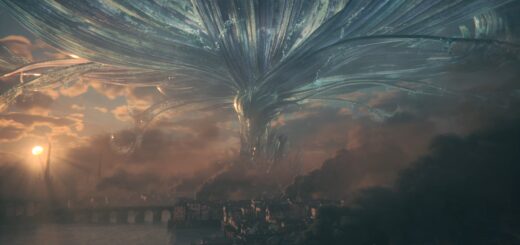
The greatest gamble of Final Fantasy XVI was prioritizing cinematic linearity. By trading the freedom to wander, it delivered earth-shattering moments that an open world simply cannot script with such surgical precision. While other games offer horizontal value through vast but repetitive spaces, this journey offers verticality. Every hour is a brick stacked on the previous one, building a narrative monument rather than a sprawling, flat playground. This focus extends to the combat, which is intrinsically tied to the story’s linear progression. Unlike open-world games, where a player might find a broken build in the first ten hours, Final Fantasy XVI introduces new Eikon abilities until the very end. This ensures the gameplay never stagnates and every power gets its moment in the spotlight.

By trading the freedom to wander, Final Fantasy XVI delivers earth-shattering moments scripted with a surgical precision that an open world simply cannot match.
While critics argue you can button mash the single basic attack through the game, doing so is a disservice to the design. The experience is fun-locked behind mastery. Mashing is inefficient and dull, whereas synergy, learning how abilities interact and switching Eikons on the fly, is where the epic feeling translates to the controller. High-level play turns Clive into a god-slaying machine. Mastery allows for a choreographed dance of destruction that matches the cinematic scale of the Eikon fights themselves. However, to achieve this level of narrative density, Final Fantasy XVI has to strip away the traditional things that fans have relied on for decades. This was not a mistake but a sacrifice. While gone are the complex elemental weaknesses, status ailments, and deep equipment builds, in their place is a streamlined system that prioritizes action. This keeps the pace lightning-fast, but may leave some feeling adrift, and the gear often feels like a secondary thought, a minor number bump rather than a transformative choice.
Furthermore, the game eschews the traditional RPG endgame of hidden super-bosses and secret dungeons, instead asking the player to find longevity through the mastery of combat in Final Fantasy Mode and New Game Plus. This is a character-action philosophy applied to a role-playing world, and it explains the game’s most controversial departure: the move away from a controllable party. While critics may see the solo-protagonist focus as a grab for mainstream accessibility, it serves a deeper narrative purpose by forcing the player to inhabit Clive’s singular burden. By removing party management, the game manifests his isolation and the literal weight of the Eikons he carries alone. The tactical satisfaction of class synergy hasn’t been deleted; it has been internalized. Instead of switching between characters, you switch between Eikons, and the party is essentially lived out through a shifting move set.

Class synergy isn’t lost; it is internalized. By swapping Eikons rather than party members, the classic team dynamic is seamlessly expressed through a single, shifting move set.
If Final Fantasy XVI is the last of its kind, it is because the industry is drifting toward aimless wandering as a primary mechanic. But if it is a blueprint for the future, its legacy will be the reclamation of the guided journey. It proves that scale is not space and that an epic is a measurement of spectacle and emotional weight, not square footage. A story is often most powerful when it is not afraid to end. Ultimately, Final Fantasy XVI reminds us that a true fantasy epic does not need to be 200 miles wide. It just needs a soul, a sword, and a story that knows exactly where it is going. By stripping away the traditional busywork of the genre, the grinding for stats, and the elemental spreadsheets, it makes its intent clear: the story is the destination. For some, the lack of traditional endgame meat is a bridge too far. But for those who engage with its systems, the reward is not a secret sword found in a cave; it is the realization that the complexity lived entirely within the mastery of the Eikons. It does not give you more to do; it gives you more to be. This is the high-fidelity proof that a curated path can lead to a much grander destination than an open field.




Recent Comments