The Legend of Heroes: Trails in the Sky 1st Chapter Impression
Seeing Liberl and its characters in Nihon Falcom’s latest engine is a delight, and the game has lost none of its incredible charm in the transition.
Nihon Falcom is finally returning to the Kingdom of Liberl in The Legend of Heroes: Trails in the Sky 1st Chapter, a full remake of the first title in its marathon interconnected Trails series. Ahead of its release next month, Nihon Falcom and western publisher GungHo Online Entertainment have given players the opportunity to try out the game’s prologue demo, which lets them go through the opening half-dozen-plus hours of the game and get to know protagonists Estelle and Joshua Bright. RPGamer was given early access to the demo to report on how the 3D remake is shaping up.
The game begins with the young Estelle Bright welcoming her father, Cassius, home on the outskirts of the town of Rolent. However, rather than being alone, he comes in carrying an injured young boy. After some persuasion, Estelle is brought on board with the idea of him living with them, though not before she establishes her role as boss of the household. After this opening scene, the game picks up five years later as Estelle and Joshua, having recently turned 16, embark on their final training before becoming junior Bracers, following in the footsteps of Cassius.

Estelle’s role as house boss is clear from the start.
Trails in the Sky 1st Chapter is very faithful to the original game in its content. The prologue’s story is effectively unchanged, with all of the quests playing out in the same way. The localisation has been refreshed but remains excellent, which takes advantage of the full voice acting now in all of the game’s main story scenes. The prologue therefore comes with the same narrative caveat as the original release in that it very much eases players into the story. This comes with the knowledge that the game soon picks up the pacing, but these early hours are very chilled and lacking the huge amount of intrigue that those who have come in later may be accustomed to. Where the opening sections do excel is in establishing the characters and relationships between Estelle, Joshua, and other major characters like Cassius and Scherazard, as well as in setting up the nature of the Kingdom of Liberl itself. Even if it is a bit slow to ramp up the adventure, it’s an immensely charming place to be.
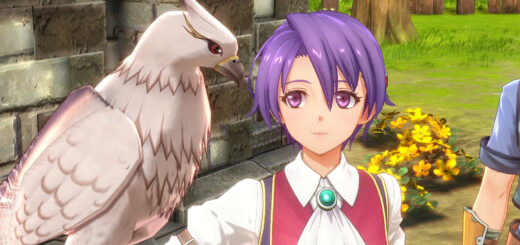
The biggest changes naturally come to the graphics and gameplay as the game ditches the sprite character, isometric view and grid-based combat in favour of the free-roaming newer titles. Trails in the Sky looks amazing in Nihon Falcom’s latest engine. Particularly noteworthy are the details in the lightning, shadows, reflections, and textures, which look especially fantastic on the character models. It’s also great to hear the familiar themes and motifs, such as “The Whereabouts of Light”, once more. Everything still feels unmistakably “Trails”, with the graphics and music helping to pile on the charm of the setting and narrative. As expected of the series, the English voice cast is very strong, with Stephanie Sheh and Johnny Yong Bosch as Estelle and Joshua (returning from a much more limited scope of work in the original) naturally given the bulk of the work in these opening stages, but giving excellent introductions to the characters. The game’s UI is interesting as it gives off a feel of blending modern and classic elements to it, with some neat little touches like the original sprites appearing in the brief loading screens.

The game looks fantastic, particularly its lighting, shadows, and character textures.
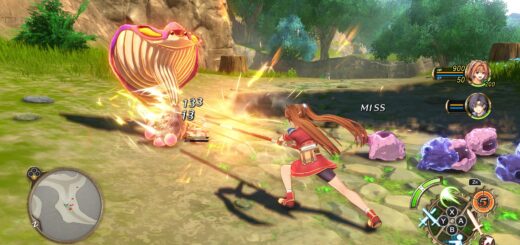
Combat in Trails in the Sky 1st Chapter borrows elements from Trails of Cold Steel and the most recent Daybreak titles. The latter games’ influence comes in the real-time action system. While exploring, players can attack (and be attacked by) enemies on the field, using regular attack combos and a charged special attack to sometimes directly defeat, but more commonly stun enemies before switching to the turn-based system and gaining a first-turn advantage.
The turn-based combat itself is more closely akin to that of Trails of Cold Steel. The regular elements are all there: each turn a character can use a regular attack, one of their unique Crafts, a magical Art, or an item. Arts are notable in their comparable effectiveness to later games, and players will need to switch between which attacks they use based on the enemies they are facing, as well as considerations of cast times, while status effects also remain quite powerful. The game makes use of the Brave Point system first introduced in Cold Steel, whereby any enemy who is stunned or receives a critical hit allows for a follow-up attack. One key element is the stun gauge, shown below each enemy’s HP bar. Breaking this provides crucial opportunities to either recover or go on the offensive. The series’ S-Crafts mainstay ultimate attacks are also there to give players the option for a potentially decisive blow, provided they manage their Craft use to keep their SP up.
Character growth is again in-keeping with the series formula. Leveling up is automatic, and equipment helps boost stats as well as providing passive bonuses in additional stat increases, status effects resistance, and so forth. The Orbment system is almost refreshing in its comparatively simplicity to later games, yet still provides plenty of options for strategic ability customisation. These devices act as the conduit for magic in the series; this generation has each character’s Orbment gets six unlockable slots. Slots can be unlocked by giving Sepith obtained primarily by defeating monsters to special vendors. This Sepith is also used to create Quartz that is slotted into those slots. The Quartz not only provide their own passive bonuses, but the elemental values of the Quartz also determine what Arts that character is able to cast. It gives players a good amount of strategic control that can prove important at times, allowing them to set up for particular situations, such as where enemies may be particularly evasive, without being overly complicated or requiring huge amounts of work.

As in the Daybreak games, action and turn-based combat combine while explore.
As has been a standard feature of the series for a while now, 1st Chapter Remake comes with five difficulty settings that can be switched between at any times, and the option to retry any failed battle with weakened enemies. The Normal difficulty provides a decent challenge where normal enemies can defeat the player if they get careless, with one battle in particular in the prologue providing a very strong wake-up call. It’s refreshing to see that even with some of the flashier elements of the recent games taken out, the Trails combat formula still remains incredibly enjoyable and easy to pick up, but still requires plenty of thought and paying attention to the situation.
After playing through the prologue, I am incredibly excited to dive into the rest of The Legend of Heroes: Trails in the Sky 1st Chapter. Seeing Liberl and its characters in Nihon Falcom’s latest engine is a delight, and the game has lost none of its incredible charm in the transition. Players can now try out the prologue demo for themselves ahead of the game’s worldwide release for PC, PlayStation 5, and Nintendo Switch on September 19, 2025.
Disclosure: This article is based on early access to the game’s prologue demo provided by the publisher.





Recent Comments