The Legend of Heroes Series: Where to Start? 2025 Edition
Developer Nihon Falcom is well known by RPGamers for two long-running series: Ys and The Legend of Heroes. Back in 2021, we provided our original look at The Legend of Heroes ahead of a selection of releases coming in the following year, with several of the staff members at RPGamer have put together their thoughts on the games and the different starting points for first-time players. Now in 2025, a number of new titles have since arrived or are on the horizon. Entires for games that had been previously released internationally are unchanged from our original article, with this update covering all those games that have been announced or released in the intervening time.
By Alex Fuller, Joshua Carpenter, Matt Masem, Luis Mauricio, and Elmon Dean Todd
A Brief Introduction
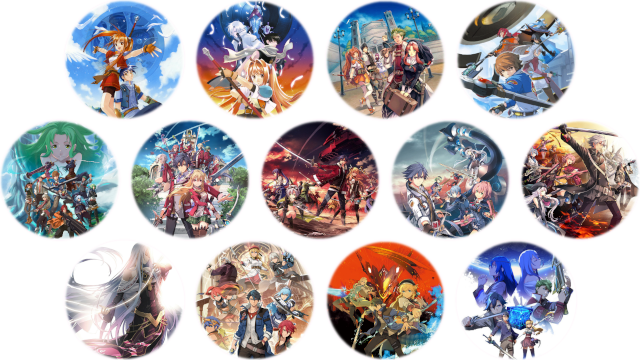
Nihon Falcom’s The Legend of Heroes series is primarily known for its interconnected Trails/Kiseki games, of which there are currently twelve titles, but its history runs all the way back to Dragon Slayer, a series touted as the forerunner of action JRPGs. The first two games with the Legend of Heroes moniker — Dragon Slayer: The Legend of Heroes and Dragon Slayer: The Legend of Heroes II — are considered the sixth and seventh games of that series, though by that point they had already diverged from action combat to the turn-based systems fans are familiar with.
One area that The Legend of Heroes is notable for is localizations. Dragon Slayer: The Legend of Heroes did get a western release in 1992, but after that it took until 2004 and The Legend of Heroes: A Tear of Vermillion, a remake of the fifth game (and second entry in the Gagharv trilogy), for it to appear in the west again. Although all three Gagharv PSP remakes were localized, Bandai did such an atrocious job — more on this later — that it wouldn’t have been surprising if Nihon Falcom abandoned any future international release attempts.
Fortunately, XSEED Games came on board for Trails in the Sky and did exactly the opposite of Bandai. The localizations of the Trails in the Sky games were — and still are — a gold standard, bringing many fans on board and inspiring a new generation of localizers. This did come with some timing issues, as the incredible amount of text and the time needed to give it the full effort it deserved meant that by the time Trails in the Sky Second Chapter and Trails in the Sky the Third made it out in the west, the PSP had been fully replaced by the Vita. NIS America took over for Trails of Cold Steel III and all subsequent mainline western releases (with the exception of the imminent Trails in the Sky 1st Chapter remake), but has carried on where XSEED Games left off. As of January 2026, western RPGamers will finally be all caught up with the main series when Trails Beyond the Horizon arrives, following a simulteanous worldwide release for the Trails in the Sky 1st Chapter remake.


At this point, The Legend of Heroes is synonymous with the Trails series, especially in the west, and Nihon Falcom doesn’t have any intention of changing that any time soon. All of the mainline Trails games take place on the continent of Zemuria and, including the most recent Japanese release, they currently cover a period of around seven years. The continent is currently in a place of upheaval somewhat reminiscent of the industrial revolution following the invention of Orbal technology, which is based on self-replenishing energy generated by gemstones called Septium. Within Trails there are more sub-series of titles, each largely based within one of the nations or powers within Erebonia. Trails in the Sky is set in the largely peaceful kingdom of Liberl, while the Trails of Cold Steel games take place in its domineering northern neighbour, the Erebonian Empire. However, events in one place often have drastic and major influences on the goings-on elsewhere, leading to a complex assortment of groups, factions, and plot threads as numerous characters put in important appearances throughout.
Considering this, it’s certainly no surprise that any newcomer to the series would be intimidated by the sheer amount of lore and important people that they might have to catch up on. Fortunately, this is something that Nihon Falcom is acutely aware of and — despite the fact there are eleven games telling the chronological, interconnected story of Zemuria — the developer has actively designed it to have multiple entry points. While some of the larger story elements may require additional efforts to fully wrap one’s head around, each arc is well contained and players are made aware of all of the important details. Of course, newcomers may be missing out on the history and relative importance of some characters to events elsewhere, particularly those that made their debuts in previous titles, but the games largely do a fine job sorting the wheat from the chaff.
For our Where to Start guide, we have listed the Trails games in their Japanese release order (with one particular obvious exception) and group them where appropriate given their story arcs. After that we’ll take a quick look into the Gagharv trilogy and Dragon Slayer entries, before finishing off with a few spin-offs. We hope you enjoy learning and reading about the series and invite our readers to provide their own thoughts in the comments.
Trails in the Sky First Chapter & Second Chapter


Available on: PC, PlayStation Portable
Japan-only: PlayStation 3, PlayStation Vita
(1st Chapter Remake covered below)
Released as The Legend of Heroes VI: Sora no Kiseki in Japan, Trails in the Sky is the start of the Zemuria saga and the Trails/Kiseki series as a whole. It takes place in the Liberl Kingdom and puts players in the shoes of Estelle Bright and her adopted brother Joshua, who join the Bracer’s Guild to take on quests to help the local populace. Through these quests, Estelle and Joshua eventually uncover the major plot points of the game whilst exploring Liberl, complete with rich and immersive world-building. The second game, Trails in the Sky Second Chapter, picks up directly after the first game, where Estelle faces an organization causing trouble across Liberl, all while traversing the locations of the first game all over again.
The gameplay in Trails in the Sky revolves around characters traversing a field and town map in the traditional JRPG style. Combat in both games consists of a turn-based system incorporating a grid allowing for both character and enemy movement and area-of-effect abilities to play a role while characters have normal melee attacks, magical attacks called Arts, and skill attacks called Crafts. Turn order also plays a key role with bonuses assigned to certain turns, and a large part of the strategy comes from players manipulating the turn order to their advantage. The second game utilizes essentially the same system, albeit with a few modifications such as Chain Crafts. The pacing of both titles leans towards the slow side, allowing players to relax and explore the world at their leisure. The true gems, however, are the story, the rich lore, and, of course, the music. The theme song, ‘The Whereabouts of Light’, has a very memorable melody that is consistent with the quality of music Nihon Falcom is known to produce, which remains a consistent highlight across the entire Trails series.
The two games originally released in Japan on PC in 2004 and 2006, respectively. The west did not see the first title until 2011 when it was ported to the PlayStation Portable and localized by XSEED Games, with a localized PC release coming in 2013. Trails in the Sky SC managed to get a digital release on PC and PSP in 2015, almost ten years after it debuted in Japan. The later PC releases of these games are the superior experiences, as they incorporate higher definition assets from the Japan-only PS3 versions and have been updated with modern conveniences such as a turbo-mode which makes traversing Liberl a much quicker endeavor. Nonetheless, for those that value portability for lengthy JRPG experiences, the PSP versions have the same narrative content as the PC releases. For someone looking to get into the series, Trails in the Sky is a mighty fine entry point provided one doesn’t mind its slow start. Events are less directly important to subsequent titles than other entries, but it’s an ideal introduction to the world as well as the series’ major themes and story threads.


Trails in the Sky 1st Chapter Remake

Releasing on September 19, 2025, for PC, PlayStation 5, Nintendo Switch
As of 2025, the Trails in the Sky 1st Chapter remake is the most recent title in the series (though it releases in the west before Trails Beyond the Horizon). With Nihon Falcom placing the series at a major turning point with the latest entry, it spied an opportunity to return to its beginnings and give it much more than a fresh coat of paint.
Trails in the Sky 1st Chapter is a bit of a mixture of the old and new for the series. It features the new 3D engine used for Trails through Daybreak, as well as the mixture of real-time and turn-based combat that game introduced. The combat is not expected to be as complex as the newest games in the series, with its orbment systems reflecting being from an earlier technological generation, but that’s not necessarily a bad thing as it could easily allow for snappier combat and a greater focus on more strategic elements over straight mechanics. Either way, there’s plenty to look forward to seeing when its enchanting locations and events are remade in full 3D.
Trails in the Sky 1st Chapter looks set to be an ideal jumping-on point for newcomers, as well as a fine treat for long-time series fans. Players can get an idea of just why the series has become so popular and it all begins with the fantastic charm and worldbuilding that this first game sets up, aided by arguably one of the best protagonists in the business in Estelle. The main downside will be the wait for any expected 2nd Chapter remake as they very much form a singular duology. [2026 update — Fortunately, the wait will not be too long as Trails in the Sky 2nd Chapter is scheduled to release later this year.]


Trails in the Sky the 3rd
Available on: PC
Japan-only: PlayStation Portable, PlayStation 3, PlayStation Vita
After wrapping up Estelle and Joshua’s trails across Liberl, Falcom still wasn’t quite ready to move on to new locales on the Zemurian continent. Trails in the Sky the 3rd is a unique game in the series — not quite sequel, not quite epilogue — but sets up the events to come in both Crossbell and Cold Steel while also having a compelling narrative of its own. The 3rd stars Father Kevin Graham, the corny but lovable traveling priest who was a party member from time to time in the first two Trails in the Sky games. Kevin is a special agent in the Gralsritter, an order within the Septian Church tasked with hunting down magical artifacts. A new mission brings him to Liberl, along with his squire and childhood friend Ries Argent, a mere six months after the events of Second Chapter when a new artifact, the Recluse Cube, has been discovered.
During their investigations, the cube activates and transports Kevin and Ries to a mysterious different dimension called Phantasma. The dimension is a large dungeon that is filled with Sealing Stones that contain familiar faces from the first two games, and they join Kevin and Ries in their efforts to find a way out of Phantasma. The dimension also contains doors that have mini-games behind them or tell side stories related to the different characters that are found. It’s an odd design that allows the developers to jump around and elaborate on different events and bits of lore while introducing new characters and storylines that become central to the overall Trails series without dealing with the constraints of a linear narrative and a set lead cast. While players are getting a heavy dose of lore from the doors, the main story slowly peels away Kevin’s backstory in a way that makes him one of the best characters in the series.
Trails in the Sky the 3rd is a difficult game to make a recommendation on. It’s the least accessible localized game, only available in English on PC (though it should be noted that the system requirements are minimal). The structure does not lend itself to newcomers as the game expects players to have familiarity with the characters, events, and locales. However, Kevin is one of the best characters in the series and his story in 3rd stands on its own as strong and compelling. Further, Trails in the Sky the 3rd helps set up the next two arcs in the series with lots of characters and story beats getting introduced here and later fleshed out in Crossbell and Cold Steel games. The integration with the events in Crossbell is especially tight, with a number of plot points that are introduced in 3rd being referenced in the Crossbell games without being rehashed for newcomers’ benefit. So, TitS 3rd isn’t the best place to start, but even if a player has passed on FC and SC to move on to the Cold Steel games, it’s still recommended to give TitS 3rd a try. TitS 3rd also works well to play between Cold Steel II and III, serving to introduce a number of characters that play supporting roles in the latter two Cold Steel games.


Trails from Zero & Trails to Azure


Available on: PC, PlayStation 4, Nintendo Switch
Japan-only: PlayStation Portable, PlayStation Vita
Trails from Zero and Trails to Azure, known in Japan as Zero no Kiseki and Ao no Kiseki, are the two titles that make up the Crossbell duology. Crossbell is a semi-independent city and economic zone located on the border between the large Zemurian powers of the Erebonian Empire and the Calvard Republic. While it doesn’t have a proper military, a Guardian Force protects the border and a police department deals with issues within the city. As the local police have garnered a reputation for corruption, Trails from Zero opens with the department establishing a Special Support Section to engender goodwill with the populace.
The Special Support Section’s charter allows for anyone in Crossbell to put in requests to the police, from exterminating monsters on the local roads to delivering packages or finding lost pets. If this sounds familiar, yes, it’s pretty much what Bracers do, and there are Crossbell PD officers that will point this out regularly to the four founding SSS members. Those members are: Lloyd Bannings, recent Crossbell Police Academy graduate; Elie MacDowell, granddaughter of the mayor; Tio Plato, a young female Orbal weapons expert; and Randy Orlando, a former Guardian Force member. The starting cast is excellently written, and each goes through personal story arcs throughout the games that make players really get to know their motivations, hopes, and dreams for themselves and Crossbell.
Gameplay for the Crossbell duology is a blend of Trails in the Sky and Trails of Cold Steel, understandable as these were developed between the two. The gameplay loop involves a chapter system with set days allowing players to complete optional requests while working on certain plot goals, all while overarching story beats weave their way through. Additional playable characters drop in and out throughout the games, and even if they don’t crack the four-person party, the standby characters will often jump into battles to use a special ability at mostly opportune times. Battles are mostly traditional turn-based affairs that take place on a grid. Characters move around and use regular attacks, Arts (magic), and Crafts (special abilities). The Arts and Crafts each have their own pool of points and a boost meter fills as battle progresses, allowing for additional moves and instant Arts casting. By utilizing all the battle system parts effectively, even bosses with massive pools of HP can be taken down efficiently and effectively.
The genius of the Crossbell games is how compact, yet rarely repetitive they are. The stories focus on a single city and a few small outlying towns and areas. Players will get to know the NPCs and areas well as they’ll encounter each dozens of times throughout the games, but with how the plot develops, this is a good thing. The encounters don’t seem repetitive as things are constantly taking place in Crossbell. Nihon Falcom’s excellent writing is on display from the first moment you strike up a conversation with the local Orbal saleslady to the final encounter with the neighborhood cat.
Despite being the start of a new arc, the Crossbell games are perhaps not the best place to jump into the Trails series. There are plenty of returning characters from the Trails in the Sky trilogy that play important parts in both Zero and Azure. While the games do a decent job of explaining most of their involvement along the way, there are plenty of things players will miss out on without context. In addition, the two Crossbell games take place concurrently with the first two Cold Steel games. While the Cold Steel games reference Crossbell a bit, the Crossbell duology flat out spoils major plot points of Cold Steel and outright states one of the big twists that takes place in Cold Steel II. While Trails in the Sky is not necessary to enjoy the Crossbell duology, the Crossbell games would be better saved for after Cold Steel II. Nonetheless, they are still great games that hold up incredibly well.


Trails of Cold Steel I & II
Available on: PC, PlayStation Vita, PlayStation 3, PlayStation 4
Japan-only: Nintendo Switch
Initially released in Japan in 2013 and localized for western RPGamers in 2015, Trails of Cold Steel marked the debut of a new arc and takes players to a new nation, the Erebonian Empire. It’s the longest Legend of Heroes sub-series so far, with four games that can each exceed 80-plus hours, though it is divided into two distinct arcs with a time-gap between them. While many elements of preceding games — such as the use of quartz, a turn-based battle system, and the division of the story into chapters — continue as staples, others are transformed or expanded, such as fishing, cooking, and bonding with other characters. Visually, the series shows a more modern aspect, moving far from traditional sprite-based look. In addition, voice acting takes the series to another level. Though the beginning of this new arc is ideal for newcomers, they need to know what they are getting into: story-rich, time-demanding games.
In Trails of Cold Steel, players take on the role of a very likeable protagonist called Rean Schwarzer, a first-year student of Thors Military Academy. The game features a colorful array of teammates, teachers, and foes, with players able to have bonding moments with some of them. The story is one of its strongest assets, including a number of unforeseeable events and plot twists, and is divided into chapters marked by school field trips, with players getting used to the pacing after a little while. While those who haven’t played previous games won’t have problems understanding all the events, those who have played previous entries are rewarded with references to guilds, Bracers, and other things that appeared in earlier Trails games. Players explore many different locations, with a considerable number of quests with well-written characters and side activities such as playing cards and riding horses. The turn-based battle system is excellent, and the game offers a long yet pleasing adventure. Trails of Cold Steel is a great starting point because it is an iconic, top-class RPG that nicely introduces newcomers to the vast universe of elements that the series has to offer while leaving players thirsty for more. Some players will be intrigued about the game’s origin and will want to play previous entries, and the surprising ending will encourage others to play the sequel to tie up the many loose ends.
First released in 2014 in Japan and localized in 2016, Trails of Cold Steel II is a direct sequel that starts immediately after the unexpected ending of the first entry. Like with the other second-parters in this feature, even when the game does explain the main events and contains flashbacks, newcomers can definitely feel lost and overwhelmed since the cast is enormous. The game plays mostly the same as the previous one while making small additions: new mech battles, tweaks in the main battle system, and a airship to fast travel to other locations, among others. There are some minor differences between the versions, though none that relate to the content. The games were originally released on PS3 and Vita and supported swapping save files between the versions. However, the PS3 and especially the Vita versions do suffer from frame rate issues in some areas. The later PC and PS4 versions solve those performance issues and add other conveniences such as a turbo mode.
Going with Trails of Cold Steel and Trails of Cold Steel II in that order is a good way to jump into the series, though perhaps with a palate cleansing in between because both are notably long time investments. Following Trails in the Sky, Trails of Cold Steel is the next best place to jump in from a narrative perspective, as it provides the beginnings of most of the major threads playing pivotal roles in the other titles in the series.


Trails of Cold Steel III & IV
Available on: PC, PlayStation 4, Nintendo Switch
Trails of Cold Steel III is the title that saw NIS America take over localization of the series, so the company saw fit to ensure continuation by bringing several of those who had worked on previous western localizations into the fold. The game takes place a bit over a year after the events of Cold Steel II, and the Erebonian Empire has expanded, taking over both the city-state of Crossbell and the northern region of North Ambria. Rean Schwarzer returns as the main protagonist and is recruited to become an instructor at Thors’ newly established Branch Campus. It soon emerges that the Branch Campus is not exactly an expansion and the Empire’s powers seem happy to have it that way — keeping both students and faculty away from the main campus where Crown Prince Cedric has just enrolled.
Trails of Cold Steel III and Trails of Cold Steel IV are where the casts of the previous games, including Trails in the Sky and the Crossbell arc, fully converge. While it introduces a new set of characters along with the new Class VII, the old Class VII is ever present, and the ultimate conclusion to events in Cold Steel IV necessitates the involvement of nearly all major characters across Liberl, Erebonia, and Crossbell. The sheer amount of character and narrative depth is on full display, and the payoff of that effort comes with both games ensuring that players are run through an incredible roller-coaster of emotions.
Although Trails of Cold Steel III and IV end up carrying remarkably similar structures to the previous two games, they at least let players visit new locations around Erebonia not explored in those titles. An understandable consequence of four lengthy games with the same protagonist, there are times where certain traits and elements wind up being overly familiar — Rean’s fawning female fanbase being one trope that gets to be a bit much — but otherwise these showcase what Nihon Falcom does best: fully bringing to life the setting and making full use of its huge cast. Mechanically, combat is a minor evolution on that of the previous games, though Nihon Falcom eschewed the ring-theme command UI in favor of actions assigned to the D-pad and face buttons, which is intuitive and makes it quick to navigate the available options. The game also makes good use of the alternative combat involving mechs.
Trails of Cold Steel III and IV are really the culmination of what came before them. While Trails of Cold Steel III is a valid entry point to the series, it’s hard to recommend doing so if the possibility to jump in earlier is available. Although Nihon Falcom does as good a job as can be done to reconcile newcomers with past events, jumping in here means missing large parts of the setup, and though all of the required details can be imparted, it’s really not the same as coming to know the characters and world through the previous experiences.


Trails into Reverie
Available on: PC, PlayStation 4, Nintendo Switch
Trails into Reverie effectively acts as an epilogue to the Trails of Cold Steel sub-series and the Crossbell saga, occupying a somewhat similar transitional role to Trails in the Sky the Third. For the first time, the game features multiple point-of-view protagonists, each with their own parties, and looks to wrap up some of the lingering plot threads while extending and introducing others that look set to come into play down the line.
Trails into Reverie features three main protagonists on their own missions, but whose paths cross through the same areas multiple times. Two of these protagonists are intimately familiar to players of the previous sub-series, but the third is a mysterious masked character known simply as “C”. It takes place several months after the events of Trails of Cold Steel IV, with the political situation in Crossbell once again coming to the fore. The comments and reception suggest that it doesn’t do a huge amount to drive the series’ main story forward, but that it brings some appreciable closure to some of the aspects left unanswered at the end of Cold Steel IV.
In addition to the story, Trails into Reverie’s combat system very much picks up where its predecessor left off, and manages to extend the full list of playable characters even further. The main new element is its Cross-Story system, which allows players to swap between the playable parties at their choosing rather than being pushed into a predetermined order of events. There is also the addition of the True Reverie Corridor, a randomly-generated dungeon, though this comes off simply as a way for players to indulge in some fanservice conversations or have fun putting together certain party mixtures rather than anything else.
Given the game is an epilogue to its previous threads, it’s very hard to mark Trails into Reverie as an appropriate jumping-on point and will be best tackled after the Trails of Cold Steel games at minimum, with the Crossbell saga also strongly recommended. It certainly seems more geared towards fans looking for one last hurrah from the Erebonia and Crossbell crews before the series moves to new places or looking to see what’s next in the deeper plot threads still to be resolved.


Trails through Daybreak

Available on: PC, PlayStation 4, PlayStation 5, Nintendo Switch
Trails through Daybreak marks the start of a new sub-series with the game taking players to the Calvard Republic, Erebonia’s main rival superpower. As enjoyable as the time spent around Erebonia and Crossbell was, it’s a long time spent in the same locales with the same casts. With its new diverse cast, new locations, combat changes, and more, Trails through Daybreak brings with it a very welcome breath of fresh air to the series.
The trip to Calvard continues the series’ ongoing theme of technological progress, giving off a slightly more modern feel than the previous locations. An economic boom means vehicles and traffic lights are common sights and its capital city even has its own subway. Protagonist Van Arkride’s extra maturity and life experience make him a different, refreshing flavour of protagonist, much more accepting of the greyer nature of the world. The series has always covered darker themes, but Trails through Daybreak definitely skews in a more mature direction than the previous titles, readily covering the seedier parts of life and allowing its villains to get their hands bloody from the start.
A change in engine helps give Trails through Daybreak a graphical upgrade, most easily noticeable in the upgraded textures on the game’s character models, which further builds upon the series’ identifiable style. In addition, it makes a change to regular combat encounters; rather than exploration leading into turn-based combat, players can engage in some action combat directly on the field. This ultimately ends up being more complementary to the turn-based system rather than a major game-changer, especially as it only applies to regular dungeon encounters, but it makes the game’s dungeons more engaging. Another new addition is an alignment system; this affects Van’s relationships with factions within Calvard and how he completes various sidequests. This has an interesting impact on one of its story chapters, changing which group the party allies with during it, but otherwise is an extra interesting bit of flavour.
The Legend of Heroes: Trails through Daybreak does a great job injecting plenty of freshness for long-time fans, and is easily one of the series’ best entries. A new main cast and setting are joined by enough adjustments to the series’ other elements to make the game appealing to loyal fans and newcomers alike. Trails through Daybreak ends up being a solid jumping-on point for newcomers. But similarly to those who join in at Trails of Cold Steel III, new players should expect to have to play some significant catch-up on a lot of events, themes, and characters that are likely to have major roles or impact as the series builds into its supposed climax.


Trails through Daybreak II
Available on: PC, PlayStation 4, PlayStation 5, Nintendo Switch
A direct sequel taking place a few months after the events of Trails through Daybreak, Trails through Daybreak II falls in a bit of an old place. It is perhaps the game that can most be considered a filler arc in the series, and feels like it primarily bridges the gap between Trails through Daybreak and the following title, Trails Beyond the Horizon.
Trails through Daybreak II investigating a series of gruesome murders. Van is connected to these murders through the apparent culprit, a red beast-like creature that looks eerily like the blue Grendel form that Van was able to take on at key points in the previous game. This investigation swiftly introduces the game’s main noteworthy addition: time leaps. This proves to be a narrative device rather than an actual gameplay system, but sees players witnessing a number of usually violent endings for the cast members, who must then find a way to avoid them as the mysterious Oct-Geneses allow Van and his allies to return from disaster to a previous point with some basic recollection of what transpired.
It provies to be an initially interesting premise, but the repetitive nature of it gets a bit grating with the lack of player agency; players don’t find the ideal route themselves, but simply go through the failure states until the story presents the successful path. It feels like the game’s challenges are an unfortunate consequence of the first Trails through Daybreak doing such a brilliant job of wrapping up its own story and character development, making it tough for the sequel to find any strong threads to grab hold of and carry on. It also doesn’t really offer much extra worldbuilding, with its new areas adding less of interest than the previous locales. Otherwise, the game slightly evolves the new mixture of action and turn-based combat from the previous game, and adds back in some mini-games that were absent from its precedessor, though it’s debatable whether they really contribute anything to the experience.
Trails through Daybreak II is very dependent on the events, knowledge, and characterisations from Trails through Daybreak, so it is certainly not one to recommend without playing the previous title at the very least, and getting the most from returning characters Swin and Nadia’s personal stories is also reliant on having played Trails into Reverie as well. Despite it being considered less impactful than much of the rest of the series, there are still plenty of interesting elements to it, and it introduces some themes that play important roles in Trails Beyond the Horizon.


Trails Beyond the Horizon

Releasing on January 15, 2026, for PC, PlayStation 4, PlayStation 5, Nintendo Switch, Nintendo Switch 2
(Available in Japan)
Although it is largely considered as the third part of the Calvard sub-series, Trails Beyond the Horizon can perhaps be considered a culmination of many of the story threads that have been planted across the entire series. The series’ twentieth anniversary title, its events are focused on two major congregations, as well as a prophesised date supposed to impact the entire Zemurian continent. The continent’s first manned space launch is taking place in Calvard, while numerous groups from across Zemuria are gathering at a location known as the Singularity, in the independent territory of Ored.
The game features three main protagonists, with Van Arkride joined by Trails of Cold Steel’s Rean Schwarzer, as well as Kevin Graham, who makes his first long-awaited return since Trails in the Sky the 3rd. Without wishing to spoil any of the details, the game’s story covers many of the questions embedded in the series from the start and which come to the fore in different ways across the series, including the very nature of Zemuria and the world. Gameplay systems are a further evolution from the Trails through Daybreak games, letting players switch between traditional turn-based combat and a real-time action system for regular encounters, with a couple of additional elements.
Trails Beyond the Horizon fills a similar role to Trails into Reverie in terms of being a culmination of much of what has gone before. Similarly, Trails Beyond the Horizon is definitely not an ideal place to jump in as players will want to at least be familiar with the events of Trails through Daybreak, and arguably want to be familiar with much of the rest of the series as well. Its events mark a huge turning point in the series, so it definitely feels like one where players can decide for themselves when they want to trigger it, at least until the next title is announced.


Gagharv Trilogy



Available on: PlayStation Portable
Japan-only: PC, Sega Saturn, PlayStation
The Gagharv trilogy is infamous thanks to the complete butchering of localizations when the games finally released in the west. Unpolished and confusing translations that result in nonsense sentences are joined by line breaks in completely the wrong places due to no consideration for differences in character lengths. Nonetheless, it’s an interesting set of titles for those curious to see the beginnings that would develop into the Trails games.
Originally released in Japan in the mid-1990s, it took over a decade for the games to make it west through the PlayStation Portable remakes. Things are made even more confusing by the fact that they were released out of order. The Legend of Heroes II: Prophecy of the Moonlight Witch is actually the first title, while the other two titles — The Legend of Heroes: A Tear of Vermillion and The Legend of Heroes III: Song of the Ocean — act as somewhat distant prequels, though Song of the Ocean should be played last regardless, as it is meant to act as the conclusive part revealing the full connections between the games.
The games don’t have the full trappings of the Trails series, but there are definite elements that get their starts here. Considerable effort has been made in giving the world a detailed history and adding interesting NPCs with their own personal stories to bring life to the world, as well as lots of supplementary reading material. However, the gameplay is definitely not on the same level as their successors’ and there’s nothing not readily seen in other RPGs. The story, which might have been a strong point, is rendered useless with the atrocious localization. For some more in-depth thoughts on the particular titles in the Gagharv trilogy, it’s worth checking out our previous Editor-in-Chief Michael A. Cunningham’s retroviews of the three games, but there’s currently no need to jump into the Gagharv trilogy unless one wants to be an RPG historian.


Dragon Slayer: The Legend of Heroes I & II
Available on: TurboGrafx-CD (Dragon Slayer: The Legend of Heroes only), Nintendo Switch*
Japan-only: PC, Super Famicom, Sega Mega Drive, PlayStation, Sega Saturn
(* Nintendo Switch version released internationally under D4 Enterprise’s EGGCONSOLE retro release series, but in Japanese only)
Delving into the world of turn-based RPGs, Falcom created The Legend of Heroes I & II, albeit attached to its Dragon Slayer moniker. These games have no relation to the story or plot of the other Dragon Slayer titles, and the subsequent Legend of Heroes titles shed themselves of this attachment entirely.
Both games take place in the world of Isrenhasa. The first game puts players in the role of Prince Serios (Logan in the solitary English release) of the Farlalyne Kingdom, which was beset by monsters when Serios was a little boy, causing him to flee to a small town until he was older. The second game takes place some years after the first one, with players controlling Prince Atlas, the son of Serios.
Both games have slight differences across their platforms. The PC Engine/TurboGrafx-CD version boasts animated cutscenes, while the later Mega Drive releases have improved game-engine graphics. The gameplay hasn’t aged well at all since players will spend almost the entire game in perpetual combat due to the extremely high encounter rate common during this era. In the traditional Legend of Heroes sense, the story and the music still hold out well, and these two factors alone are enough to warrant an extra look from ardent fans eager to experience its beginnings.


Spin-offs
The Legend of Nayuta: Boundless Trails
Available on: PC, PlayStation 4, Nintendo Switch
Japan-only: PlayStation Portable
The Legend of Nayuta: Boundless Trails is an action RPG spin-off of the Trails series that was originally released on the PlayStation Portable in Japan in 2012 and received a localization in 2023 through a port to modern platforms. Most RPGamers would likely assume from that basic description that Nayuta would be a marriage of Ys-style combat with plenty of narrative nods to the extensive, interconnected lore that the Trails games are known for. However, Nayuta eschews those obvious expectations with a combat system that takes its cues from a much less well-known Falcom franchise, Zwei, and a narrative that is seemingly set in a different world and shares none of the familiar faces from the Zemurian continent. While this isn’t an obvious route for a Trails spin-off, Nayuta was one of the best games on the PSP not to get a western release.
Like Zwei, Nayuta employs a dual-character combat system with the main character Nayuta doing melee attacks while his fairy-like companion Noi employs ranged magic attacks. Each is mapped to specific buttons and it’s easy to change magic attacks on the fly, allowing the combat to flow more quickly than the Zwei games. Nayuta manages to craft its own path with lots of platforming and exploration combined with some fantastic boss battles that match the best on its original platform, though may not hold up quite as strongly to others on its ported platforms.
While the combat is strong and Nayuta has some impressive visuals for the PSP, the narrative is disappointing coming from a game sporting the Trails moniker. There are no obvious direct ties between Nayuta and the Trails games — though some reveals at the end of Cold Steel IV might provide the tiniest of threads to connect these games together. The story just isn’t a strength as Nayuta has a bland, one-note cast and a predictable story of a kid going to a magical world to help save it from a baddie intent on destroying it. The gameplay more than makes up for the story’s shortcomings, but players shouldn’t expect the narrative quality and interconnected characters and lore that Trails games are known for.
Given the limited, bordering on nonexistent, connections to the series as a whole, Nayuta can be played by anyone at any point. Despite being a good little action RPG, it’s important to keep in mind that Nayuta doesn’t act as representative of anything in the Trails series as a whole.


The Legend of Heroes: Akatsuki no Kiseki

No longer available
(Previously available in Japan only on PC, PlayStation 3, PlayStation 4, PlayStation Vita, Nintendo Switch, iOS, Android)
The Legend of Heroes: Akatsuki no Kiseki originally launched as a browser game in Japan in 2016, with many ports arriving since. The game is created by UserJoy rather than Nihon Falcom, but the two collaborated on its story. It’s set during the events of Trails to Azure and follows a pair of Bracers who undertake requests in Crossbell, Liberl, and Remiferia, with them coming across various members of the series cast who can be used as party members (although those characters aren’t actively involved in the story). The game features a turn-based combat system that looks right at home in the series.
Though main series events are clearly referenced and influence story elements in the spin-off, it’s difficult to see whether any elements from Akatsuki no Kiseki itself will actually feed back into the main series. Even when it was available, it could only be considered one for die-hard Japanese-speaking fans who wanted see another developer’s take on the world, but the game was finally shut down in 2024.


The Legend of Heroes: Trails of Cold Steel – Northern War

Available on PC, iOS, Android
The Legend of Heroes: Trails of Cold Steel – Northern War is another collaboration created by UserJoy. The game is a free-to-play gacha RPG based on the anime series of the same name that first aired in 2023. It takes place in the Septian year 1205, following the events of Trails of Cold Steel II, and is set in the northwestern state of North Ambria, a poor region on the border of the Erebonian Empire. The story follows Lavian Winslet, who volunteers to join the renowned Northern Jaegers to help protect her hometown and prove herself different to her grandfather Vlad.
Given its nature as a gacha title, the appeal of Trails of Cold Steel – Northern War will likely heavily depend on one’s predilection for such titles and the usual gameplay systems associated with them. The game’s localization is also nowhere near up to par with the rest of the series, and in general it is not considered notable amongst its peers. Its events do little to impact the series overall, so it is certainly not necessary for players to enjoy any of the other titles in the series, and those interested in its story may find themselves better served by the animated series.


Ys vs. Trails in the Sky: Alternative Saga
Releasing later this year on PC, PlayStation 4, PlayStation 5, and Nintendo Switch
(Available in Japan on PlayStation Portable)
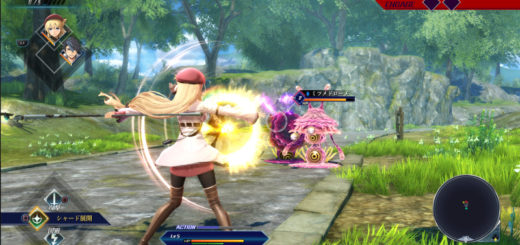
Ys vs. Trails in the Sky is a 3D arena fighter originally created for PlayStation Portable that mixes characters from the Ys games with those from the Trails series. There are two different modes to play in the game: story mode and local multiplayer. The local PSP multiplayer used the PSP’s ad-hoc connection to allow two or four players to battle against one another, while its modern version will include local and online multiplayer. In story mode, there are several different characters to choose from — such as Adol from Ys and Estelle from Trails — and each character wakes up in a mysterious world and keeps encountering characters from their respective franchise who are acting strangely. The chosen character remedies this problem by literally beating the sense back into the others. After each battle, there are short story segments that tie into an overall story for the game, though it should come as no surprise that it’s not considered canon for either franchise.
The gameplay feels like the other PSP Ys games — it uses the same engine that Ys Seven is built upon — so it’s fast-paced and fun. Also, as expected of a Falcom game, the soundtrack is fantastic, interweaving series staples from both franchises while also providing plenty of new remixes. A remaster for PC and modern consoles will finally see it get an international release, letting players dabble in a bit of lighthearted fun.


Thanks for reading our Where to Start guide on The Legend of Heroes series. We hope that it is useful and it helps others enjoy a much-beloved series, and welcome readers’ own thoughts on the best entry points and play order. Whereever one chooses to jump in, there are going to be many hours of enjoyment waiting for them.




Recent Comments