Omori Review
Cry, Forget, Remember, Accept
Omori is a turn-based, surreal horror RPG released in 2020 by Omocat. The game initially presents itself as a colorful retro adventure, but beneath its eye-catching aesthetics lies a deeply unsettling exploration of trauma and escapism. By intertwining its RPG mechanics with emotional storytelling, particularly by shifting the boundary between dream and reality, the game transforms familiar genre conventions into a means of expressing its protagonist’s internal struggle. It is a game that understands grief better than most, one that resonates in a way that is hard to shake and even harder to explain.
The game begins with a boy waking up in a colorful dream world alongside his friends: Kel, Basil, Hero, and Aubrey. Together they move through a whimsical place full of strange creatures and warm, almost unbearable cheerfulness. However, that warmth does not last and Basil disappears without a trace. The search for him pulls players deeper into this world, which is called the Headspace, a vast dreamlike world divided into strange and distinct regions, from the wandering depths of Vast Forest to the eerie quiet of Pyrefly Forest, each area stranger and more unsettling than the last. The exploration of this world lets players experience the slow unraveling of a world that was never as safe as it seemed. During this search, new people appear whom players can choose to help, as if solving their problems is easier than confronting their own. And for a while, the Headspace lets them believe that.

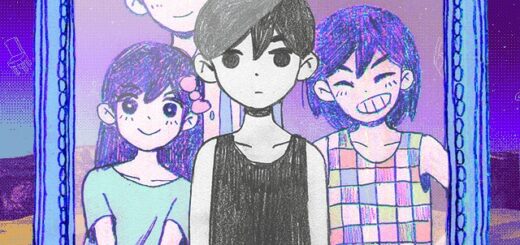
Omori meeting his friends in the headspace.
But Omori never lets players settle there comfortably. Running parallel is the real world, quieter and heavier, centered on a boy named Sunny who has not left his house in four years. He has had no contact with any of his old friends in this time, and has become a complete shut-in, planning to move to a different town in a few days. Those few days are the entire length of the game. The impending move acts as a quiet countdown, a deadline that forces Sunny back into a world he has spent four years avoiding. Old friends begin showing up at his door, the town outside his window holds memories he has buried, and the life he abandoned is suddenly asking to be looked at again. These few days become his only chance to mend what was broken and face what he has been running from. There are no monsters to fight here, but the real world is still scarier than the Headspace, simply because it is the reality he cannot escape. The more time spent in this world, the closer it gets to the truth of why Sunny is the way he is, and the more the two worlds begin to bleed into each other.
One of the most distinct aspects of this game is the turn-based combat, which brings some twists of its own. After every normal attack, a follow-up can be performed, and the follow-ups are unique to all the characters. For example, Hero can pass the turn to other party members and heal them, while Omori can attack an additional time. Follow-ups use up an energy bar that sits at the bottom of the screen. This fills up as the party takes damage, and once filled, the player can perform an energy release that does major amounts of damage.

Sunny waking up after a good night’s rest
The emotion system is also a really important part of combat. It works like rock, paper, scissors; for example, the emotion Sad beats Happy, Angry beats Sad, and Happy beats Angry. Characters can inflict different emotions on each other or the enemy; Omori can inflict Sad, Kel can inflict Angry, and Aubrey can inflict Happy, with each emotion having different effects. Sadness causes the affected to take less damage, but also do less damage in return; Anger does the opposite, causing more damage dealt and more damage taken; and Happiness increases luck and speed. The emotion system ensures that simply spamming the strongest attack is never enough. Every difficult fight asks players to read the situation, manage emotions, and build toward something, giving the combat its identity.
The follow-up system layers onto this and rewards thought: managing party energy, deciding when to hold a follow-up back for a burst, and syncing the right abilities at the right time creates a rhythm that a lot of turn-based games never manage to find. What stops the system from getting stale is that the emotion triangle is not just impacted by the party. Enemies can also shift emotions mid-fight, meaning the setup that worked two turns ago can fall apart and force a pivot. That back-and-forth keeps boss fights genuinely tense in a way that goes beyond just having high enough stats to survive. The emotional states also carry personality. It is hard not to find it a little funny watching Kel make an enemy angry on purpose, or Hero reading a poem mid-battle to inflict sadness. The system fits the characters and the world without ever feeling like it was bolted on for the sake of being different.
The world is huge and vast, but the game still manages to make players explore all the parts without ever feeling overwhelmed. Each area has a distinct visual identity and tone, so even though the world is large, it never feels repetitive to look at, and hidden items, optional bosses, and side quests are scattered throughout, rewarding players who take the time to wander rather than rush. But some areas of the game feel drawn-out; it feels like there is often a bit too much padding between more emotionally significant moments. In addition, while the different types of enemies and bosses are fun to fight, most of the common enemies become extremely underwhelming once players exceed level 15. Past a certain point, there is no real incentive to fight common enemies at all since the items they drop become redundant fairly quickly. The game seems aware that its real strength is its story and atmosphere, so when it leans too hard into dungeon crawling, it loses some of its grip.

Omori and his friends fighting KING CRAWLER
The visual art direction of Omori deserves its own moment. At first glance, the game is vibrant and colorful, with a warm and comfortable palette. The hand-drawn visuals lean into this, giving the Headspace a childlike quality, like a world someone imagined rather than built, and the character designs are deliberately simple and cute but deeply expressive despite that simplicity. But Omori knows exactly what it is doing with all of that brightness, and its change in color scheme when things start going wrong is jarring in a very effective way. The warmth does not go away, but it becomes more disturbing than darkness could ever hope to be. The game understands that the scariest thing is not something visible, but the feeling of something being off without being able to define it, and the visual style is the primary means of achieving this.
While music might not demand immediate attention, it resonates long after finishing the game, not necessarily because the tracks are catchy but because they carry something heavier than just their melody. The 179 tracks composed by Pedro Silva (SLIME GIRLS), Jami Lynne, and bo en feels like a single coherent emotional journey. What makes it work so well is that none of it is trying to be noticed. The Headspace tracks are warm and gentle in a way that matches how Sunny wants to see things, not how they actually are. That gap between what the music presents and what the game is actually about is where all the tension lives. Tracks that feel lighthearted and safe the first time come back later in completely different context; something that sounded like comfort suddenly sounds like grief, and the game does not announce this, it just lets it happen. “Duet” is the clearest example of this. It sounds gentle and tender the first time, the kind of track that makes a moment feel safe. When the game shows what it is actually about, it becomes one of the hardest things to sit through in the entire game, not because it is dramatic, but because it is so quiet about it. A soundtrack that can take the same melody and make it feel like two completely different emotional experiences across a single playthrough is doing something most composers spend entire careers trying to figure out.

Sunny and his friends celebrating his birthday and gifting him a violin
What also deserves more attention than it usually gets is how much the interactivity of Omori is doing underneath the surface. The game has two full routes and several endings, but the main split comes down to a decision that seems almost trivial: whether Sunny answers the door when Kel knocks. There is no dramatic prompt, no warning that this will change the course of the game. On top of this, smaller choices throughout accumulate in quiet ways. Watering Basil’s flowers in the Headspace, something that looks like optional busywork, changes what happens at the very end. The game asks players to do things without explaining why those things matter, which mirrors exactly how Sunny exists in his own story, going through the motions and not fully understanding the weight of what he is carrying. That design choice is not an accident. It is the game asking players to be present in the same way it asks them to be present for its music and its story.
While I have been lucky enough to not lose a loved one to tragedy, Omori still managed to make me feel the despair of losing someone cherished, and the powerless feeling of being able to do nothing to bring them back was replicated perfectly. The game tackles the idea of acceptance and escapism beautifully, and when the credits rolled, I did not move for a while. It is one of those persistent games that follows players even after putting the controller down. I think about it more than I expected to; it creeps in at night before I sleep, and whenever I come across a screenshot or hear the name, something in me just recalls the weight of it immediately. People process loss in completely different ways and at completely different speeds, and Omori never pretends otherwise. What makes it so remarkable is that it does not ask players to have lived through something specific to feel it. It just asks for attention. And with attention, Omori will find something in players to pull on regardless of what their lives look like.


Emotionally moving story and themes
Emotion-based combat system with real strategic depth
Incredibly effective visual art direction
A soundtrack that gets heavier the longer it sits with you
Enemy scaling falls off hard past the mid-game
Pacing drags in certain areas of the Headspace





Recent Comments