Final Fantasy VII Rebirth Switch 2 Review
The Planet Calls Again
Revisiting Final Fantasy VII Rebirth on a handheld console still feels unreal. I had the opportunity to play the Nintendo Switch 2 version for this review, and the fact that a game of this scale can even exist on a portable system feels hard to believe. Yet somehow, Rebirth not only runs on the handheld, but retains nearly everything that made the original release so special in the first place. While load times and blurry textures occasionally hold the port back, particularly in handheld mode, the core experience remains intact. Rebirth is still one of the most ambitious RPGs Square Enix has produced in years, combining outstanding character writing, exhilarating combat, a massive open world, and a mountain of side content into something truly unforgettable.
Rebirth picks up immediately after the events of Final Fantasy VII Remake, following Cloud Strife and the rest of Avalanche as they leave Midgar behind and finally step into the incredibly realized wider world. Regions are expansive without ever feeling empty, packed with side quests, world intel objectives, environmental storytelling, and activities that constantly reward exploration. More importantly, every location feels distinct. Junon’s oppressive military presence creates a completely different atmosphere from Costa del Sol’s carefree energy, while places like Gongaga and Cosmo Canyon lean heavily into mood and environmental identity. The world never feels like a collection of disconnected zones; it feels lived-in, layered, and full of personality.
The most fascinating part of Rebirth is how it manages to feel both deeply faithful to the original Final Fantasy VII while also becoming something entirely different. Many of the most iconic locations, story beats, and character moments remain intact, but they are expanded in ways that make them feel new again. Entire towns that once lasted only a handful of screens in the original game are transformed into massive spaces filled with side stories, minigames, and character interactions. Smaller emotional scenes that originally passed quickly now receive greater focus, giving the cast significantly more depth and humanity. At the same time, Rebirth constantly introduces changes, new mysteries, and alternate interpretations of familiar events.

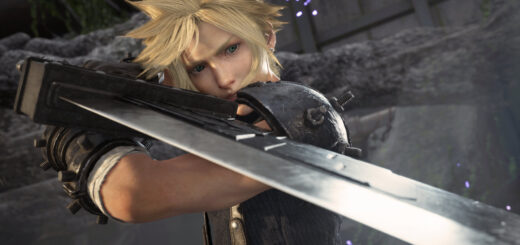
A little too much mako blur in handheld mode.
That unpredictability becomes one of the game’s greatest strengths. Rather than simply recreating the original game scene-for-scene, Rebirth actively plays with expectations and audience familiarity. Certain moments unfold exactly as remembered, while others veer into completely unexpected territory. The result is a game that captures the emotional weight of revisiting a beloved classic while still delivering the excitement of experiencing something new. Much of that success comes from the direction led by Naoki Hamaguchi and the larger creative team, who clearly understand not only why the original game mattered, but also how to reinterpret it for a modern audience without losing its identity. In many ways, Rebirth is a thoughtful reexamination of the original game’s ideas, characters, and emotional themes.
In some respects, that approach actually strengthens the experience compared to the original Final Fantasy VII. The original title remains legendary for good reason, but technical limitations of the era often restricted how much time could be spent developing character relationships and quieter emotional moments. Rebirth benefits enormously from modern presentation and pacing, allowing the cast to feel more believable and emotionally grounded than ever before. Optional conversations, quiet moments at rest stops, side quests, and small interactions during exploration constantly reinforce the growing bond between party members. Cloud, Tifa, Aerith, Barret, Red XIII, and even Cait Sith and Yuffie develop naturally over the course of the journey. The game spends so much time letting the cast simply exist together, allowing the emotional scenes to carry significantly more weight later on.
Exploration itself is equally rewarding because the game constantly gives players new things to discover. World Intel activities tied to Chadley initially resemble a familiar open-world checklist, but Rebirth makes it all genuinely enjoyable through sheer variety and strong integration with the combat system. Summon shrines, combat assignments, excavation sites, lifesprings, and environmental objectives all encourage deeper engagement with each region rather than simply existing as filler. Chocobos further improve exploration by introducing region-specific traversal mechanics, making areas feel mechanically distinct. Scaling cliffs, gliding across large gaps, and uncovering hidden paths give exploration a real sense of adventure throughout the entire journey.

Chadley makes a welcome return with plenty of new combat challenges.
Chadley’s combat simulations are also one of the game’s most unsung features. Initially, one may mistake them for mundane side content, but they gradually evolve into some of the most satisfying combat challenges in the entire game. Harder VR battles demand a deep understanding of materia combinations, synergy abilities, party composition, and enemy mechanics, constantly pushing the combat system to its limits. The post-game challenges in particular are exceptional, offering brutally difficult encounters that fully reward mastery of the game’s systems. Instead of feeling like padding, these simulations become an addictive reason to keep experimenting with new builds and strategies long after the main story. The Brutal and Legendary simulations, in particular, are some of the best content in the game.
The combat itself remains one of the strongest battle systems Square Enix has ever designed. The hybrid approach seamlessly blends real-time action with command-based strategy, creating fights that feel cinematic without sacrificing mechanical depth. Every character feels unique to control, encouraging constant experimentation. Synergy skills and abilities further strengthen the system by reinforcing teamwork while adding even more spectacle to battles. Bosses are especially phenomenal, constantly evolving through multiple phases while demanding quick adaptation and careful resource management. Even dozens of hours into the game, combat never loses its sense of excitement.
That same level of creativity carries into the game’s enormous selection of minigames and side activities. Rebirth constantly shifts between genres, throwing players into card tournaments, rhythm sections, chocobo racing, piano performances, strategy games, shooting galleries, and countless other diversions throughout the adventure. What makes these minigames so impressive is how fully realized most of them feel. Queen’s Blood alone could easily stand as its own standalone game, with incredible depth and an addictive progression system that makes every new opponent exciting. Chocobo racing is equally excellent, expanding a small activity from the original Final Fantasy VII into a genuinely engaging kart racing mode with customization and progression. Even the smallest distractions remain consistently entertaining because of the clear care that went into their design.

Cait Sith sure got a glow-up!
The Gold Saucer deserves special mention simply because of how much content is packed into it. The iconic amusement park feels enormous in Rebirth, overflowing with activities, minigames, story moments, and optional content that constantly pulls attention in different directions. It perfectly captures the chaotic energy and excess that made the original location so memorable while massively expanding its scale. Unfortunately, it is also one of the areas where the Switch 2 version struggles most technically. In handheld mode, the image quality takes a noticeable hit, with everything appearing significantly softer and more “mushy” than on a larger screen. Performance dips become more noticeable here than almost anywhere else in the game. Similar issues occasionally appear during larger battles filled with heavy visual effects and layered attacks. While these problems never ruin the experience, they are difficult to ignore during some of the game’s most visually overwhelming moments.
Even with those limitations, the game remains impressive overall. Just like with the other versions, character models are expressive and highly detailed, environmental art direction remains stunning throughout the journey, and many locations still manage to deliver breathtaking moments despite the reduced image quality in portable play. The soundtrack is equally exceptional, constantly shifting between emotional orchestral themes, energetic battle music, atmospheric exploration tracks, and memorable reinterpretations of classic Final Fantasy VII compositions. Music drives much of the game’s emotional identity, and Rebirth consistently understands exactly when to let those themes take center stage.
Performance problems and image quality issues stop the Switch 2 version from becoming the definitive way to experience Rebirth, particularly in handheld mode, where the hardware occasionally fails to keep up with the game. Even so, those issues never diminish just how remarkable the experience still is. Rebirth remains an extraordinary RPG filled with exceptional combat, an outstanding world, incredible music, and one of the strongest casts in the genre. More importantly, it succeeds at the nearly impossible task of honoring one of the most beloved RPGs ever made while carving out its own identity. Technical compromises aside, Final Fantasy VII Rebirth stands as one of the best RPGs currently available on Switch 2 and a hugely impressive new realization of a classic that already defined the genre decades ago.
Disclosure: This review is based on a free copy of the game provided by the publisher.


Exceptional combat
Strong emotional storytelling
Incredible soundtrack
Huge amount of content
Poor handheld image quality
Occasionally long load times




Recent Comments