The Magic and Mastery of Kingdom Hearts: A First-Time Player’s Retrospective
Merging Disney’s timeless charm with the rich, deep lore of Final Fantasy sounds like a concept cooked up during a fever dream. Yet, on the PlayStation 2, Square Enix and Disney made the apparent impossible a reality with Kingdom Hearts. Years later, with Kingdom Hearts IV on the horizon and Disney officially labeling it a billion-dollar franchise, newcomers are still diving into where it all began. Going into the game as an adult, there were genuine worries about whether the presentation being targeted towards a younger audience would be a turn-off. In spite of those concerns, the experience ended up being an unexpectedly phenomenal ride that leaves a lasting impression.
Right out of the gate, Kingdom Hearts demands the player’s attention. The narrative kicks off on a sun-drenched, adult-free tropical island where Sora, Riku, and Kairi live. When darkness shatters their home world, Sora is chosen by the Keyblade. Meanwhile, in another world, King Mickey goes missing, prompting Donald Duck and Goofy to set out to find the Keyblade bearer and close the universe’s keyholes. While the plot introduces layers of complexity involving many classic Disney villains, the tragic manipulation of Riku, and the ultimate reveal of the villain Ansem, the standalone narrative of the first game is surprisingly cohesive. It is entirely creative, featuring Disney characters who act like themselves yet are woven into a completely fresh, high-stakes original universe. This is not a game where I could check my phone during cutscenes. Miss a piece of dialogue, and I would find myself wandering blindly through backtracking corridors. Regardless of a bit of backtracking through familiar areas, the pacing rarely drags and kept me thoroughly engaged from world to world until the challenging finale.

Sora and Kairi share a quiet moment on the edge of the world before everything changes
Starting out, Kingdom Hearts might feel a bit simplistic, as I could easily fall into the trap of just mashing the singular attack button. However, the combat evolves into a surprisingly deep and rewarding action RPG system. The biggest hurdle for modern players is the camera. The camera hugs very close to Sora, which occasionally leaves blind spots where enemies can hit Sora from off-screen. Mastering the lock-on system drastically mitigates this issue by snapping the perspective to targets and fluidly repositioning. Managing spells, items and, abilities also requires quick D-pad reflexes during chaotic late-game battles. Thankfully, the spell menu remembers the last cast, making repetitive actions like healing with Cure seamless. Customizing Donald and Goofy’s AI behaviors via the menu ensures the party actually has my back, dispelling any unfounded online internet slander about Donald failing to heal. As players unlock movement abilities like sliding, high jumping and, gliding, combat and exploration open up immensely, revealing that previously visited environments are much larger than they first appeared.
Exploration also ropes the player into the classic, polarizing mini-game within a game: the Gummi Ship. Whether loved or just tolerated, the Gummi Ship cannot be ignored, as upgrading the ship with better defenses and cannons is essential to surviving trips to endgame planets. Fortunately, finding plenty of Gummi pieces in world chests means avoiding wasting money buying upgrades and a handy warp drive acquired after the Deep Jungle world that lets the player fast travel to past worlds.
For players who want to push past the credits, the post-game offers a substantial test of skill. Finishing around level 50 provided me with a fair challenge for the story bosses, but tackling the brutal secret bosses requires heavy level grinding and mastery of Sora’s toolkit. A completionist run adds plenty of mileage: unlocking the ultimate weapon requires synthesizing items at the Traverse Town Moogle Shop, which in turn demands hunting down every single chest across every world. These chests also house Dalmatian puppies from the Disney classic 101 Dalmatians, and hitting specific rescue milestones rewards the player with rare synthesis materials gifted by none other than Pongo as a thank you for finding his lost puppies. Whether this grind is worth it depends entirely on one’s appetite for punishment. If the combat system is something the player falls in love with, these optional trials offer a unique difficulty that modern RPG endgames rarely match, stretching a 25-to-30-hour main story into 60-plus hours.

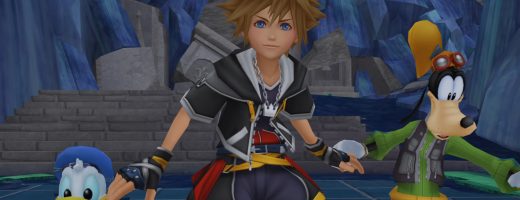
Sora stands alongside the legendary hero Hercules within the stone-columned arena of Olympus Coliseum.
Ultimately, appreciating Kingdom Hearts boils down to one major question: Does the player like Disney? If the answer is no, the experience may not click. But for those who grew up with these characters, hearing the original voice actors return breathes incredible life into the journey, even if it brings a few funny nitpicks. The Genie sounds unmistakably like Homer Simpson and Peter Pan’s voice sounding like it was recorded in an empty hallway. Final Fantasy characters like Cloud, Yuffie, and “Leon” add plenty of flair for Square Enix fans and Sora is a great addition alongside the memorable cast of Final Fantasy characters. Although Final Fantasy and its characters play a vital role in Kingdom Hearts, it’s the heartfelt integration of Disney worlds that carries the emotional weight. Interestingly, despite loving the Disney cast, I chose to actively leave out Disney companions like Aladdin or Ariel in favor of keeping Donald and Goofy.
The presentation shines just as brightly through its music. Rejecting standard orchestral pieces found in other fantasy media in favor of an iconic pop-infused opening theme, the music embodies the game’s bold, singular and unapologetic vision. It’s a game built on a distinct, passionate creative vision. In an industry full of safe bets, that kind of magic is worth experiencing firsthand.
As the industry ramps up for Kingdom Hearts IV, a vocal faction of online veterans suggests a strange shortcut: skip the original entirely, watch a YouTube recap, and jump straight to Kingdom Hearts II because of the first game’s aged controls, platforming, and camera. That advice should be firmly ignored. Stripping away the rough edges also strips away the foundational magic. Kingdom Hearts is an essential, fiercely creative and, mechanically rewarding adventure that holds up remarkably well and it deserves to be experienced from the very first keyhole.



Recent Comments