Exploring New Worlds: RPGamer’s Favourite Settings, Part 2
One of the great things about RPGs is how they enable players to immerse themselves and explore brand new settings and locations. There is a huge variety of worlds for players to find themselves in, be it versions of real-world locations or truly bizarre and physically-impossible creations from the developers’ minds.
We invited the RPGamer staff to pick out some of their favourite settings from across the RPG universe and share what drew them into the world or made them particularly memorable. It should be noted that as revelations regarding the setting may be key for what makes them memorable, there may be some spoilers in the particular write-ups, though we have endeavoured to minimise them where possible. As the hopefully makes clear, this is the second part of our two-part feature, with the first half available in part one. As always, we also invite our readers to share your favourite settings in the comments or on social media!
Mass Effect — The Milky Way
Rather than restricting itself to a single planet, BioWare’s Mass Effect gives us a full galaxy to play around in. Set at the end of the 22nd century, it sees humanity taking its relatively new place among the interstellar community after it uncovers the mass relays that link star systems and permit faster-than-light travel. Its version of the Milky Way features some interesting approaches to physics that run a bit of a gamut from hard to soft sci-fi through the use of Element Zero and its ability to empower both the eponymous mass effect fields that much of the technology runs on and telekinetic Biotic powers, but it all comes together nicely to produce a coherent galaxy.
One could argue that there’s not a whole lot new around the worlds themselves, often falling into the usual selection of sci-fi biomes and usually. However, what makes the Mass Effect version of the galaxy so compelling is all of the different species populating it and the different stories and conflicts they generate. This stories play big roles in the overall plot lines and the individual quest lines and character stories for Shepard’s allies, of particular note being the conflict between the Quarians and their robotic Geth creations, and the usage of the Genophage on the warlike Krogan.
While the grand scale of the series’ story and setting is definitely a major draw, it’s some of the smaller parts of the setting that really come to the fore to make the whole Mass Effect experience what it is. The Citadel and the Normandy in particular are fantastic mainstays that become a home-away-from-home for players, while the diverse set of crew that players will pick along the way really helps to build up the series’s setting and cultivate its passionate fanbase. — Alex Fuller

Septerra Core: Legacy of the Creator — Septerra
Septerra Core: Legacy of the Creator is a game that is upfront about its world. The name Septerra is formed from the Latin words for seven and earth (septim and terra), which represent the seven layers of floating islands called shell, forming tighter and tighter around a central core. All shells have unique identities that are separate from each other, yet are connected through travel and trade.
The adventure starts on Shell 2, a Wild West-themed shell built around an economy of scrap collection from upper Shell 1. The largest city is Oasis, which is founded on being able to draw water from pipelines connected to a mysterious factory in the north of the map that sports an impressive foundry, while its other town, Galdon, is in a far less safe place, next to the worryingly-named Outlaw Canyon. Each of the locations also has a purpose for the story that is uncovered, with players often needing to revisit them. However, one can’t talk about Shell 2 without also talking about Shell 1. It is home to the mysterious Chosen, humans said to be derived from an ancient savior, Marduk. Holding the highest level of technology in the story, it is also the most mysterious shell, and its actions shape most of the major plot developments either directly or indirectly. This shell only has one town, the Chosen Capital, but it hides some of the game’s largest locations.
Shell 3 features a simpler agrarian society around Wind City and Southfarm. The former is named for the giant wind turbines north of the city and protected by an order of knights called the Holy Guard, while the latter is known for breeding Helgaks, a species of thick-plated flying creatures that can get to impressive sizes. Another sizable town called Armstrong can be found on the other side of a huge mountain ridge, but it is generally stable. Shell 4 is more chaotic despite having a singular location, the World Bazaar, which stretches throughout most of it. When entering it, players pick among various districts to visit, changing between them many times. In addition to the slums, which have a more sci-fi than fantasy feel, players will also find a bounty hunter district where mercenaries rule, a red light district, and a shipping district.

Shell 5 is basically a warzone. Home to two nations in Ankara and Jinam, which can be considered the second-most powerful factions in Septerra Core, but are currently devoted to trying to defeat each other. While the Ankaran Capitol acts as the central location, players won’t see much of it, and find their focus more drawn to the various side locations, such as the other main Ankaran town, Gregor. For reasons related to the story, players will only find one Jinam location on this shell: a crashed Jinam warship full of mechanical war machines. Moving onto Shell 6 presents an alternate type of frontier town to Shell 2, themed around being a pirate heaven. There are two towns in Pranno and Scumm Town; Scumm Town is a more sci-fi outlaw town, while Pranno is not too different to those from Shell 2. Going through this Shell, you realize that pirates run the show here, even having an island fortress in the middle of a lake, and what isn’t controlled by them is simply wilderness.
Past this lies the wilderness of Shell 7, which tightly wraps around the core of the world of Septerra. The core not only acts as its center, but also as the controlling force keeping the Shells in place. Shell 7 is characterized by unbound mushroom growth, with certain areas being concentrated with spores so heavily that entering them is toxic to every human. If Shell 2 and 6 are the frontier to the wilderness, then Shell 7 is wilderness incarnate, with its human civilization amounting to just some mining efforts on the core itself by the nations of Shell 5. You will be able to find a village; however, it won’t be a human village for once, but one of the mysterious alien-like natives of Shell 7 called the Underlost.
What makes the world of Septerra Core work isn’t just that it has many varied locations, but that you will gradually explore each of them as side locations further draw you deeper into each of the Shells. The game is also not scared to have world locations change fundamentally, unearthing dungeons that are initially not present, or having hidden locations revealed deep within previously visited places. Septerra Cores’s world and story function quite similarly, both pulling layers away as you dive deeper and deeper into more and more important locations. — Benedikt Geierhofer

The Legend of Heroes — Zemuria
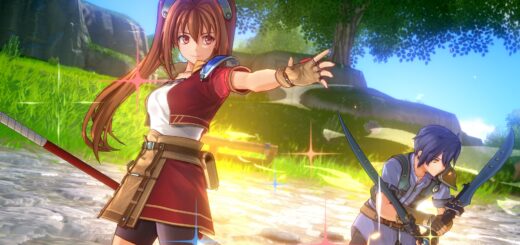
The continent of Zemuria. The land blessed by the Sky Goddess Aidios, where elementally-charged Septium veins criss-cross the land, granting the gift of magic to those who can extract and utilize the miraculous minerals. Here divine mysteries, technological advancement, and ruthless human ambition intersect to shake the very land to its core. For thirteen games thus far, Falcom’s Trails series has taken players through the ongoing story of the Zemurian continent. It’s a fascinating setting that I feel contributes a lot to the series’ pull, as so much effort goes into making it feel like a world truly full of history, and that said history continues to progress as the games play out.
Zemuria is a continent defined by the nations within it, and the Trails series takes a piecemeal approach to exploring them, with a subseries of games focusing on a country. The series starts with Trails in the Sky, taking place in the southwestern Kingdom of Liberl, where peace reigns through a benevolent monarchy and rapid technological progress. The Trails from Zero/Trails to Azure duology brings the action to the more central autonomous city-state of Crossbell, with its geographical significance and vast wealth as a merchant city constantly putting it at threat of invasion by the two superpowers flanking it. The Cold Steel games shift west to one of said superpowers, the Erebonian Empire, where strife grows as the nation sees division from within. Most recently, the Trails through Daybreak and Trails Beyond the Horizon take players to Erebonia’s rival superpower just east of Crossbell, the Republic of Calvard, where the veneer of peaceful democracy hides subterfuge and dissent.
With multiple games dedicated to exploring each of these nations, players learn a great deal about them. Their history, culture, and relations with the other nations of Zemuria are explored thoroughly. It leads to players getting very invested in these places and the characters in them. Crossbell in particular is a favorite of mine. You spend two games exploring a relatively small place, getting attached to the characters you meet, and learning Crossbell’s sad history as a small nation pushed around by greater powers. It’s hard not to connect with a setting when you spend so much time exploring it, and that’s a philosophy that holds true for every part of Zemuria the Trails series has let players explore.

A host of other nations are also mentioned throughout the series, helping to make Zemuria feel more full as a world. Leman State, the seat of high-tech innovation. The Holy City of Arteria, where the near-universally-worshipped Septian Church congregates. North Ambria, a harsh, snow-covered country that was flung into disarray when a mysterious object appeared from nowhere and turned half the landscape into salt. These places have not yet been visited in-game, but characters from these and other countries are met throughout the games and their accounts of their homelands add more texture to Zemuria. There’s also a sense throughout the games that its history is continuing to be built upon as the games progress. When something major happens in one place, the news spreads and affects the entire continent. Trails from Zero lets players quickly find a book about “The Liberl Incident”, which details what the general public knows about the climax of Trails in the Sky SC. Characters in the know talk about the incident and its ramifications for coming events in Zemuria as a whole. Players quickly get the sense that the continent of Zemuria is a world in motion.
Trails’ take on magic and technology is also quite striking and adds to the allure of its setting. Zemuria is effectively a fantasy world rushing quickly into the invention of modern and sci-fi technology. The minerals known collectively as Septium are infused with elemental magic, but for much of Zemurian history few knew how to utilize that power. The Orbal Revolution, occurring roughly 50 years before the events of Trails in the Sky, saw the invention of a type of technology that could channel refined Septium to various ends. This technology was given the blanket name Orbment, and quickly began to reshape Zemuria. Some flashy uses of Orbments lie in people using them to cast spells and the invention of airships, but most Orbal technology takes the form of modern technology, including lights, trains, cars, radios, and guns; the list goes on. This tends to push Zemuria towards a level of technology that seems more realistic than fantastical, which creates an interesting dynamic with the reminders that this is indeed a fantasy world crop up. Monsters, demons, and artifacts of unknown power are real in Zemuria and pose a very serious threat. It creates interesting friction as rapid advancement in technology and these truly magical elements collide, especially since the technology is built upon the scientific use of the magic of Septium. It creates a sense that, mundane as the technology can seem, Orbments are the culmination of humans attempting to grasp magical or even divine power.
Between the rich history of its many nations, the sense of connection and progression between them, and the interesting interplay between magic and technology in the setting, Zemuria is a place that captured me and many others with fascination when playing the Trails series. It’s a place that engrosses players by having them spend multiple games getting to really know every single region and teasing with knowledge of places beyond. Personally, I can’t wait to see what part of Zemuria we’ll be visiting in the next game. — Sven Ferguson

World of Warcraft — Azeroth
World of Warcraft is built on the Rule of Cool — if it’s cool then add it in — and the end result is a wonderful mess. Azeroth is the kind of setting where you need to meet it halfway to get the most out of it. Sure, it’s silly at times, but that’s part of the fun too. Want to play as an orc? You can! Want to play as a zombie? You can! Want to play as a space goat? You can! The setting includes a cookie-cutter medieval-ish human kingdom, but Azeroth’s elves are visually distinct and come in multiple flavors. They both live in the same world, alongside a few extraterrestrial peoples, and no one treats that as strange. World of Warcraft is at its best when it plays with standard fantasy tropes. For example, their demons are alien invaders from another planet, and use spaceships to travel from planet to planet as they conquer them.
Having played World of Warcraft for over ten years also means I’ve witnessed years pass by in Azeroth too. I’ve been present for major events and celebrations, and even watched characters grow older or grow up. When I started playing, Anduin Wrynn had no lines and used a generic child model. Now he’s old enough to not only have his own voice actor, but also has custom models in multiple cinematics. I’m so proud! It’s a fun relationship to have with a piece of media.
Though my opinion of the game as a whole and of Blizzard has gone up and down over the years (mostly down in recent times, if I am honest), my love for the world endures. What keeps that love going is seeing what creative fans can do with Azeroth as a sandbox. Seeing what kinds of characters — especially ones that aren’t generic heroes — people come up with, and how they play with established lore, is inspiring. It’s a fun and wild mash of ideas, and I adore the things people can make with it. — Kay Vandivert

Xenoblade Chronicles — The Bionis and the Mechonis
The Xenoblade series is well known for its incredible settings, but the setting of the original Xenoblade Chronicles is perhaps the most memorable. The game is set on an unnamed oceanic world with two landmasses, the Bionis and the Mechonis. These two landmasses are in fact two ancient titans, who long ago were locked in battle and ended up in an apparent mutual defeat, rending them the basis of life on the planet as flora and fauna flourish on their massive bodies.
However, despite the ending of the direct battle between them, the fight between the Bionis and the Mechonis continues. The prologue begins a few years before its main events, with a large battle between the human Homs and the hostile Mechon, seemingly ending in the favour of the Homs thanks to the powers of a mysterious sword called the Monado. We then cut to the true beginning of the game, where protagonist Shulk appears to be living a fairly idyllic life in Colony 6, at the base of the Bionis. That temporary peace is soon shattered, however, by a sudden invasion from the Mechon. This becomes the driving force for the plot, as the events of that invasion see Shulk taking up the Monado and setting out on a mission of revenge, accompanied by his friend Reyn, to defeat the Mechon danger once and for all.

The location and world design plays a massive part in keeping players enraptured in the game. Players get to enjoy some stunning locales and views as they make the journey up the Bionis and eventually onto the Mechonis, visiting some spectacular and varied biomes along the way. Players stepping into Gaur Plains for the first time is one of the most noteworthy moments in the past couple of decades, and there are tons of other great places that will stick in memory for a long time, such as the fascinating glowing crystals of Valak Mountain and the floating islands of the Eryth Sea. The world itself also comes with some great mixture of races and characters, including the Nopon and High Entia, and players get to watch plenty of smaller moments that further build up the world as they see connections between its people evolve and flourish throughout the game, pleasingly building up the worldwide Affinity Chart that shows the relations between all named characters in the world.
As one might expect from Monolith Soft, players get to learn many fascinating fundamental reveals about the setting. Without spoiling the particulars, players eventually uncover the full story about the creation of the world and the cause of the conflict between the Bionis and the Mechonis, which ultimately tie it into both Xenoblade Chronicles 2 and 3, despite both being set in their own different and fascinating worlds. The nature of Xenoblade Chronicles 3′s world in particular offers incredible callbacks that come about purely because of the outstanding design of Xenoblade Chronicles locations. Traversing the Bionis and the Mechonis is a treat from start to finish thanks to the incredible efforts and attention paid to its setting through the game’s narrative and its visual and gameplay design. — Alex Fuller

8-Bit Adventures — The Computer’s World
When deciding upon a favourite place to explore, I typically enjoy a lot of variety, and yet in that same breath, there are many worlds in which there are one or two areas that I’d dread revisiting. Some mechanic, boss fight, or party restriction that just makes the entire memory of the setting tarnished in some way. When I was trying to think if there’s a game world where I look back fondly on every space, the first title to come to mind is Critical Games’s 8-Bit Adventures 2. There is something heartwarming about going through all the typical areas — be it desert, ice, fire, forest, or sprawling kingdom — seeing their inhabitants and recalling fond times in every single spot.
On the surface, 8-Bit Adventures 2 is a world that embodies the nostalgia of earlier titles, feeling like the expansive worlds of early turn-based RPGs. But, the story of 8-Bit Adventures 2 takes some connections between the technological and mystical and finds a way for everything to feel organic. It’s a setting that seamlessly blends robots, ancient civilizations, volcanoes, computer glitches, and medieval fantasy kingdoms, while managing that incredibly difficult balancing act of having every area feel impactful and exciting. There’s a level of unknown that is built into the comfort of seeing all the recognizable areas that are typically found in a turn-based RPG, through the character designs, enemies, and plot purposes for visiting and revisiting each area that just build together in a way that encapsulates the feeling of adventure. This is a pixelated world that, due to its inhabitants and how they interact, makes every adventure, big and small, held within it feel immensely enjoyable. — Ryan Costa

Once again, we hope that you’ve enjoyed reading about our favourite RPG settings, and in case you missed it, make sure to catch up on the first part of the feature. As always, please share and let us know your favourites!






Recent Comments