Game of Thrones: War for Westeros Impression
There is clear potential in this game, particularly once the full multiplayer offering becomes available.
There are few worlds better suited to a real-time strategy (RTS) game than Westeros. Game of Thrones has always revolved around the struggle for power, with armies marching across Westeros and powerful houses constantly vying for control. Game of Thrones: War for Westeros taps into that potential with a straightforward approach to the RTS genre. Developed and published by PlaySide Studios, the game puts players in command of one of the Great Houses, or even the Night King, as they build armies and seize territory, attempting to reshape the fate of the Seven Kingdoms. Heroes such as Jon Snow, Jaime Lannister, and Daenerys Targaryen also play a central role on the battlefield, with each bringing unique abilities and strengths that shape how their respective factions are played.
The preview build begins with a stunning cinematic opening cutscene with an incredible amount of detail. From there, the game moves to the title screen, which displays the available modes and factions. Of the four available factions, Stark, Lannister, Targaryen, and the White Walkers, only Stark and Lannister are playable. After spending time with the preview build, it’s clear that War for Westeros embraces the core ideas of the genre. Many RTS games fall into the trap of burying their battles beneath layers of convoluted mechanics; War for Westeros instead focuses on resource management, territory control, positioning, and choosing the right time to attack.
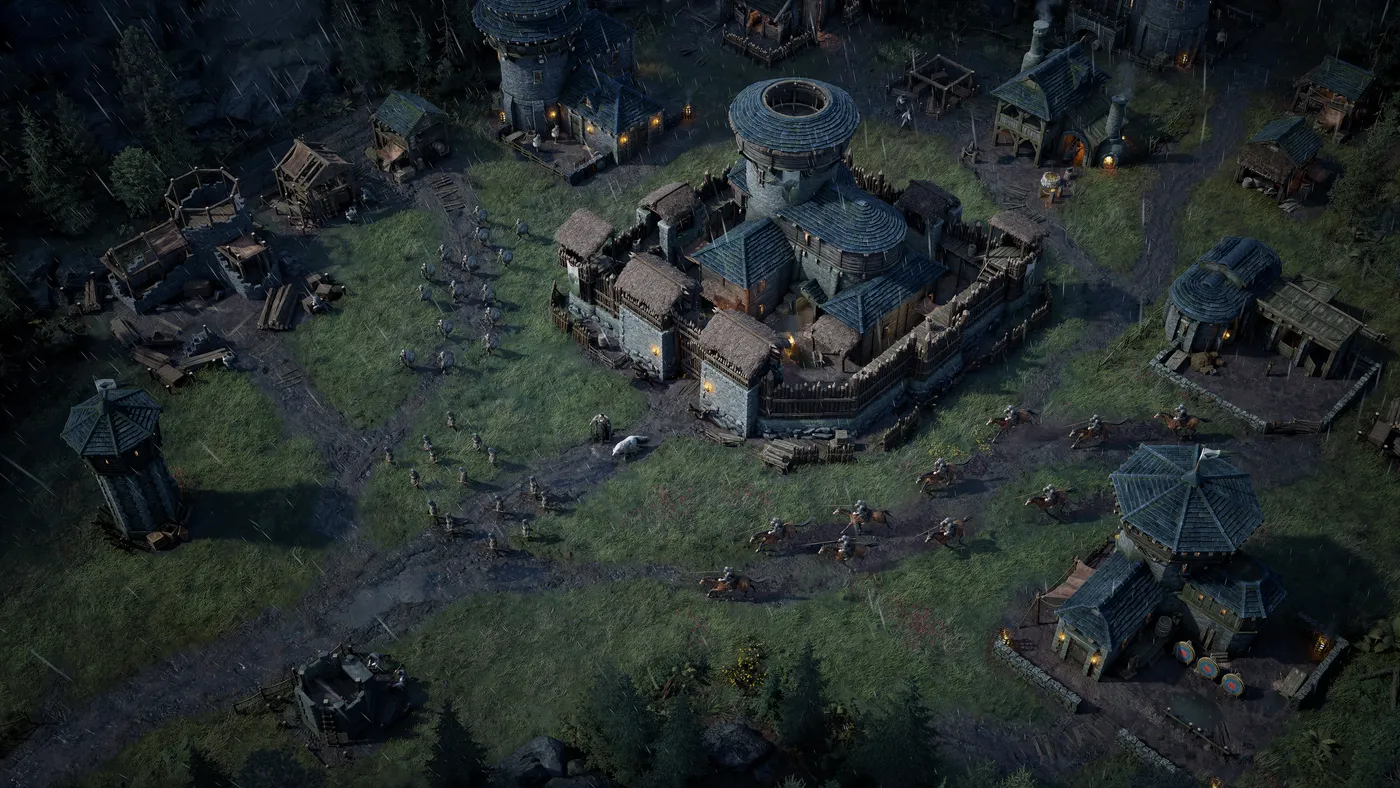
Winter is coming, so better build something.
That said, with the campaign and several multiplayer options unavailable, the preview gives a relatively narrow look at what War for Westeros has to offer. The only available option, Skirmish, is restricted to Duel mode, with Teams and Free for All also absent. Matches can be won through either Annihilation or Domination. The former requires destroying the opponent’s seat, while the latter requires holding either two or three territories for 180 seconds. Both conditions provide a clear objective, giving each match a straightforward focus even with the limited selection of modes.
Each match begins with a base, a builder, and a scout, with the early game focused on establishing an economic foundation. Building a dwelling increases the available supply, which determines how large the military can become, while capturing additional territories further increases the supply limit. Influence and gold are the two primary resources used to construct new buildings, making early resource management particularly important. House Stark relies on windmills to generate gold, which provide a consistent source of income throughout the match, while House Lannister uses mines that gradually deplete over time. Lannister’s mines compensate for this limitation by producing slightly more gold, but eventually need to be destroyed and replaced. Building the appropriate gold-generating structure as early as possible is essential, allowing enough resources to accumulate for upgrading other facilities and eventually expanding the army.
Once the economy is established and the necessary facilities have been upgraded, the focus shifts toward building an army and preparing to invade the opposing side. Upgrading the castle also unlocks heroes, who bring powerful special attacks and abilities to the battlefield. Heroes that survive combat gain experience and level up, becoming stronger as the match progresses. Territory control creates another layer of pressure, as the CPU opponent immediately begins mounting an invasion as soon as a point starts being captured. This creates a gameplay loop designed around managing resources, expanding territory, and waiting for the right opportunity to commit to an attack. Moving too aggressively can leave a base vulnerable, while waiting too long gives the opponent more time to strengthen their own position.

Ready to lead your army to victory?
There is clear potential in this game, particularly once the full multiplayer offering becomes available. The 2v2 mode, which is unavailable in the preview, is especially interesting, as the differences between the factions create opportunities for interesting synergy between allies. The preview already demonstrates that Stark and Lannister approach their economies differently, and having multiple factions working together could add another layer to the strategic decision-making. Personally, I am intrigued to see more of War for Westeros, particularly the campaign, which will be one of the most important pieces in determining how well the full game comes together. Whether it lives up to its potential will depend heavily on how the other multiplayer modes fare and how the story ultimately unfolds.
Disclosure: This article is based on a preview build provided by the publisher.





Recent Comments