Elden Ring Tarnished Edition Switch 2 Impression
For RPGamers with even a passing interest in this acclaimed game, Tarnished Edition provides a convenient new way to experience it.
I’ve been playing FromSoftware games since Demon’s Souls on the PS3, which means I’ve had a front-row seat to the studio’s evolution from a cult favorite developer into one of the most influential names in modern RPGs. The richly atmospheric and methodical design of Demon’s Souls laid the groundwork for Dark Souls, Bloodborne, Sekiro, and finally Elden Ring, a game that took everything FromSoftware had spent years refining and expanded it to a much larger scale. Elden Ring is, without question, one of the giants of this generation; its enormous world, memorable bosses, seemingly endless build possibilities, and extraordinary freedom in how players approach its challenges represent FromSoftware at its absolute best. I’ve spent a considerable amount of time with Elden Ring across its various iterations, so approaching Tarnished Edition is mostly about seeing how well the experience translates to Switch 2 and what its new content brings to the table.
The Tarnished Edition adds two new starting classes, the Heavy Knight and Idus Knight, alongside four new armor sets and three customization skins for Torrent, the player’s mount. The Idus Knight was the first class tested, followed by the Heavy Knight, and the difference between the two is apparent at the start. The Idus Knight is an agile, Dexterity-focused warrior from the land of Idus who starts at Level 7, making the class a natural fit for players already comfortable with Elden Ring‘s dodge-focused combat and familiar with the game as a whole. The Heavy Knight starts at Level 10 and instead leans heavily into Strength, with bulky steel armor and a large scimitar providing a more forgiving start for players who are new to the game. These classes primarily affect the beginning of the game and do not lock players into any particular playstyle; as with other Souls games, stats, equipment, and builds can be adapted considerably as the journey progresses.
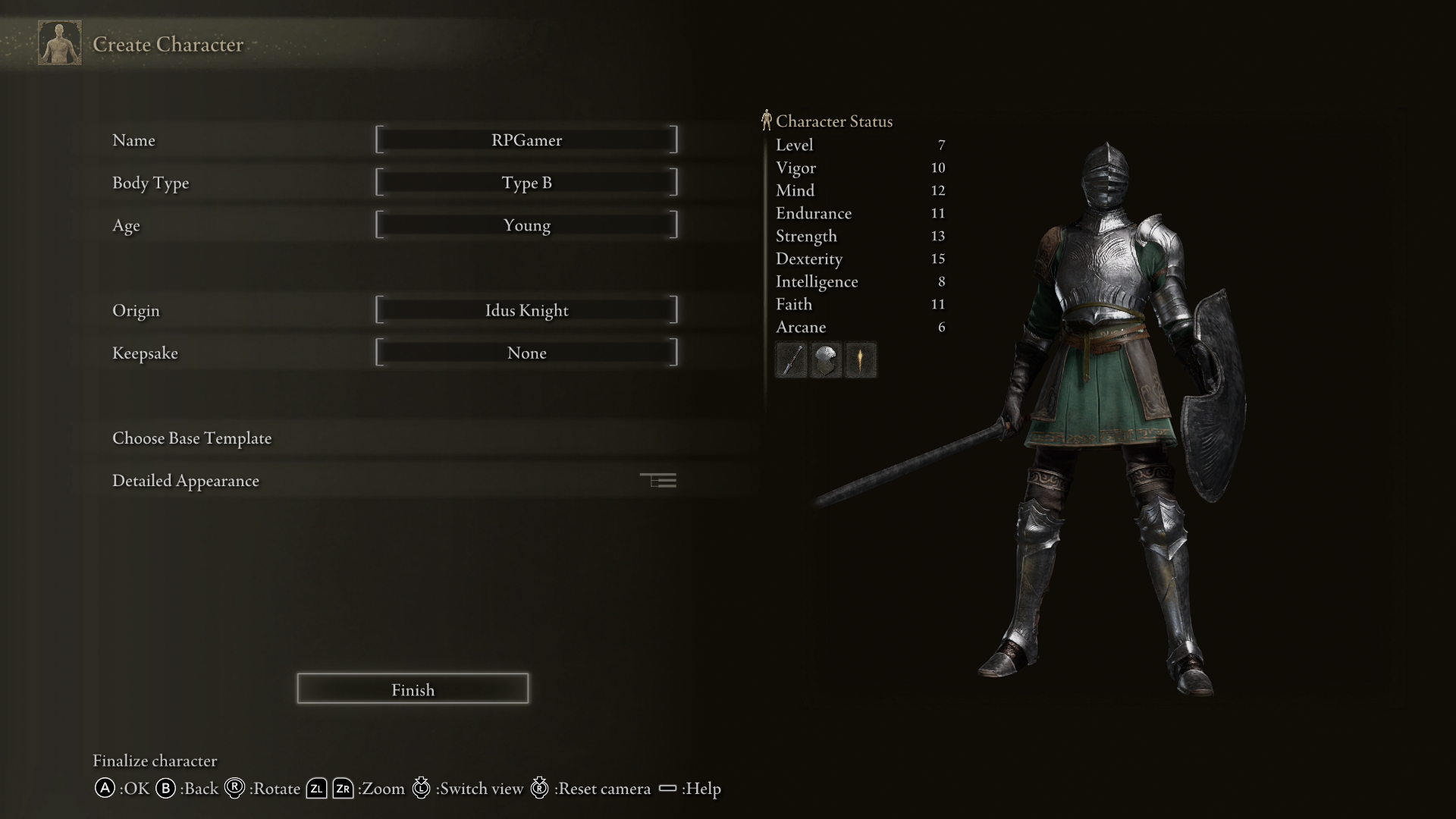
A knight from Idus joins the fray!
Interestingly, the Idus Knight starts with only 6 Arcane, the lowest of any starting class. This gives the class the lowest starting Discovery as well as the lowest resistance to Death Blight, while its low overall investment in Arcane leaves it particularly well suited to builds that want to minimize unnecessary stats. The practical impact of the lower Discovery is very small, so players looking to optimize their builds may actually appreciate how efficiently the Idus Knight distributes its starting attributes. Overall, the Heavy Knight is an excellent option for those who prefer a pure melee build, with its starting stats reflecting that approach, while the Idus Knight stands out as one of the best all-around starting classes in the game.
Beyond the new content, evaluating the Switch 2 version itself is just as important. Starting with docked mode, Bandai Namco has done an admirable job bringing Elden Ring to the Switch 2, although there are some significant performance issues to consider. The game targets 30 fps, though frame rates can drop noticeably while exploring the map, particularly as the system has to handle larger areas and more detailed environments. In some ways, the inconsistent performance is reminiscent of Bloodborne. Textures and overall visual detail are also noticeably reduced compared to other versions, although the lower resolution is not severe enough to prevent the game from looking generally fine. Thankfully, performance is much more stable during boss fights, where the action remains responsive. Despite these limitations, Tarnished Edition is perfectly playable in docked mode, and the scale of what has been brought to the Switch 2 remains impressive.
Handheld mode experiences many of the same performance issues, with frame rates dipping significantly during exploration. The reduced texture quality, on the other hand, is far less noticeable on the Switch 2’s smaller screen. More importantly, handheld mode represents the single biggest advantage of this version, as Elden Ring can finally be taken on the go without relying on streaming. The Joy-Con controllers are a little less suited to the precise demands of a Souls game than the Pro Controller, however, and the analog sticks can feel overly sensitive at first. This takes some adjustment, but once accustomed to the controls, Elden Ring remains perfectly playable in handheld mode.
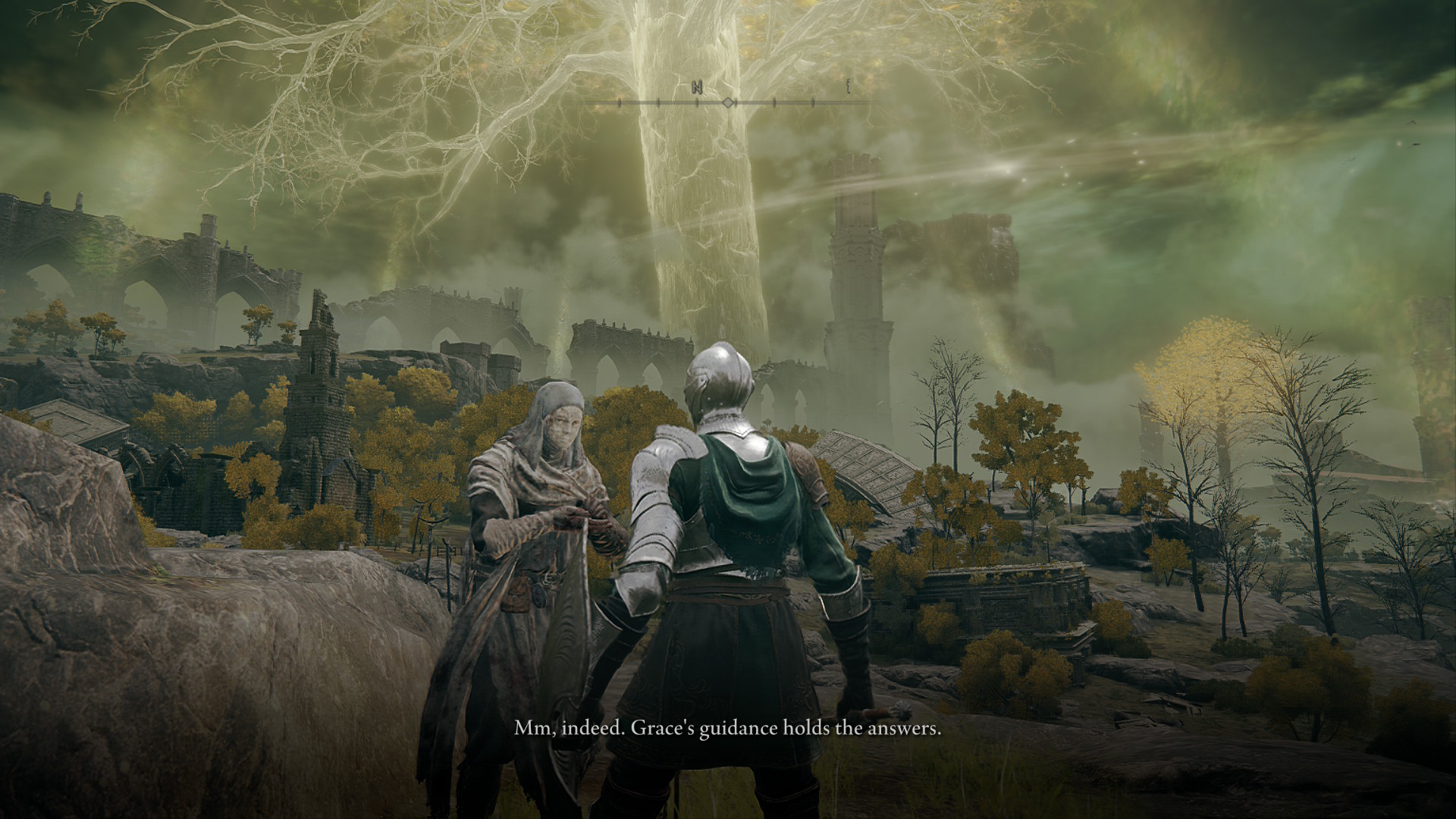
The Erdtree looms over the Lands Between.
Elden Ring has always been about freedom. Freedom to build a character however you want, freedom to approach its challenges in countless ways, and above all, freedom to explore the Lands Between at your own pace. Tarnished Edition takes that further, giving players the freedom to play the game wherever they go. Like many other open-world games on Switch 2, there are significant technical issues, but the fact that a game of this scale can run natively on a handheld at all is incredible. For those who have already experienced Elden Ring elsewhere, that may not be enough to justify another purchase, but for RPGamers with even a passing interest in this acclaimed game, Tarnished Edition provides a convenient new way to experience it. Elden Ring was designed around the idea of going wherever the road leads; now, that road can go almost anywhere.
Disclosure: This article is based on a copy of the game provided by the publisher.




Recent Comments