Looking Back at Sword of Mana
It might well be time to revisit this game, see what can be improved, and then remake the remake.
Once upon a Q&A Quest, we were talking about what made a good remake when it came to much older games, and it reminded me that I’d played Sword of Mana the previous fall. It was the first game I had in my Game Boy SP after I had the battery replaced, in fact. Apropos to our conversation, I had done a Looking Back segment on the original Final Fantasy Adventure several years before, and this other version is worth a look as well.
The first point of the discussion was, what is the point of a remake? Accessibility was a big item, since the specter of legacy media obsolescence is a concern for video games, but Sword of Mana came out for a handheld that could still play the original version without a problem. So, why have it?
The most obvious answer is that the game’s developers thought they could do better in one or more ways, with graphics being only one of them. If it were simply a matter of visuals, then the cell phone remaster or smartphone remake would have been enough. But no, Sword of Mana went above and beyond and possibly too far at times.
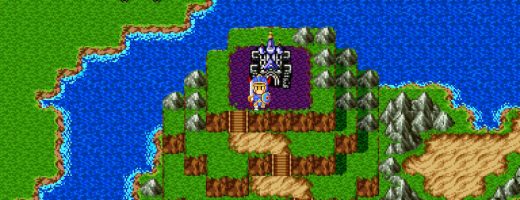
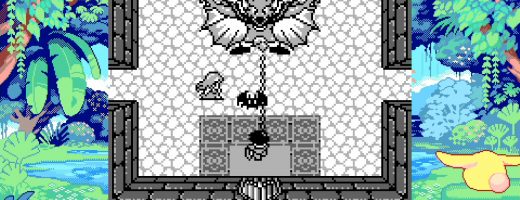
One important factor is that, while Final Fantasy Adventure was the seed from which the Mana series sprouted, it doesn’t necessarily feel like a Mana game. It began as a spin-off of Final Fantasy, after all, and it has a number of references to the first game of that series in its boss list. So it cannot be overstated how much more Sword of Mana has been made to feel like a game of its series. It includes all the graphical flourishes and visual shorthand of Secret or Trials of Mana for the SNES/SFC while including the creative character design philosophy of Legend of Mana. It has more weapon types, more magic spells, more involved boss fights, a class change system, and in general feels like a more advanced game of its series.
Keeping with that, the plot has received some evolutions of its own. While the basic frame is the same, it can’t be denied that the original game’s plot was quite basic indeed. There’s little explanation for why anyone is doing anything, beyond the simplistic “bad guys want power and good guys want to stop them.” But in Sword of Mana, the Hero gains a fuller backstory, the Heroine becomes a protagonist in her own right with a detailed origin, and the villains are suddenly party to a complicated family drama across magical dimensions that leads to misguided attempts at vengeance and conquest. Also, the vampire dude wasn’t actually a bad guy after all. It’s all much more interesting.


Final Fantasy Adventure had several gimmicks wherein a specific weapon—or more rarely, a spell—was needed to navigate a dungeon and solve puzzles. While some of this remains intact in Sword of Mana, the remake also retains the issue that much more could have been done with this. Flails pull the hero across gaps, scythes cut away underbrush, and axes chop trees. That’s as basic as it gets, and actually less than in the original, as it lost the utility of mattocks, the morning-star, and ice magic. Magic in its own right has taken two steps forward and one step back, with the introduction of the series’ signature elemental spirits being a plus, but the usage and targeting system being a flat minus. The length of time spent holding the magic control button determines whether it is a support spell (short press) or an attack spell (long / charged press), while the hero or heroine’s currently equipped weapon determines the attack range of the spell. It’s reminiscent of spell targeting in Legend of Mana, and not in a good way. Having each elemental grant a signature attack that interacted with the world in different ways would have enabled more and better puzzles.
It’s easy to look back in hindsight and see what could have been done better. The fact of the matter is that this is what Brownie Brown was doing with this title already, and while some aspects were much improved, others could have used more thought. The class system, while an interesting side item, is also somewhat opaque on details. The inclusion of the Amigo System, a peer-to-peer connectivity function that pre-dated the Nintendo 3DS and its StreetPass by two whole generations, has doomed at least one magic subsystem and its attendant side quest to being practically undoable, even during the short period of time where one might conceivably be able to meet more than one other person with this game in real life.
As of now, it has been well over two decades since Sword of Mana first graced the shelves, which is longer than the period between it and the original Final Fantasy Adventure. In fact, next year it will be twice as long. It might well be time to revisit this game, see what can be improved, and then remake the remake. Much like Mt. Illusia in the end-game, there’s nowhere to go but up.




I have a deep fondess for Sword of Mana, although I haven’t played Final Fantasy Adventure, nor the newer remakes that is closer to the original game than the GBA title, Adventures of Mana. This is an intersting look as to how it worked as a remake and what it could improve upon.