Grifford Academy Early Access Impression
Grifford Academy has some wrinkles to iron out for its best chance to shine. The equipment-based combat system is really engaging and the dialogue hits quite well.
Nothing beats a good tale of being transported to another world. LandShark Games’s turn-based RPG Grifford Academy is one such tale as the story takes players on a complete journey from a campus library through a fantasy world all while providing an interesting equipment hook for the combat system. The groundwork has been laid for an enjoyable ride, though there are a few distracting moments where the character’s motivations feel as though they shift suddenly.
The world of Caldria is a magical medieval place, existing entirely within a book found at the library of Grifford Academy. This book is stolen from the librarian’s desk by Ernest and the incantation on the cover spoken aloud, leading to everyone in the library being transported. After being caught in the spell, Ernest’s sister Erika wakes up alone in a medieval village with only her hockey stick for protection. The library’s other patrons have also been transported into the book, being transformed into monsters in the process, and it is now up to Erika to find out where her troublemaker of a brother has gone.
At the same time, a dark force from the east has been sweeping through Caldria, creating violent monsters and ushering in the rise of the Dark Cloaks. The Dark Cloaks use any means necessary to gather more recruits in an attempt to conquer the world. As Erika and her friends Viva, Cap, and Jinnie gain more reputation among the population, they soon realize that helping Caldria become peaceful again and finding their friends and family from Grifford Academy aren’t mutually exclusive.

Katanas feel right at home with hockey sticks and electric guitars as weapons of choice for this misplaced band of misfits.
Occasionally, the party will come across a menacing enemy known as a Night Scryer. These beings automatically banish those that cross them, which means death for Caldrians. Luckily, banishment just boots Academy students out of the book, where they are free to voice the incantation and re-enter at any time. These pauses are just done for expositional purposes and to update the librarian back home, but still contain some urgency because time flows differently in the two worlds, with minutes in the Academy meaning days in Caldria. Being sent home just gives the party more time to reflect on what to do next and how to survive longer in Caldria to find Ernest and the other students.
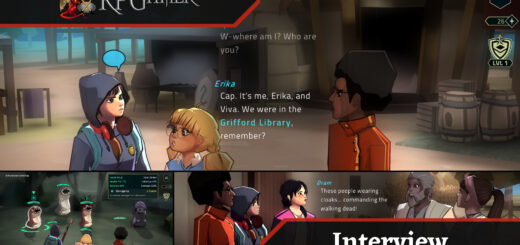
The party is not always on the same page and there is often bickering with one another. This typically takes the form of conversations between party members about how to proceed or to work as a team. There are times where these work wonderfully and help continue the growth of a party member, while other times they feel forced, with a party member suddenly becoming a jerk for the sake of drama. This has an in-game purpose as well as it can affect the party’s attributes in minor ways. Each decision can affect one of two related personality traits, and gaining enough in one of them results in a small bonus in a corresponding stat. Stylistically, it works as a jarring reminder that these characters are young and impulsive. This unbalance is most keenly felt between party members with little history with one another while those with connections or backstories have dialogue that feels more organic.
Characters level up based on milestones reached in the story rather than experience earned, making random encounter points on the map useful only to collect currency for buying new equipment. For the most part the story follows a linear path that diverts into a few optional sidequests that add some world building flavour to future conversations. The fifteen-hour story is split into five chapters, with no ability to revisit previous chapters and try out alternate decisions other than starting a whole new playthrough.

Viva using the most powerful spell — Reading — to enlighten a skeleton.
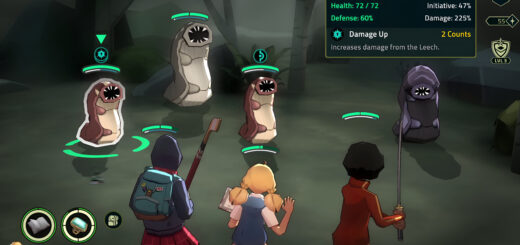
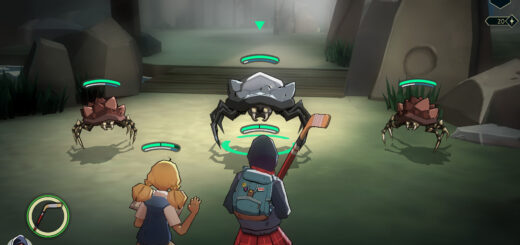
There’s an interesting wrinkle to turn-based combat in Grifford Academy that keeps each fight engaging. Every character has a set single-charge weapon and three empty slots for purchased gear. Charges dictate how many turns are needed before that weapon can be used again, with each character’s base weapon always being available due to having no cooldown. Each party member has a default affinity to either physical, intellect, or spirit-based gear and boosting those attributes will make affiliated weapons more beneficial to equip. This gear is bought from a shop in town that adds new variety slowly, so oftentimes, spending currency to refresh it is also needed to make sure players have the strongest gear.
Players are incentivized to always sport cutting-edge gear in other ways too. Each piece of equipment also has a level attached to it, and if a party member’s own level becomes too much higher than the gear they are using, several negative effects come into play, such as buffs not always working and charge time between attacks increasing. This forces players to constantly check for new gear and try out new combinations to make sure they’re as optimized as they can get.
Currency becomes a focus both in practicality with purchasing new gear, but also within quests. There are moments where progressing the story requires a lot of essence, the currency of Grifford Academy, to buy some information or gain a needed key. This is the only time things feels sluggish, as combat itself is enjoyable, but grinding becomes repetitive since no matter the enemy’s levels the same amount of essence is received. There is no incentive to explore every combat opportunity if the weakest enemies give the same rewards as the toughest.

A pun so bad it’s almost good.
Grifford Academy has a lot of future goals while it is in Early Access. While the story is completed, there are plans to add in a create-a-story feature so players can create and share their own adventures to embark upon. Adding to this personalized feel will be the option to incorporate a player’s own voice acting to showcase the quirks of each character as they see fit. A roguelite mode with intense combat, recipe hunting, and a new difficulty are all in the works to look forward to.
There are only a few songs on the soundtrack but they are quite catchy and fit the mood well. Visually, there’s a fun use of a diorama style for three-dimensional buildings to show off each town location. Characters walk on- and off-screen during story moments making each instance of dialogue feel as though it was delivered as a stage play. The main characters have some distinct designs, but for town guards and Dark Cloaks there’s no variation and overall there is minimal enemy variety.
Grifford Academy has some wrinkles to iron out for its best chance to shine. The equipment-based combat system is really engaging and the dialogue hits quite well. Minimal variety in grinding and having some character motivations feel unbalanced shows there are still improvements that can be made. Right now, there’s an interesting adventure with plenty of opportunities to make Caldria a promising destination in the future.
Disclosure: This article is based on a copy of the game provided by the publisher.




Recent Comments