Castlevania: Belmont’s Curse Review
The Artful Ballet of Dracula’s Castle Exploration
Gamers have dreamed about what a return to the Castlevania franchise would look like in the modern age. Growing accustomed to added RPG mechanics, there was a sense of familiarity and comfort with the franchise before it went dormant for over a decade. Any notion that the series would pick up where it left off is thrown out the window very quickly. Evil Empire’s Castlevania: Belmont’s Curse draws heavily from the lore, characters, story, and presentation, but the gameplay has shifted away from many of its RPG roots. This shift is met with tightly polished execution; however, there is a lingering sense that this isn’t what some fans were expecting. Of course, when there’s plenty of platforming puzzles and exploration, it may just rope in long-term classic fans instead.
Over two decades after Dracula’s defeat at the hands of Trevor Belmont and Sypha Belnades, evil starts to stir again in Paris. Trevor and his daughter Rose arrive to find the city in flames and go to investigate, leaving players controlling Rose. Rose Belmont has a curse that tries to take hold of her when her emotions go out of control. As she struggles to control her emotions, the curse has transformed her arm and threatens to envelop her entire body. The local bishop summons the Belmonts because the strength and numbers of the demons haven’t been seen since Dracula’s defeat. Rose explores the burning city of Paris and tries to manage her emotions as she uncovers who has targeted the city and why. The dialogue is fierce and gives a lot for the voice actors to chew on, but the plot is a comfortable backdrop with nostalgic connections to the franchise’s past.
Castlevania: Belmont’s Curse feels more aligned with a return to the classic titles of the 8-bit and 16-bit era rather than with the RPG mechanics present in later titles. This is emphasized by a large focus on exploration. Everything connects wonderfully into a well-designed map that is a joy to uncover. Successfully progressing isn’t always easy, particularly for those who aren’t used to precision platforming. Treasure chests are hidden behind increasingly elaborate death traps that zig and zag about, making Rose use the full extent of her abilities just to reach the end of a mini-maze that holds the relic or weapon inside. Side rooms almost feel more straightforward than figuring out how to progress. Vague clues and paying attention to surroundings are needed at times to decipher where to go next.
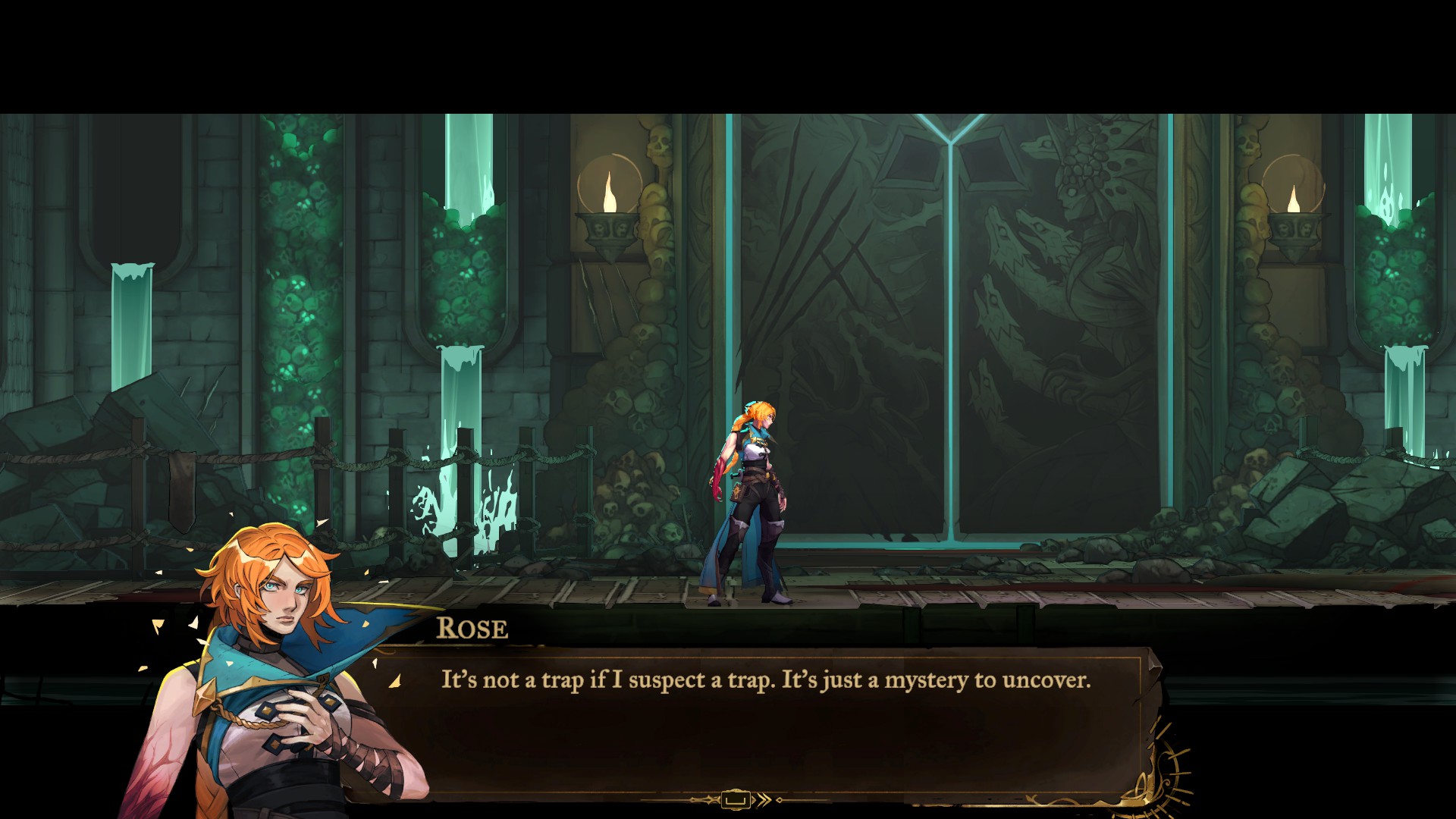
Rose taking liberties and warning that there will be plenty of traps.
There are tarot cards that house abilities that Rose can use both in combat and in exploration. These tarot cards are obtained upon defeating bosses that are littered throughout Paris. The first few bosses are simple to find, but all of them have clues to help ascertain their exact locations. Some of these clues are obscure, and Castlevania: Belmont’s Curse consistently rewards checking everything; avoiding doing so will be an outright detriment to Rose. Beyond equipment, Rose can find heart and mana pieces that increase health and magic while exploring. That rewarding feeling from uncovering a new secret or passing a puzzle test is wonderful, but it often comes with a side of frustration. Rose will get injured a lot while getting the timing down while zipping around the map as saws, spikes, and square stones will punish players that can’t get the platforming completed quickly. Fail enough times, and Rose will run out of health, sending players back to their latest save room.
The balance between rooms with enemy combatants and those with puzzles feels skewed to the side of puzzles. This constantly keeps players’ minds and reactions on top of their game, even without factoring in enemies. Enemies are often tossed in after players barely survive a deathtrap puzzle room, as suddenly the doors close off and Rose is bombarded with a few waves of demons. Belmont’s Curse is a bit forgiving during the large space between save points, as there are checkpoints in the puzzle rooms, and anything unlocked or defeated stays after death. Which means that if Rose fails at any point in a room full of buzzsaws, the reset point won’t always be at the beginning. Those with great skill will find no issues with the calibration of everything, as it is all well-designed in isolation. In practice, the pacing between platforming and combat usually focuses too long on exploration. It can be difficult to realign from environmental buzzsaws and their sharp teeth to the monstrous beings that bite back, which causes health to run out just before the next save point, necessitating some backtracking.
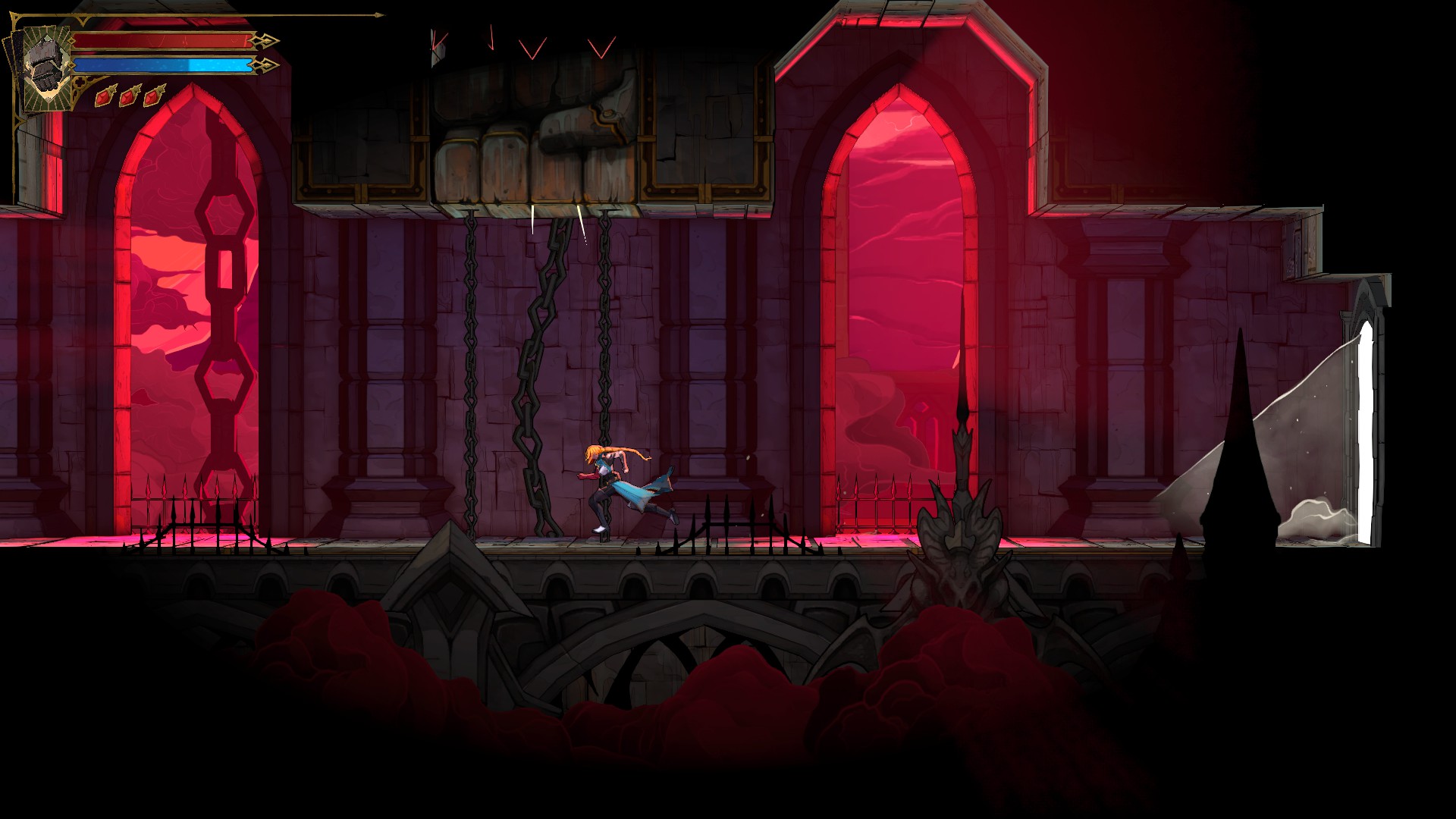
The chain is wobbling out of sheer happiness to see Rose underneath…right?
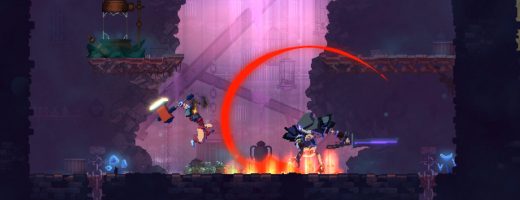
The majority of the difficulty in combat boils down to the boss fights. As with the platforming puzzles, however, there is a rhythm that can be figured out to defeat these bosses, but it can take trial and error. In many ways, the graceful movements needed to conquer the puzzles can help with combat sections. The ballet is a bit more straightforward in combat, though the obstacles and fight layouts still have some visual poetry at work too. There is still a sense that combat is a bit like a rich dessert; in that players are always overjoyed when it’s there, but it’s finished quicker than expected when compared to the healthy vegetables that platforming feels like. That isn’t to say that sealed enemy rooms are easy either; remembering every enemy’s pattern is impossible, and it is likely that even normal foes will sneak hits in.
Rose moves very precisely to player input, and there’s a selection of seven different weapon types that players can use to conquer the forces of the night. Each adheres to a preferred play style that eventually leads players to picking a favourite, and hoping to find its upgrade first. This is because each weapon has four tiers, and every upgrade is well worth learning a new or returning weapon for the power increase alone. Rose also has tarot skills to use in combat. These skills provide a different kind of attack or ability and can be improved by completing side objectives listed on the tarot card, which can include finding three of a particular weapon tree or using the ability to defeat a certain type of enemy enough times. Some of the tarot cards also give new platforming skills, opening new areas to explore after each one is found. The side objectives give a reason to swap out skills, but like with the weapons, it is easy to stick with a favourite.
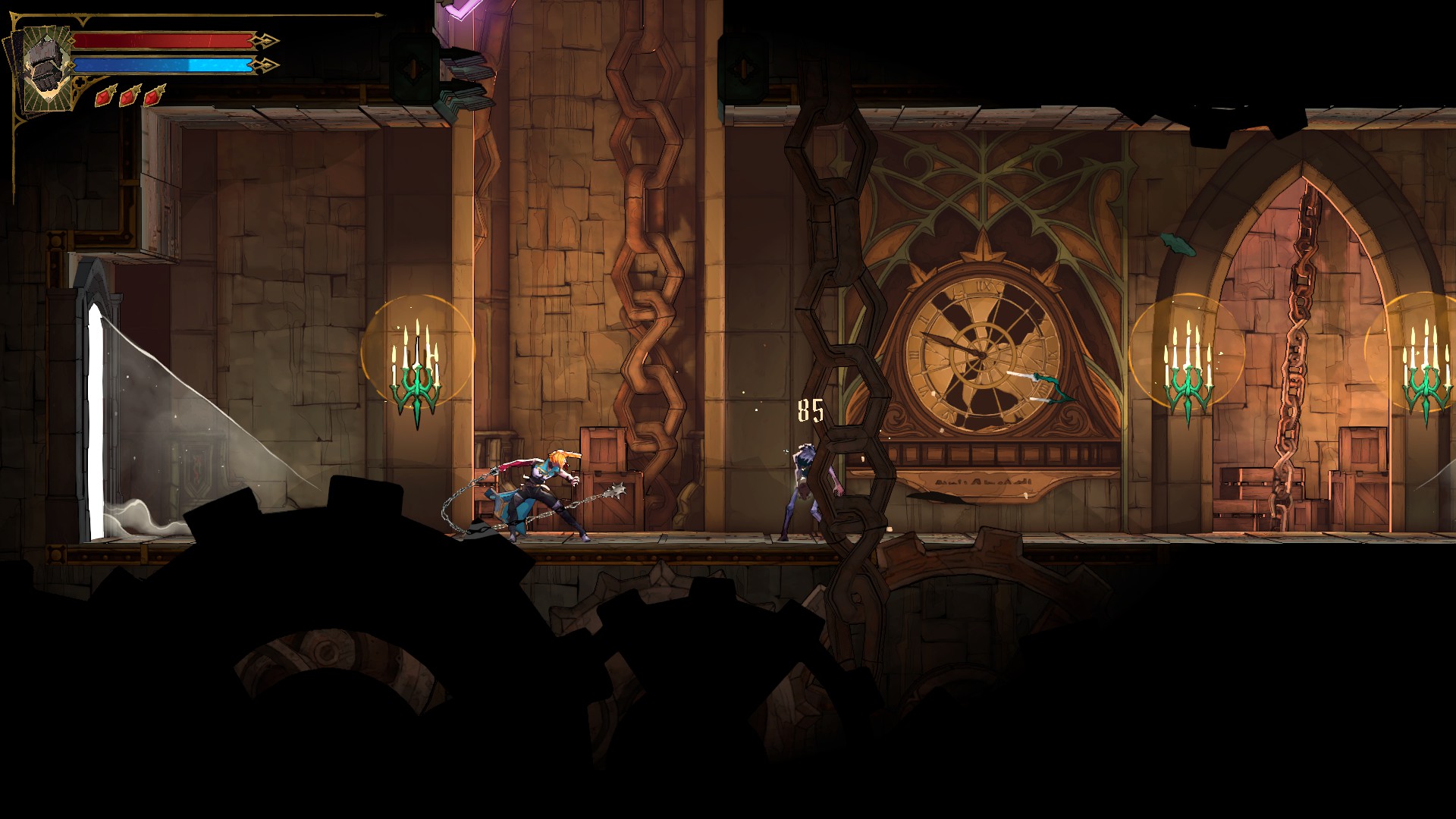
Wouldn’t feel right without a whip and some skeletons.
Castlevania: Belmont’s Curse differs from its RPG-heavier predecessors in a few ways. Defeating regular enemies can only net more health potions or refill mana on occasion. There is no currency or store of any kind. This adds to the emphasis on exploration as the primary way of getting stronger. Rose does gain levels, but they feel small compared to equipment increases. This is because one level up gains a single strength and defence point. They do add up to eventually take enemies down in one less strike, or allow Rose to survive one more hit, but when numbers frequently reach triple digits, single point can take a long time to be worthwhile. This leads to the balance feeling off, as platforming feels wonderful in short bursts, while combat could use to be a factor more frequently.
Visually speaking, there’s nothing quite like a Castlevania title, and its essence is fully captured with the gorgeous backdrops found in each room of every biome. The updated artstyle to the character and enemy designs allow for a wonderful fluidity and grace to the combat sequences. The auditory experience is full of a cacophony of piano-forward tunes that pushes the unsettling ambiance nicely within a 15th-century Paris engulfed by demonic forces. The voice actors are given a long leash to be passionate with the few lines they are given, making it a pleasant surprise that is well worth the wait.
Castlevania: Belmont’s Curse is a polished title with a clear design vision, and it is executed with a craftsman’s precision. The balance in the amount of puzzles compared to meaningful combat skews towards the platforming side. This shift in focus can be a blunt hit to the senses for long-time fans of the series’ more RPG-heavy entries. The title feels at home with older fans of the franchise as well as those of modern contemporaries of the Metroidvania genre. Those who can handle difficult exploration will find taking the fight to Dracula quite an enjoyable experience.
Disclosure: This review is based on a free copy of the game provided by the publisher.

Polished like a diamond
Boss fights are engaging
Always a reward for exploring everywhere
Pacing issues leave large chunks of platforming puzzles back to back
Precision platforming can be frustrating at times






Recent Comments