Brothers in the Dark: Grief, Guilt, and Growing Up in Final Fantasy XV
(This article contains significant spoilers for Final Fantasy XV.)
I didn’t play Final Fantasy XV at its launch ten years ago. My Day One Edition sat wrapped in plastic for years, waiting for a particular moment in my life. I’m not interested in mythologizing what Final Fantasy Versus XIII might have been; what matters to me is what’s actually on the disc, and how it hit me during a quiet, difficult stretch.
At its core, Final Fantasy XV is a story about brotherhood, loyalty, and duty. Real friendships aren’t always pretty. Sometimes a person gets deeply frustrated with, or even dislikes, their best friends and brothers in a moment without actually hating them or throwing away the bond.
For the first half of the game, that bond feels effortless. Hours are spent cruising down open highways in the Regalia with classic Final Fantasy tracks playing on the radio, taking detours to ride Chocobos or hunt monsters while the weight of the crown feels miles away. Combat is a tight, practiced rhythm: Ignis calling out weaknesses, Gladiolus backing Noctis up on heavy hits, and Prompto humming the victory fanfare while snapping candid photos of the crew. Even ending the day at camp feels warm and safe, built around Ignis cooking everyone’s favorite meals and the guys laughing over Prompto’s worst snapshots before turning in.

Before the weight of the crown catches up, Final Fantasy XV lets you live in the effortless warmth of four friends with no rush to get anywhere
That warmth is exactly why one of the most impactful stretches in any video game for me is the train scene and the area right after it: Fodina Caestino. After the devastation at Altissia and losing Lunafreya, Noctis is broken. He questions whether any of it matters and essentially looks ready to give it all up. Caught in his own grief, he overlooks what his friends have already sacrificed to bring him that far, especially Ignis, who paid the heaviest price by losing his eyesight.
Gladiolus becomes the driving force pushing back against Noctis. Getting right in his face on the train, Gladio reminds him that Lunafreya gave her life and Ignis gave his sight so Noctis could reach the throne. None of them are exempt from sacrifice or duty; Gladiolus, Ignis, and Prompto all want the Starscourge banished and the world saved from eternal darkness. Noctis starts out as a reluctant heir, a bratty young man who doesn’t grasp the weight of his calling, and it takes his brothers forcing him to confront that responsibility before he begins to see it.
After Gladiolus explodes on the train, the party feels on the verge of breaking apart for good. Gladiolus storms off, refusing to talk. Prompto curls up in his seat, his usual upbeat energy gone as he watches his best friend surrender. Ignis, steady and mature as ever, refuses to abandon the mission and tries to brush off his pain even as he’s clearly hurting, yet still he can’t hold the group together in that moment.
Stepping off the train drops the player into a dark, dangerous swamp. When Noctis moves forward here, it isn’t out of heroic resolve; it’s out of guilt and obligation. What makes this section unforgettable is how Final Fantasy XV transfers Noctis’s guilt straight to the player through mechanics.
The player starts running ahead like they would anywhere else, only for Gladiolus to snap, “Is it too much to ask the royal procession sticks together?” Turning the camera around reveals Ignis moving slowly and stumbling along the path, occasionally falling until Prompto helps him up. Pulling a weapon out too close to Ignis prompts Gladiolus to bark, “Hey! Don’t you think you’ve hurt Iggy enough already?” Casting magic nearby brings “Noct, what if you hit Ignis too?!” Even combat drives the knife deeper: Ignis is sidelined, and Prompto often hesitates to join the fight so he can stay near him.
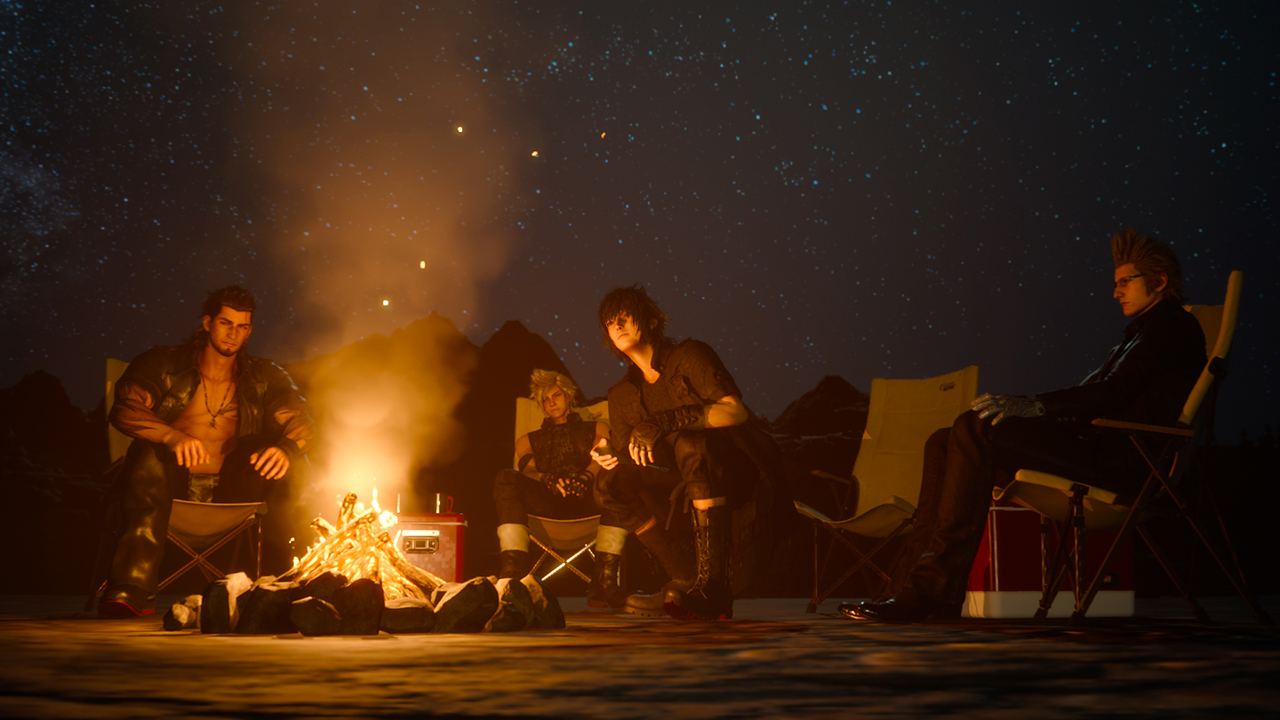
By the time the group reaches Fodina Caestino, the once-warm campfire has gone completely cold
Even camping, a mechanic that used to mean jokes and easy camaraderie, turns heavy and quiet. Instead of banter, there’s silence. Gladiolus helps Ignis to a chair, can’t bear to sit across from a sulking, self-pitying Noctis, and walks out of sight, while Prompto sits slouched and staring at the floor.
Right before the boss arena, Gladiolus stops Noctis for one of the game’s rare interactive dialogue choices and one of its sharpest moments: “Hold up. You sure you’re ready for this? You got what it takes… to face your ancestors and convince them to lend you their strength? Got a long road ahead, can you see this through to the end?” Answering with frustration makes Gladiolus put his foot down and tell Noctis to stop dragging his feet; answering with resolve gives Gladiolus a small glimmer of hope that Noctis might finally take his duty seriously. It’s colder and more businesslike than the train blowup. It serves as a reminder that entering a Royal Tomb isn’t a checklist item, and the past kings of Lucis are judging whether he’s worthy.
Once Noctis claims the power of the warrior, Ignis steps in as the grounding voice the group needs. He says he can’t take the silence and bickering anymore, telling Gladiolus to accept that Noctis hasn’t abandoned his duty, that he’s grieving, and that he’ll step onto the throne when he’s ready, not a second sooner. That gives Noctis the push he needs to start coming out of his shell, and the bond begins to mend. Ignis’s words carry extra weight because he paid the highest physical price, yet he is the one telling the party to stop coddling him, stop bickering, and endure their shared adversity together. Brotherhood isn’t always warm and tidy; it’s different people bound by a shared purpose even when they clash. People don’t grieve the same way. Noctis and Gladiolus are hurting over the same losses, even if how they process that pain looks completely different.
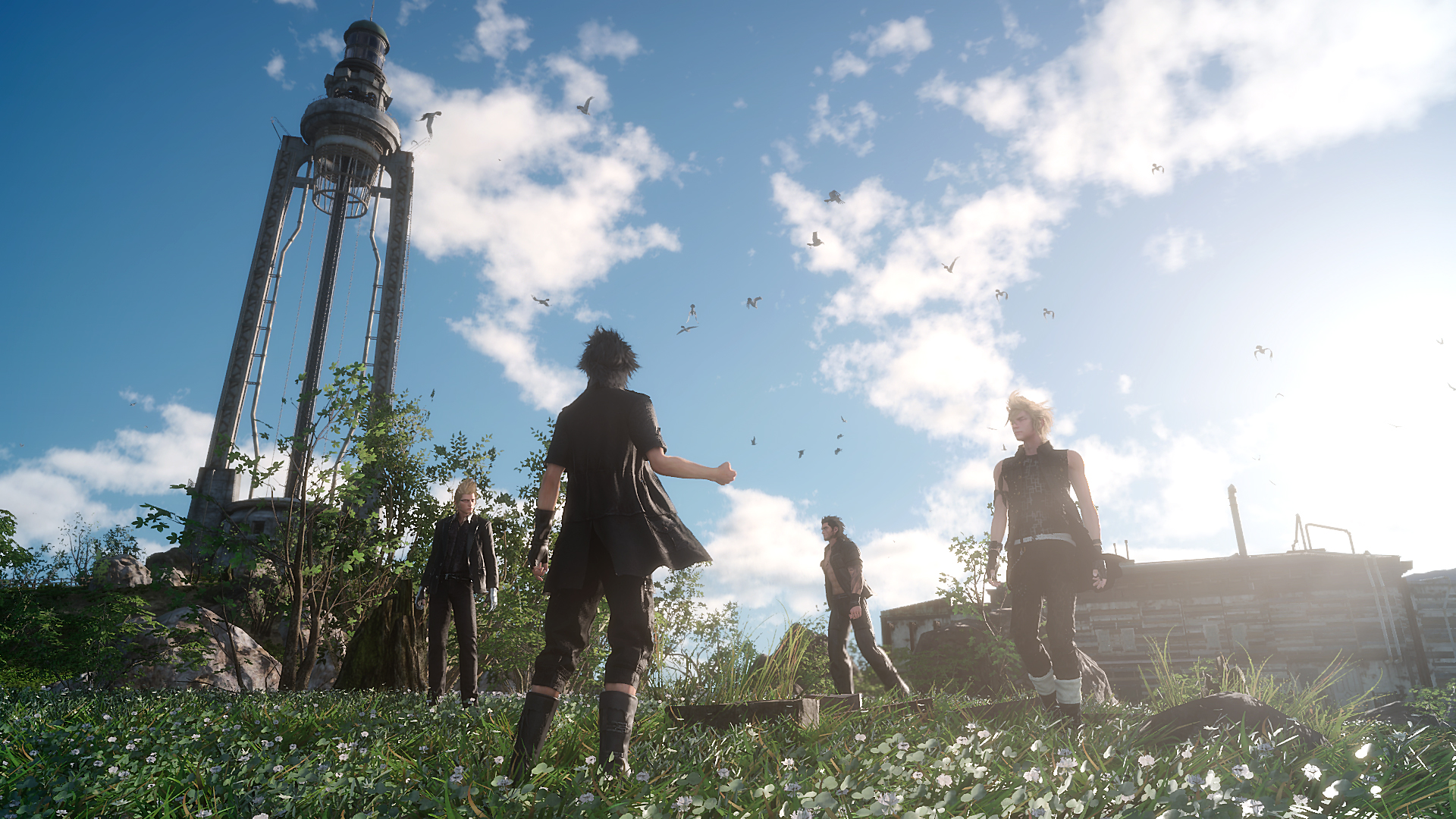
Brotherhood isn’t measured by the easy miles, but by who remains standing when the silence clears
After Fodina Caestino, the group doesn’t magically snap back to the carefree boys from the start of the road trip. Ignis still has to navigate the world in the dark, and the scars from their worst moments don’t disappear. Instead, they learn a quieter, sturdier kind of loyalty. It’s a loyalty that carries them all the way back to Insomnia and that final, heartbreaking campfire, where the laughter is gone not out of anger, but because they finally understand the cost of love and duty.
That’s why Final Fantasy XV stayed with me long after the credits rolled, and why it still hits so hard years later. People tend to romanticize brotherhood and close friendships as effortless: all inside jokes, shared history, and unconditional warmth. Life rarely stays that simple. People grow apart, carry unspoken resentments, or process pain in ways that hurt the very people they love most. Sometimes silence settles where laughter used to be.
Final Fantasy XV understood that. It didn’t pretend that love means never clashing, never failing each other, or never needing time to grieve. It showed that real loyalty is what happens after the silence, when people pick up the pieces, accept who they’ve both become, and decide the bond is still worth walking through the dark for.





Recent Comments