People of Note Interview
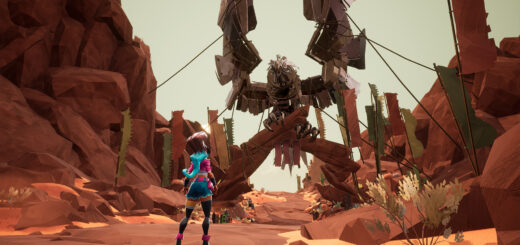
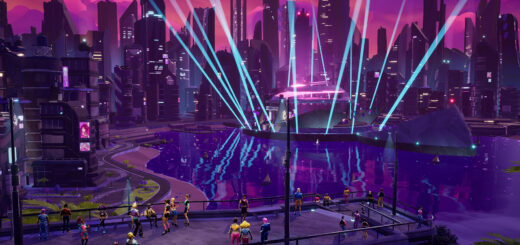
Developed by Iridium Studios, People of Note is a musical turn-based RPG that follows pop-star protagonist Cadence. After she’s shut out of the Noteworthy song contest in her home city of Chordia, she sets out across the land of Note to form a band with a new, fresh sound capable of winning the contest, but along the way, she finds much more than she initially bargained for. RPGamer was given the opportunity to ask director Jason Wishnov some questions about the game’s inspirations, development, and design philosophy. People of Note is available now for PC, PlayStation 5, Xbox Series X|S, and Nintendo Switch 2, and readers interested in learning more can check out RPGamer’s review of the game.
Jordan McClain (RPGamer): What was the original spark behind wanting to make People of Note, and did any specific games, media, or experiences influence the core design?
Jason Wishnov: Absolutely. I’ve always loved musicals, but…and forgive me if it’s a bit trite, as this point…seeing Hamilton in 2017 in LA really got me thinking about the broader cultural appeal of musicals, not just as stage plays, but interwoven into television and film…why hadn’t that been thoroughly explored in gaming? Rhapsody was a thing, back on the PS1, but the technology just couldn’t represent the proper experience, I think.
But on the RPG side, I think you’ll immediately see some major influences. Final Fantasies 7, 9, and 10, Chrono Cross, and even a little bit of The World Ends With You…not to mention Super Mario RPG or Legend of Dragoon for the active timing element (which, I want to point out, is wholly optional).
RPGamer: What were your musical inspirations, either within the realm of video game music or outside of it?
JW: Soundtracks from RPGs have always been a favorite of mine…Scars of Time and the old world vibes of much of Mitsuda’s Chrono Cross OST were big influences, and we have a whole Celtic area to make sure we paid homage. Hamauzu and Uematsu, of course, are mainstays as well! Big Giant Circles did an incredible job with the game’s score.
From a “musical” perspective, beyond Hamilton, Hadestown really inspired me when I went to see it right at the beginning of production. The set design, the cohesion, the way it took a familiar story and made it new…really just blew me away. And the opera scene from The Fifth Element! We have a direct nod to that scene in the game.

RPGamer: People of Note features quite a wide variety of musical genres. What did the talent search look like for musicians and collaborators on the soundtrack?
JW: DIFFICULT. Big Giant Circles took care of the vast majority of the score…which is an unbelievable feat, spanning dozens of genres…but the musical numbers required quite a few different specialists, mixing engineers, live musicians, and of course, performers. Jason Charles Miller (of Final Fantasy XIV fame) was the lead composer on many of them, but we also have Andrew Aversa (aka Zircon, an EDM specialist), Mansa Wakili (a Grammy-nominated rapper), Breabach (a proper Scottish folk band), and more. Music production took the entire length of the development cycle…over six years…and we hope the effort involved comes across in our fully animated musical numbers!
RPGamer: How did you approach the turn-based combat design, and what are your goals for players while engaging with it?
JW: We decided to forego long-term item management in the game…there are no items at all, in fact!…so to compensate for that, we wanted to ratchet up the complexity and strategic decision making in battle. There are quite a few ways we did this…by making our “mashup” attacks (read: limit breaks) require two different band members, each combination having a different effect…by having boss enemies ascend periodically in power, to discourage turtling strats…but one of the biggest ways was by giving players direct control over turn order, and creating many incentives and disincentives for taking certain actions in a certain order. This can give rise to an almost chess-puzzle-like feeling on certain turns, and to that end, we made sure that there’s very little hidden information in the battle system: you know what the enemy is going to do, when they’re going to do it, and exactly how much damage all your attacks will do.
That complexity needs to be very carefully and deliberately rolled out to the player. Things may seem simple and traditional in the first dungeon or two, but by the time you’re six to eight hours in, things are going to start to really expand, and you’re going to see some things that you haven’t seen in any other RPG! And, of course, ALL of the mechanics are highly themed to the musical nature of the game…crescendo meters, mashups, time signatures, stanzas, and measure mods all kind of play into that theme.

RPGamer: What was the most challenging part of the development process, and how did the team overcome it?
JW: I think it had to be the production of the musical numbers, which temporarily shifted our entire studio to being an animation production studio for a VERY significant period of time. The pipeline for such things is pretty different from game development as a whole, so we really had to learn on the fly. Luckily, we were able to bring in a few key team members who had experience in that sort of thing, and lean on them: you never know where key expertise is going to come from! We ended up making quite a few incredible musical numbers, so we really hope everyone enjoys them.
RPGamer: Were there any ideas or gameplay elements that you had to cut during development?
JW: Fewer than you’d think, which is weird to say! We had a full dungeon, the Half Steppes, which was probably the biggest cut…but from a pacing perspective, that’s probably totally fine. A few puzzles here and there had to be cut, and the battle system definitely went through a couple of iterations…initially, the player could directly control the genre of music active in battle, but the mechanics around disincentivizing the player not to just immediately change it every turn got weird and required the player to do math.
There’s a small rhythm minigame in Chordia you might find pretty quickly…I really wanted to expand that out into a much larger endeavor…but making a whole rhythm game is, in fact, a ton of work, and I think it could have potentially further confused players: despite the fact that this is a musical, it’s an RPG first, not a rhythm game!
RPGamer: Is there anything else you want to communicate about People of Note to our audience?
JW: I guess…considering the audience…I guess I just want people to know this is an RPG borne out of the legacy of Final Fantasy, a proper, highly strategic title that attempts to combine the best of the past with a hope for the future. The musical element is woven into every strand of the game’s DNA, but the feeling you get when playing…I hope it evokes those magical feelings of exploring Zanarkand, or Alexandria, or Junon. I couldn’t be more proud to release a game like this, and I sincerely hope you all enjoy playing it as much as we loved making it.
RPGamer would like to thank Jason Wishnov for taking the time to answer these questions, as well as to Alex Shea and Tara Bruno PR for facilitating the interview. People of Note is available now for PC, PlayStation 5, Xbox Series X|S, and Nintendo Switch 2. Readers interested in learning more about People of Note can read RPGamer’s review.





Recent Comments