Digital Impermanence and the Curious Case of Wuchang: Fallen Feathers
Nothing Is Forever
As time marches on and a new year approaches, technology continues to rapidly advance, and so too does the way we play and experience video games. When I was growing up in the 2000s, discs were how we stored and played games. When a developer released a game — say, Kingdom Hearts — that was it. Any changes to the product would come from a director’s cut or updated release, like Kingdom Hearts: Final Mix. Not until the widespread adoption of broadband internet in the late 2000s did it become commonplace for developers to issue updates for their games, though, early on, this was less common and largely elective. Now, when players purchase a game, updates queue and download automatically, and, in some cases, internet connections are required to launch digitally downloaded games, meaning patch updates are less optional and harder to avoid than before. If the game has no physical release, players often make irreversible decisions once an update is downloaded. Even more starkly, the PlayStation 5 Digital Edition and Xbox Series S both lack disc drives entirely, and discs are quickly going the way of the dodo.
So why does this matter? Is this a bad thing? In most current cases — at least in my experience — not necessarily. When an update or patch is released to fix something like a game-breaking bug or performance issues, that’s a good thing. We all want our games to function and play properly. But what happens when a game goes further? What happens when a game changes core, fundamental aspects of itself in a way that is not only noticeable, but even contradictory to the initially offered experience? That brings me to the topic of this article. Wuchang: Fallen Feathers is a game that, in its post-launch updates, has been on the end of some incredibly curious and unusual decisions. These decisions raise important questions and concerns about artistic expression and preservation of games as a medium in an era where the permanent snapshots of the compact disc are increasingly falling by the wayside.
For context and full transparency, Wuchang is a game I reviewed on release back in July of this year. I liked it quite a lot: its gameplay was thrilling, evoking the best qualities of a Soulslike, but its narrative and world elements suffered from poor interactive execution. My full thoughts can be read here, but now lies the crux of the problem. Those thoughts aren’t exactly as relevant anymore, because Wuchang’s post-launch updates have changed the game in drastic ways, altering key plot details, massively changing enemy behavior, and tweaking gameplay and other elements to a degree that systematically undermines some of its central strengths in a worrisome way.

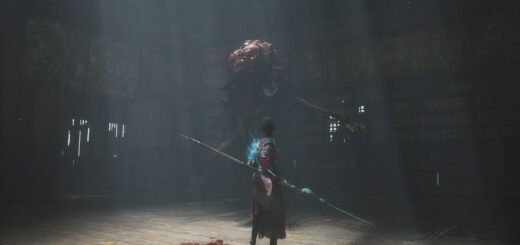
Liu Wenxiu just gets a lil’ winded now after defeating him.
Fundamentally, Wuchang is a game about ephemerality: a predominant thematic element is the inevitability of change, which is an essential tenet of Taoism. Taoist philosophy underscores much of Wuchang’s world and plot to the point where the game’s tagline on PS5 is, “Nothing Is Forever.” Throughout the game, numerous bosses and characters make ultimately futile attempts to prolong the fading Ming Dynasty, all of which prove fruitless. The protagonist, Wuchang, must grapple with the fear and prevalence of death in the chaos of a collapsing society. It’s a powerful message, and one of the game’s narrative high points. It’s ironic then, that its patch 1.5 update in August not only reversed the deaths of major bosses and plot figures but made them merely become “exhausted,” as well as changing lines of dialogue in ways that starkly contrast their original meanings and motivations. The game is no longer tonally consistent with its own themes, and the plot and characters are now concretely different from what I played and reviewed.
From a gameplay standpoint, Wuchang is now quite different in several ways. Most significantly, entire hordes of enemies in the late game become passive and unattackable, drastically undermining the level design. Windows for dodging have become much wider, healing is significantly quicker, and most interestingly, invincibility frames when getting up from being knocked down are now present — an original omission that I mentioned in my own review. While it’s one thing to consider player feedback and tune the game, the larger changes exhibited, especially regarding wide changes in enemy enmity and level design, make Wuchang also feel like a fundamentally different experience in a way that feels more extreme than any single-player game I’ve ever played. I am no stranger to the balance of games changing after their initial release. Another Soulslike game I reviewed earlier this year, The First Berserker: Khazan, received tweaks to its difficulty, but its level design and mechanics remained, for the most part, fundamentally intact. While tweaks and balance adjustments can be justified, widespread alterations of movement mechanics or the enemy placement of entire chapters represent a drastic change from the initially offered experience.

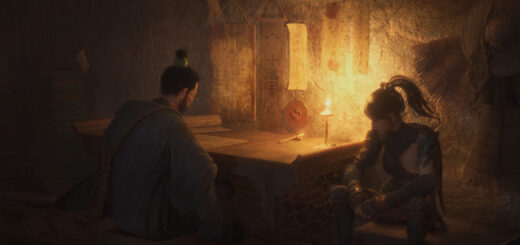
Note the complete tonal shift in post-battle dialogue.
The changes to Wuchang’s plot also raise concerns about developers compromising on their initial artistic vision. The plot alterations are significantly less defensible and border on egregious in some instances, with so many meaningful deaths being either unwritten or otherwise retconned in sloppy, unbelievable ways. In one specific example, numerous lines of dialogue from a Portuguese missionary are now absent from the game, as well as the complete removal of the “Pray” gesture granted at the end of his quest. Even further, various new dialogue lines for the English audio are now voiced by noticeably different actors, making their presence even more jarring in certain instances. While Wuchang may have been a mess to traverse, so many of its remarkable themes, interesting historical figures, zeitgeist, and fascinating lore elements have been thoroughly abandoned or reversed, amounting to a game that is less emotionally, intellectually, and philosophically challenging.
With all of that said, it is important to consider the ramifications for the preservation of video games and our experiences with them. The adventure Wuchang initially provided me with, flawed as it may have been, was valuable. As a practitioner of Taoism myself, far before playing Wuchang, I thought the game’s thematic and philosophical inquiries held some profundity worthy of discussion. But should I want to share and discuss that experience with others, I would be hard-pressed to do so… unless they own a disc of the game’s initial release, elect to play it offline, and forgo installing updates.

Shh… they’re only peacefully sleeping now.
In an era with terabyte-sized hard drives, where fiber-optic internet speeds have made downloading massive games almost seamless, few games now see releases on discs, and many see no physical releases at all. It’s not unrealistic to imagine a future where, eventually, physical releases will no longer exist; even now, many “physical releases” are simply prompts to a digital download and require an internet connection to initiate. When we lose that launch snapshot of a game — short of dubious digital shenanigans and having to perform technical gymnastics to access earlier versions — do we risk losing out on those initial experiences? Could games go even further than Wuchang does? For a game all about impermanence, the case of Wuchang: Fallen Feathers should make players think: will “Nothing Is Forever” apply to the games of the future?





Recent Comments