CONTROL Resonant Review
Resoundingly Trippy
Paranormal activity, when used as a plot device or thematic element in nearly any medium, offers a wide range of directions. The sky is the limit, and when a creator chooses to bend or even break reality and scientific parameters, imagination becomes the only real boundary. This game’s predecessor, Control, shows sheer, alluring creativity, but with a constrained scope set in a single building: the headquarters of the Federal Bureau of Control (FBC), a secret government agency that studies, experiments with, and attempts to control the paranormal. CONTROL Resonant pushes the creative boundary even further by having the supernatural break containment and engulf all of Manhattan. The result is an extraordinarily original experience that excels atmospherically and visually while staying firmly in control of its plot and combat, even if the paranormal elements sometimes slip into incoherence.
Resonant takes place after the events of Control; for those who didn’t play the previous game, the main menu has a helpful video with a synopsis of the first game. The game begins with Dylan Faden, the younger brother of FBC Director Jesse Faden, awakening and escaping his containment cell. He learns that the Hiss, a paranormal entity that once possessed him and that his sister faced down, has escaped confinement at the FBC headquarters, known as The Oldest House, and taken over Manhattan. At the same time, Jesse, who used a stone rod known as the Aberrant to wake Dylan, has disappeared. After escaping The Oldest House, Dylan is quickly recaptured by FBC operative Zoe de Vera and tasked with exploring Manhattan to investigate and combat the Hiss under her watchful eye.
Resonant does a lot well, with a powerful, pervasive sense of subjugation running through the experience, embodied by its protagonist. It’s absolutely miserable to walk a mile in Dylan’s shoes. As a byproduct of his social isolation, abuse at the FBC, and sheltered nature, he’s quite aloof and thoroughly haunted by his violent past — in part from his possession by the Hiss, but also due to his past trauma. As players explore Manhattan, NPCs frequently allude to Dylan’s outbursts, reacting with fear, disgust, or even hate. Even Zoe, who communicates with Dylan during missions, treats him terribly, and consequently, Dylan lacks confidence. This juxtaposes effectively with his sister, Jesse, who shows far more control, cool-headedness, and conflict management during Control, and the game’s later exploration of their sibling relationship makes for some emotionally poignant character writing.
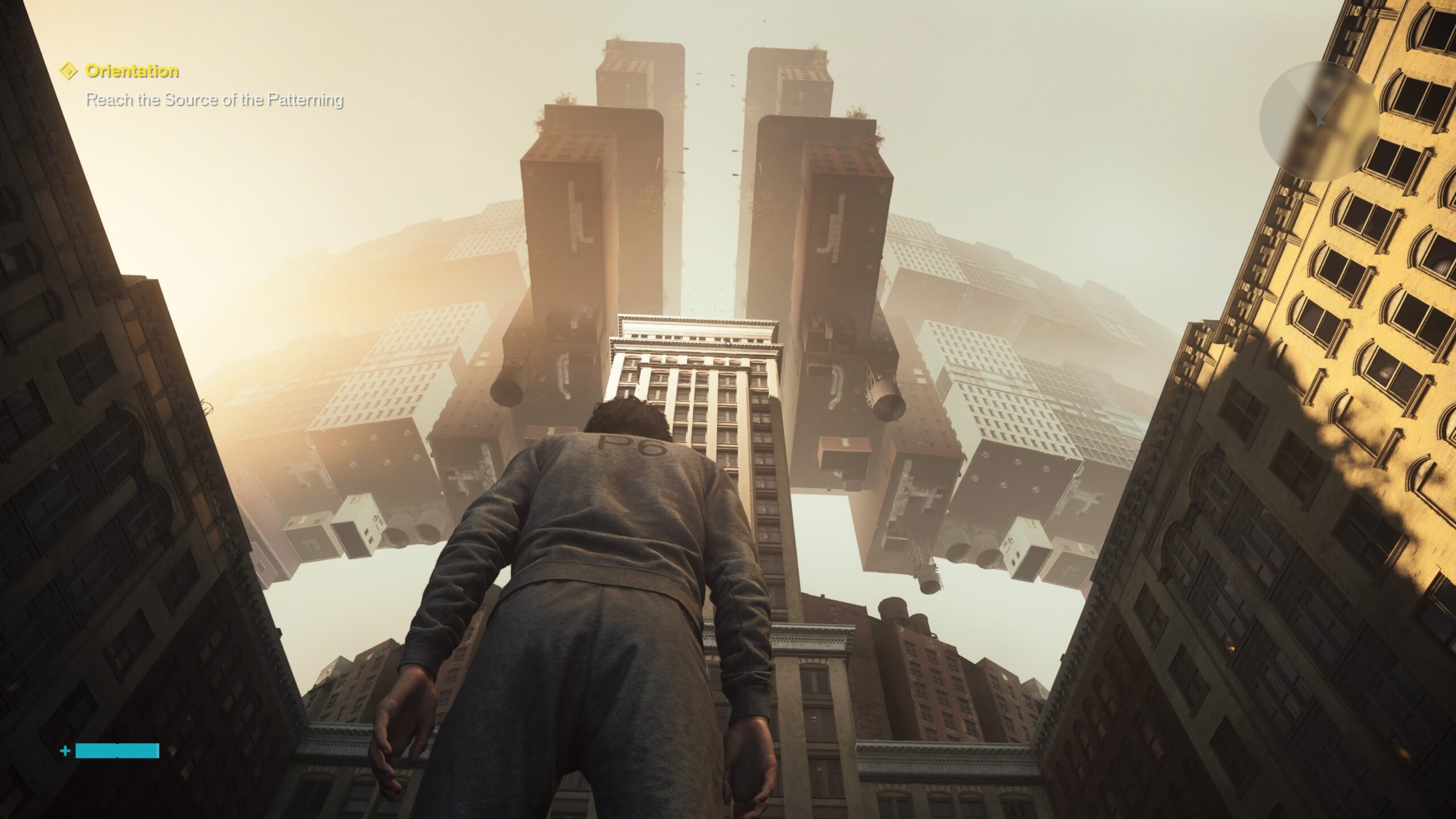
It’s hard not to feel small and overwhelmed.
Where Resonant somewhat stumbles is in its overarching lore, particularly as it relates to the Hiss. With a scope that that dwarfs that of its predecessor, the Hiss and its impact are felt across a significantly wider range by a much larger group of people, and while this often makes for interesting plot moments and sidequests, the sheer divergence in the powers, abilities, and paranormal phenomena exhibited by the Hiss unravels into an overwhelming variety of plot threads. Resonant doesn’t make this particularly easy to understand, and trying to piece it all together in a satisfying way is a Sisyphean challenge. The world is littered with documents, often redacted, that offer some insight, but they often raise more questions than they answer. It also doesn’t help that the game’s story ties into Remedy’s Alan Wake series, which takes place in the same universe, further complicating matters.
In one sense, perhaps feeling overwhelmed is the point, creating a fascinating sense of parallel discovery alongside Dylan, with players feeling the same exhaustion and tastes of the madness he frequently exhibits. At the same time, it becomes increasingly difficult to justify further exploration and engagement with quests when the world is so disorienting and jarring, and Resonant‘s plot is ultimately an acquired taste that varies in how well it connects with players. CONTROL Resonant finds itself in an interesting paradox here: its atmosphere and world feel simultaneously engrossing and overwhelmingly complex. Though it doesn’t skimp on detail, its coherency suffers when examined too hard for too long.
On a simpler note, Resonant’s combat is much easier to understand than its labyrinthine plot, and it sports some effective, often high-intensity action RPG combat that is fundamentally sound and fairly rich in customization options and RPG elements. Wielding the shapeshifting Aberrant as his weapon, Dylan can transform it on command, letting him seamlessly shift between three primary weapons: Cleave, an axe that excels at back attacks; Strike, dual daggers with a high critical chance; and Glaive, a wide scythe that can push enemies away. Dylan also has three secondary weapons: Crush, a slow, high-damage bludgeoning hammer; Extend, nunchaku that reward charge timing and can strike multiple enemies; and Drill, which can inflict continuous damage. Supplanting these is a wide variety of combo finisher weapons, ranging from fists to giant swords and rotating blades.
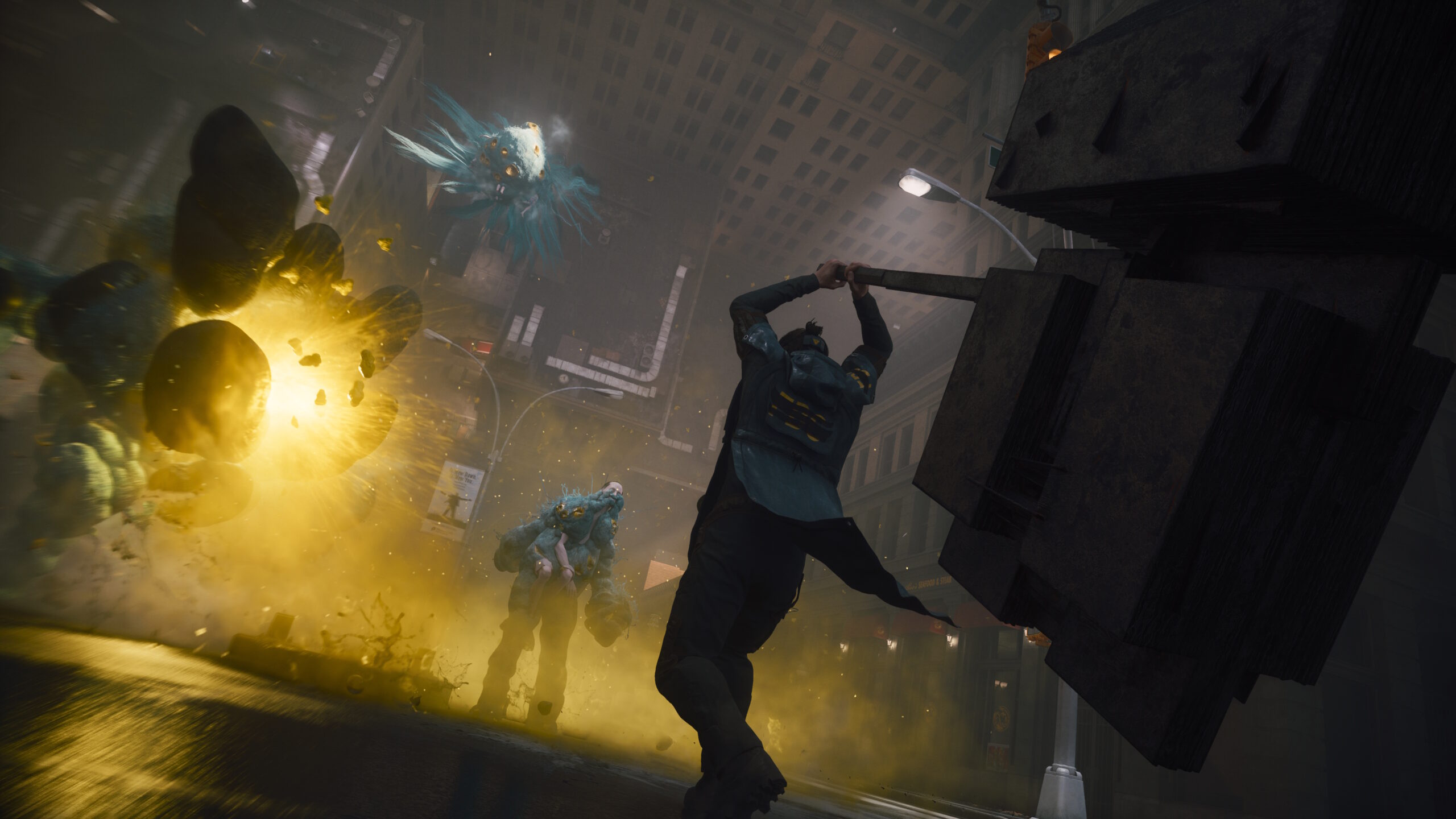
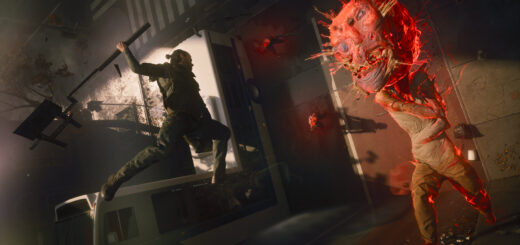
Dylan’s about to put the Abberant’s hammer down.
Dylan can also dodge and has a handful of combat abilities — such as a fire element, projectiles, a ground strike, and status moves — plus an extensive skill tree and equippable artifacts that grant boons. Together, these elements give the game broad build variety and plenty of ways to tackle fights. Dodging, switching weapons, and basic combat feel fast, fluid, and fun at their best, and there’s a real, chaotic satisfaction in navigating hordes of Hiss-infected beasts, with CONTROL Resonant interestingly making it feel seamless to not use lock-on. While fights against enemies are always engaging and initially quite fun, Resonant eventually gives way to weariness, and the balance feels like it gradually deteriorates later into the game.
While beelining through the story or lightly engaging with side quests won’t leave players feeling unsatisfied with the enemy variety, engaging with too many activities throughout the world makes one thing apparent: despite well-designed enemies with some good variety, CONTROL Resonant simply doesn’t have the enemy variety necessary to adequately fill the scope of its world. Some mold-infested enemies weak to fire mix it up somewhat, but enemies can eventually feel routine, even if their movement demands engagement and attention. While the game’s mostly optional boss fights, known as Resonants, provide needed variety (and some truly incredible spectacles), they also simultaneously illuminate the combat’s biggest flaws and strengths.
At their best, Resonants encourage adaptation of player strategy and build, and are deeply rewarding to conquer and figure out; at their worst, they feel like health sponges or have frustratingly high-damage mechanics, which is only made worse the more Resonants players defeat, as each one killed resets the world state and gradually empowers all of the game’s enemies. Resonant’s primary combat mechanics that feel responsible for its later balance issues are Falter and health recovery. Falter essentially operates as a stagger bar and is increased to varying extents by different weapons and statuses. Filling the Falter bar against regular enemies lets players perform an execution that instantly kills them, while bosses become stunned and take heavy damage. On a different note, players find health only in the environment or occasionally dropped by enemies. Executing an enemy grants the short-lived Dominance status, guaranteeing defeated enemies drop health while it lasts. Boss fights address this with health checkpoints, indicated by a blue dot on the boss’s health bar, where players gain health once they reduce the boss’s health enough.
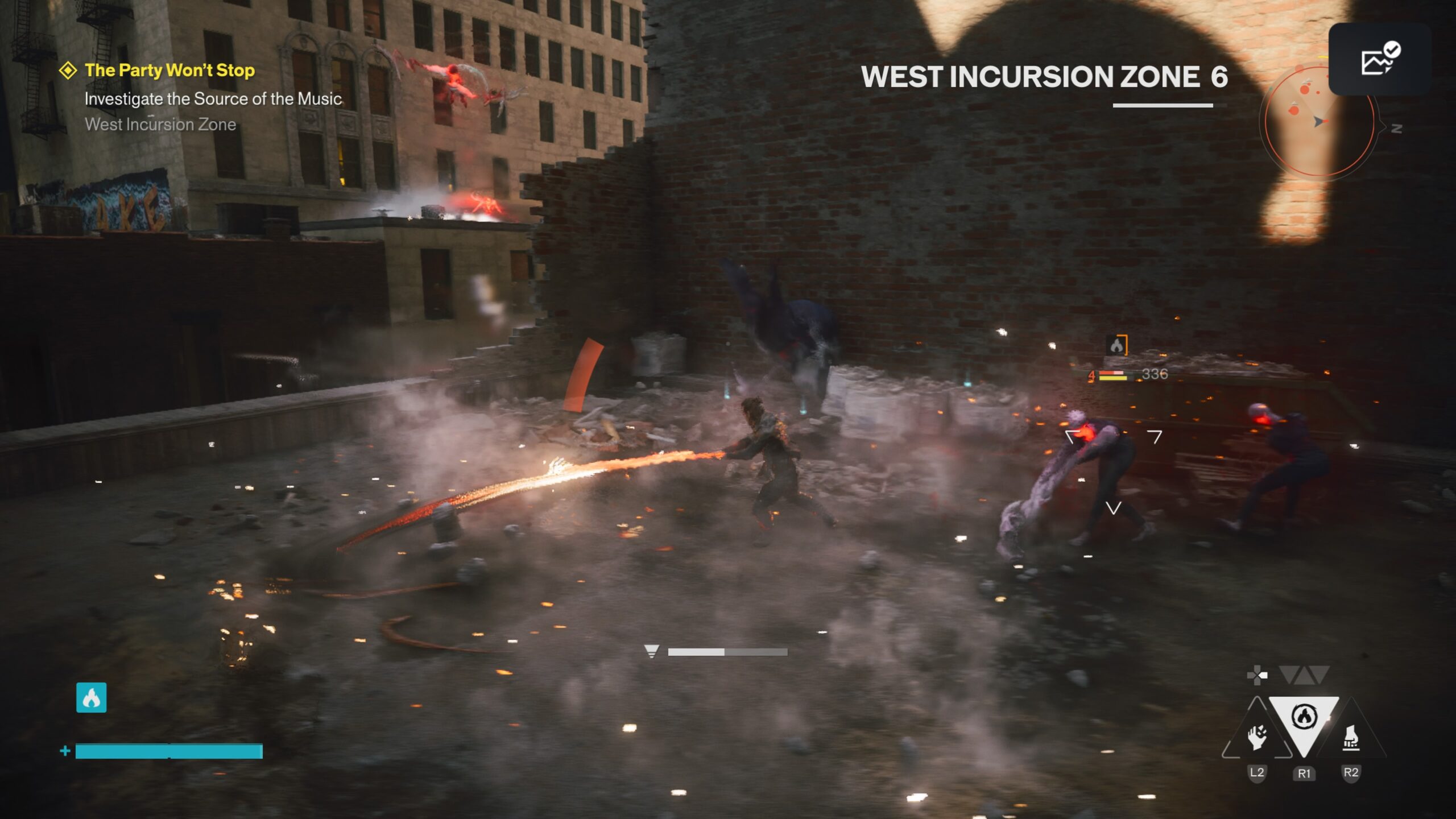
Enemies, meet fire glaive.
When these mechanics work, they’re phenomenal. For most of the game’s first half, they very often reward attentiveness, smart dodging, weapon selection, and aggressive play. But eventually, especially if players defeat too many Resonants, damage outpaces their ability to regain health, especially if they can’t establish an initial string of Dominance. This is made worse by encounters spawning infinite minor enemies, with players needing to defeat the stronger, larger major enemies to end an encounter. By the endgame, combining the health discrepancy with the chaos of minor enemy fire just makes fights frustrating, and the less-impressive Resonant bosses that feature underlings are particularly indicative of this. While combat is an overall positive in CONTROL Resonant, the gap between its early incorporation and later evolution creates an uneven experience that discourages exploration outside of combat, since Manhattan is chock full of enemies at every turn.
Exploring Resonant’s Manhattan is fairly seamless thanks to Dylan’s wide array of paranormally inspired telekinetic abilities, which let players traverse the city with ease. Often, just running through the city and taking in the sights is a reward in itself, though the city also boasts impressive content, sidequests, and points of interest. In the world of Resonant, the FBC investigates Altered World Events (AWEs), which are dimensional shifts or other bizarre events caused by Objects of Power or Altered Items, which can essentially be understood as possessed. Expanding the Hiss’s paranormal influence to the general public creates plenty of engaging, chaotic side stories, and watching how normal people interact with and adapt to it is thoroughly fascinating. Further, a dizzying number of well-designed puzzles are scattered across the city, offering valuable rewards in addition to the intrinsic satisfaction of solving them. That said, a few of the world activities, primarily combat-related ones, eventually wear thin.
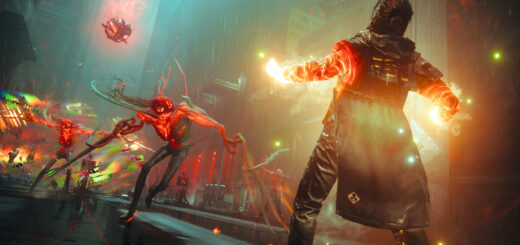
Speaking of the world, CONTROL Resonant’s Manhattan is mind-bendingly astonishing: twisted, peculiar, trippy, and borderline lurid. The Hiss’s corruption is truly a sight to behold, and it has left many districts geometrically warped, with all sorts of topsy-turvy violations of the laws of physics. The presentation is remarkable and unlike any other game in its sheer creativity and bizarreness. The dynamic lighting, textures, and ray tracing, combined with the amazingly detailed world design, create a consistently engrossing experience; just when players think the game has amazed them with one set piece, they’ll quickly find themselves blown away as they turn the next corner into yet another incomprehensibly corrupted nightmare zone.
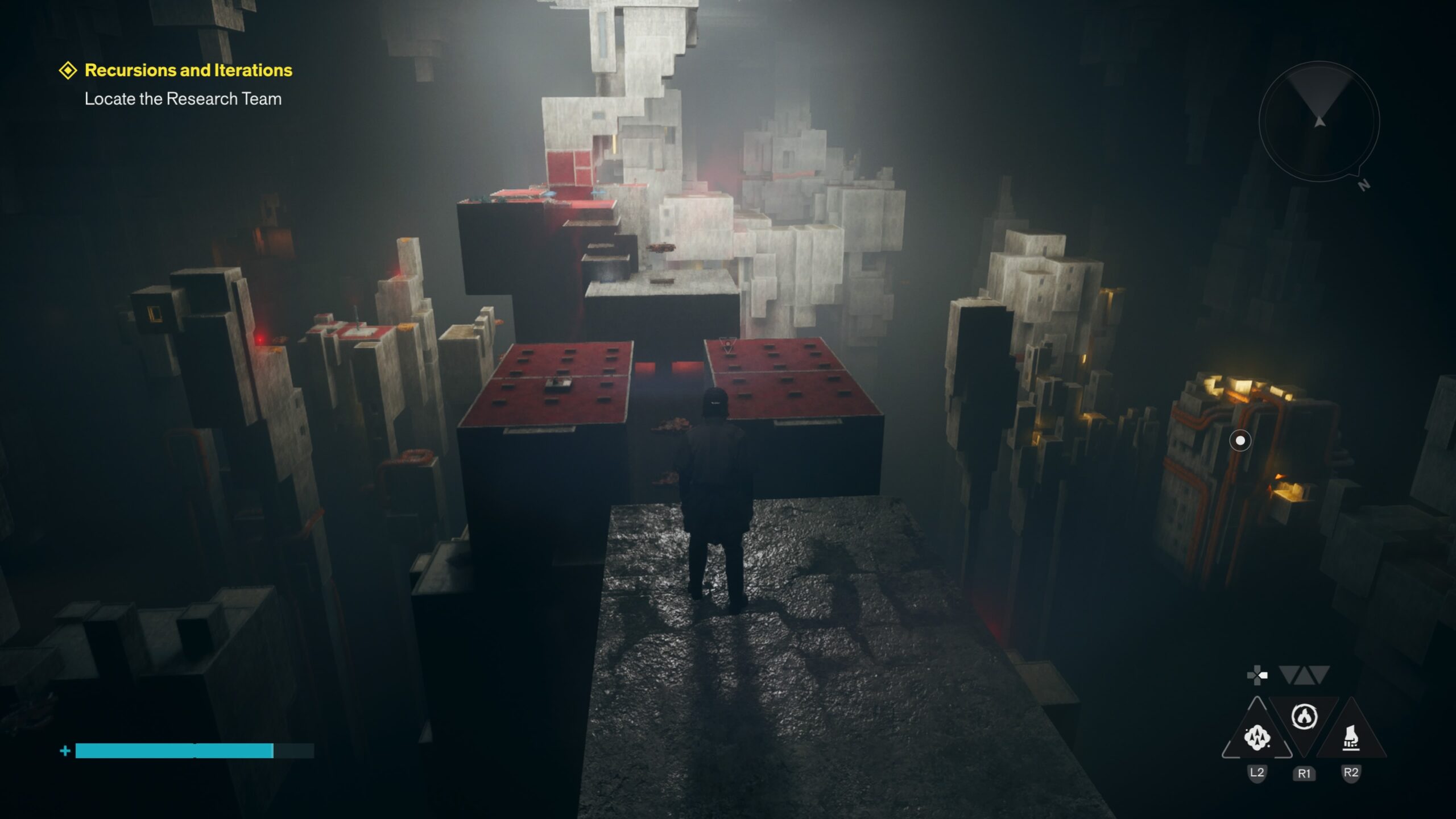
The otherworldly location design stuns.
The sound design further supports the atmosphere with a well-composed soundtrack, though its presence comes in bursts; it could occasionally take more of a front seat, since it shines in the moments it does. The vocal songs amplify the game’s best explorative moments, making for a memorable experience, and the game’s core voice cast further helps, doing an all-around solid job of expressing nuance and emotion. In particular, Sean Durrie’s performance as Dylan contrasts effectively with Courtney Hope as Jesse, and both deliver outstanding vocal performances that do wonders for their characterization and the game’s best story moments, particularly in the latter half.
CONTROL Resonant is a standout experience, and uniquely so. It is enigmatic and occasionally paradoxical. But that’s kind of the beauty of it. Its intricate, painstakingly crafted world is so beautifully surreal, but it’s also relentless, oppressive, and kind of scary. Its incredibly detailed story is always riveting and novel but wildly disorienting and even frustratingly bewildering at times. Its combat and deep RPG systems, later balance woes aside, always remain engaging. At the end of the day, though it’s not a perfect experience, it’s unusual and exceptional, and in one aspect or another, RPGamers are sure to find something here that deeply resonates.
Disclosure: This review is based on a free copy of the game provided by the publisher.


Breathtaking world design
Bizarre, trippy story, world, and tone
Great combat fundamentals and deep RPG progression
Outstanding world traversal
Interesting sidequests
Plot can be too complex
Late-game combat balance suffers
Some world activities can get repetitive





Recent Comments