Qliphah in Providence’s Shadow Interview
At Anime Expo 2026, Arc System Works was present to show off their upcoming tactical timeline RPG, Qliphah in Providence’s Shadow. RPGamer sat down to interview Game Designer and Director Satoshi Hirayae about the game’s distinctive combat system, visual design, and inspirations. Mr. Hirayae’s answers were given in Japanese and communicated through a translator. Qliphah in Providence’s Shadow will release on September 24, 2026, for PC, PlayStation 5, and Nintendo Switch.
Jordan McClain (RPGamer): To begin, could you tell us what the core concept of Qliphah in Providence’s Shadow is, and what kind of experience you set out to build as a whole?
Satoshi Hirayae: The concept that we had was to create something like – these titles are quite popular in Japan, as well – like Jujutsu Kaisen, Chainsaw Man, Tokyo Ghoul, these kind of really cool anime. To create that world in a game where you can take control and battle for yourself.
RPGamer: The timeline-based system displays enemy actions prior to their execution, which allows players to intervene and intercept those outcomes. From a design perspective, what experience or feeling were you aiming to create through that battle system?
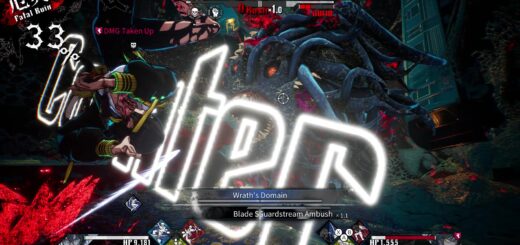
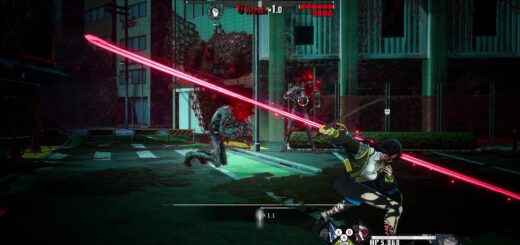
SH: As an idea, we wanted to make it so you could achieve the same kind of cool things that you can do in fighting games on your own terms. So, you have the options to slow down or stop time during the battles, you can take your time to perfectly line up the frames to achieve that same cool technique that you would see in an action game.

RPGamer: When designing the timeline-based system, how deterministic are enemy actions once they appear to the player? Are they fully fixed, or can they shift based on player input?
SH: Once they’re shown on the timeline, they don’t change. What the enemy does will not change after it’s displayed on the timeline.
RPGamer: Just to add to that, for actions that are not on the timeline, does player input have an impact on future actions?
SH: The enemies do have kind of tendencies, and those tendencies do shift in response to the behavior of the players: how the player is, what kind of actions the player is performing. And, actually, if you stop time in the game, you can see that kind of potential, like, what the enemy might do is displayed. And you can kind of see for yourself if you change up what you’re doing and you pause, you’ll notice that the enemy is changing up what they’re doing in response to that.
RPGamer: How does the story featuring Rena and Souma connect with the investigative gameplay built around the collapse phenomenon and the related anomalies within Tokyo?
SH: The world that this story takes place in is a world where reality is shifting, and in this world, there’s a potential for people to gain godlike powers to essentially become gods. And the anomalies that you see, these are these people who… they don’t have the potential to become gods, they end up becoming these monsters. But some people who do have that potential can obtain this godlike power. And the two main characters that you see, they’re more on the side towards achieving that kind of power.

RPGamer: With the presentation and the art direction, the game depicts a really distorted and unstable version of Tokyo. What kind of visual direction or atmosphere were you aiming to achieve, and were there any inspirations behind the game’s visual design?
SH: I wanted to create a kind of unusual, unconventional atmosphere to the game, and one way that we achieved that is the shader. The shader has this look where you see the outline of things warping and distorting, as well as kind of swirling – like, unusual movement that you wouldn’t expect to see. And, the fine details of the shader, that’s part of how we wanted to express that visual style, the taste of this kind of, like, Japanese horror manga. Ito Junji, the Japanese horror manga artist, we wanted to kind of express a little bit of a taste of his style in the graphics in that way.
RPGamer: Were there any difficulties in achieving the intended visual design, like, was it difficult to get the shading right?
SH: We hadn’t created anything like this before, so I would say the first challenge for me was to try to convey what I wanted to create to the team, the visual, who were creating the graphics and creating the visuals. So, it was hard to get that across. And then the second thing is that, once they understand, they still would kind of make a more mild and more acceptable version of it, whereas I want them to push it farther. I had to have a lot of discussions back and forth with them to try to get them to push it there to where I wanted it.
RPGamer: The characters have very distinct designs. What was the inspiration behind the character designs, and was that hard to get right?
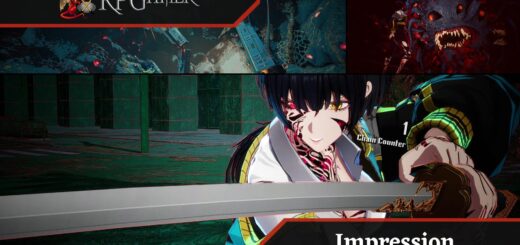
SH: So, I love Makima from Chainsaw Man, and I wanted to have a character inspired by her. And then, also, you can see she has like the – it’s called the stigma – there’s the lines on her body. And, originally, to show that off, I wanted to have a bit of a lower collar. But they got angry at me for that. [laughs]

RPGamer: So, going back to gameplay, how did you approach balancing the game’s difficulty and the learning curve of the system – it’s kind of a unique system – particularly with a system that relies heavily on reading enemy intent, and then responding through the timeline?
SH: For that gameplay, we have three difficulty levels that we created so that for the easiest one, it would be something that’s really just for people who want to enjoy the story and immerse themselves in that. And then the hardest one is really challenging, it’s challenging even for myself. And the one in the middle is kind of a balance, which means that we try to strike a balance in that sense.
RPGamer: What kind of player experience or impression do you most hope players will take away after experiencing the game? And are there any intended emotions or feelings that you want players to experience during the game?
SH: I want them to feel like, “That was so cool!” And then, also, for them to feel like, “I want to experience that again.” To enjoy that feeling or the exhilaration of the battle. And also, I just want them to feel like they can do anything, like they are achieving that kind of godlike power where they can achieve anything.
RPGamer: Is there anything else you want our audience to know about the game? Or any final thoughts, as well.
SH: I do think that this game can appear like an action game at first glance. I do want players to know that this is – even if you aren’t very good at action games, you don’t really enjoy action games – this is an RPG, so it’s something that anybody could play. And also, I feel that within RPGs that it really provides that experience to experience how cool and how powerful you can feel in battle while playing an RPG.
RPGamer: Any other final thoughts?
SH: I would say we’re aiming to create a completely new experience, as well as a visual experience – both gameplay and visuals. So, I hope that the players will be able to look at this and get that feeling themselves that they’re experiencing something revolutionary and new.
RPGamer would like to thank Satoshi Hirayae for taking the time to answer our questions, Steve Willis at DKC and Lany Chantharak at Arc System Works for helping coordinate the interview, and Amber Seitz for her excellent translation. Qliphah in Providence’s Shadow is set to release on September 24, 2026, for PC, PlayStation 5, and Nintendo Switch.




Recent Comments