Demons’ Night Fever Interview
At Anime Expo 2026, Arc System Works was on hand to showcase the upcoming SRPG Demons’ Night Fever. RPGamer sat down to interview the game’s producer, Sohei Niikawa, about the game’s unusual flip on SRPG conventions, its story, characters, and art style. Mr. Niikawa’s answers were given in Japanese and communicated through a translator. Demons’ Night Fever is set to release later this year for PC (via Steam), PlayStation 5, and Nintendo Switch.
Jordan McClain (RPGamer): You helped define modern SRPGs with Disgaea, which is built around growth, optimization, and unit investment. With Demons’ Night Fever, it feels like the gameplay inverts that, where loss and sacrifice become core to progression. What inspired you to flip those SRPG conventions like that?
Sohei Niikawa: One part of that is that since now I have this opportunity to work independently, I wanted to create something that was quite different from the Disgaea series.
RPGamer: Does being able to work independently give you an opportunity that maybe you didn’t have before?
SN: I’d say because of that independence, I have a lot of freedom with how I will invest my own time, so I’d say that the environment I have right now is really ideal for the creation process.
RPGamer: The game borrows a lot from roguelikes, where repeated deaths lead to becoming more powerful. When translating that into a grid-based combat system, what was the biggest challenge in making it feel natural within tactical combat?
SN: I think it actually fits quite naturally with those two elements, because the idea for the more minute, in-battle level of gameplay is that the more you kill your allies, the stronger they become. I feel like that actually melds really well with the roguelike elements of the game, like, as you get game overs, you become stronger over time. I think that those actually harmonize quite well together.

RPGamer: Can you talk a little bit more about the progression system as it relates to stats? Something I noticed during the demo that I played on the floor was that Killshiro didn’t do much damage early on with his attacks; I think he actually did zero. So, is that something he’s able to build through Misdeeds and other means?
SN: Yeah, it is possible to make him stronger, as well. But it’s a more efficient way to play to continue killing your servants or Peons and killing enemies using them instead.
RPGamer: The Peon Exploitation System rewards players for deliberately killing their own units during battle. Mechanically speaking, how do you incentivize players to engage with this instead of relying on more traditional habits like unit preservation, caution, or too much deliberation?
SN: I felt that just from the game mechanics, it would be quite challenging to make it so that you would start naturally wanting to use those kind of killing your allies and mechanics. I think because it’s very natural for players, not only in SRPGs, that you want to kind of protect and defend your allies. So, we added two elements. One is that all of your Peons, they’re criminals themselves. Like, they’ve all done bad things themselves. And the second is that, in battle, they don’t listen to your commands. They just kind of do what they want in battle, as well. These two elements provide reason enough for it to feel okay for the player to kill them.
RPGamer: [laughs] Yeah, no, that’s totally fair. I get that. Were there any challenges in designing the combat system, and were there any mechanics you wanted to implement that didn’t work out?
SN: The biggest challenge when creating the battle mechanics was to try to find how to make it fun for the player when the Peons don’t listen to their commands. And that’s something that I don’t think any other game really has mechanics like that, so we didn’t have any reference to build upon. We had to try to do trial-and-error ourselves to figure that out.
RPGamer: How did you approach balancing attacking enemy units – as Killshiro or making offensive decisions – and then sacrificing your own units?
SN: Well, during development, in some versions, we did have some versions where you were kind of able to make Killshiro quite strong and fight with just him. But we found that in that approach, that you couldn’t really feel any unique characteristics to the game. It kind of felt similar to other games, so we adjusted it to make Killshiro extremely weak so you have to rely on these “killing your Peons” kind of game mechanics. And we felt that that made it more interesting and let more of the personality of the game shine through.

RPGamer: What was the inspiration behind the game’s plot and world?
SN: I didn’t have any particular source of inspiration, but I did start with a concept which was to enjoy doing evil. So, I thought of like, what is a story that would naturally kind of lead the player into wanting to kind of enjoy doing or indulging in these evil deeds? So, for sake, I came up with the evil deity character who has this grudge against God and he wants to get revenge on God, so his goal is to be risked to have his power restored.
And then I made Killshiro a character who, he works at this unethical third-rate game company where he’s forced to stay up working all night, and he has this, like… he just wants to see the whole world burn. To me, I value the concept of the game above all else. I see it in a way of kind of collecting these different elements — the story, the characters, the game mechanics — so that they all kind of fit and harmonize together to create and realize that concept.
RPGamer: Were any of the characters more fun or more difficult to write than others?
SN: So, all three of these three main characters, all three of them were really fun for me to write. And God is also kind of a… you don’t really like the guy, but it was really fun to write him. There aren’t too many characters in the game, so there weren’t any really that I struggled with writing in this one.
RPGamer: And then, do you have a favorite character?
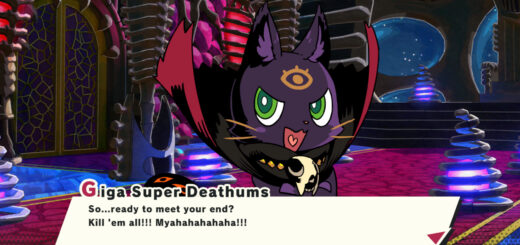
SN: The cat.

RPGamer: Demons’ Night Fever has a really vibrant, colorful, and distinct art style. What inspired that art style, and were there any particular details of it that were important to convey?
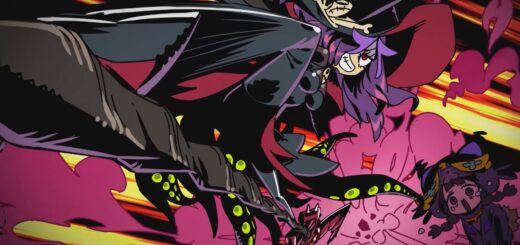
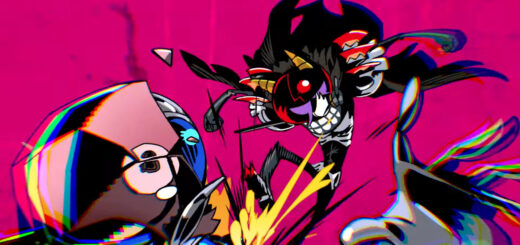
SN: So, when considering the concept of this game, I wanted to find the illustrator who I felt was the best fit for this concept. The illustrator I wanted to work with is the illustrator from Etrian Odyssey, Yuji Himukai, and so he was the choice for the most fitting illustrator for the art style we were looking for. And it was really important for me. One thing I valued with the artwork is that I wanted not only the ally-side characters, but also for the characters who appear as your enemies, I wanted them to be really appealing and interesting characters as well.
If you think of my representative work, the Disgaea series, there’s a lot of characters who appear in the Disgaea series — including both the ally and the enemy characters, monsters included — and within that, there are so many that I would say that there are some within there that I don’t particularly have really strong feelings about. I worked really closely on the designs with the designers for this game, to ensure that with Demons’ Night Fever, that there are no characters that I don’t particularly love or don’t really feel strongly about. If they presented the design to me and I was kind of iffy on it, I would push back. I’d be like, “No, I don’t like that one, do it more like this.” So, we kind of worked through process to ensure that I loved all of them.
RPGamer: What are you hoping that players experience while playing Demons’ Night Fever?
SN: One thing I’d like players to feel is — and I do believe that this is true — that the play feel of the game is completely different from Disgaea. I feel like with this game, I set out to create truly one-of-a-kind, so I hope that when the players are playing it, that they’re thinking, “I’ve never played anything like this before.” I hope that they’ll feel that way.
RPGamer: Yeah, I will say, I’ve never played anything like it. Having played the demo, I was a little bit thrown for a loop. [laughs]
SN: I’m really happy to hear that. And with that in mind, if you’re able to think, “Oh wow, this game’s really fun,” then that would be the happiest for me.
RPGamer: Is there anything else you want our readers to know about Demons’ Night Fever? Or do you have any other final thoughts?
SN: It’s kind of repeating myself, but I just wanted to share with everyone that this is a completely different game from Disgaea. And I think I was able to create a game that will be a completely new play feel, something that you’ve never experienced before. And I think some elements of it will surprise you, and maybe some of them will kind of confuse you. But within that, I do strongly feel that there is a kind of fun that can only be experienced through this game, so I hope that you’ll enjoy this kind of unique, one-of-a-kind experience.
And since we are creating something new, even for ourselves, we don’t really have this kind of confident sense of whether or not what we’re creating is perfect, in a sense, so I do expect that from the players, we’ll hear a lot of things like feedback, and I wish that this was kind of more like this, I wish it was this way. And I’d like to hear all of the requests and feedback from the players and create an even better sequel. And, in order to create a sequel, I need the game to sell well, so please buy the game.
I hope you’ll find something to love about this game and then spread the word to the people around you. I’d be the happiest if I’m able to work with the fans to create a series out of Demons’ Night Fever.
RPGamer would like to thank Sohei Niikawa for taking the time to answer our questions, Steve Willis at DKC and Lany Chantharak at Arc System Works for helping coordinate the interview, and Amber Seitz for her excellent translation. Demons’ Night Fever is set to release later this year for PC (via Steam), PlayStation 5, and Nintendo Switch.




Recent Comments