Phantom Blade Zero: SGF Play Days Impression
Phantom Blade Zero‘s combat impressed me heavily, standing out for its fluidity, rhythm, and satisfying challenge. Paired with its impressive level design, the game looks set to deliver a wuxia experience with a distinct feel, tone, and style that could be one of the most unique action RPGs this year.
I am a massive fan of wuxia games and Chinese martial arts, so when I heard that Phantom Blade Zero would be at Summer Game Fest Play Days, I absolutely had to check it out. RPGamer was able to get a look at a brief slice of an early level of the game, and luckily, it plays just as smoothly as a premier wuxia movie looks, with fluid, intense, and gripping combat.
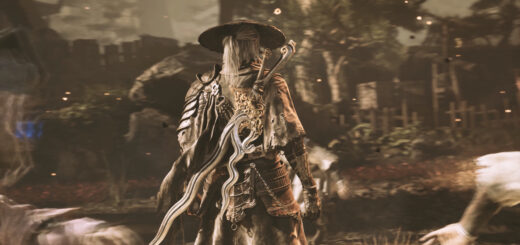
The demo began with the elite assassin protagonist, Soul, in a mountainous area featuring temples and military-looking outposts, their scaffolding resting precariously against sharp, rocky peaks. There was quite a lot of detail in the environment, and level traversal felt smooth, fluid, and satisfying, with Soul making impressive, entertaining acrobatic leaps across the platforms and terrain. Some areas didn’t seem reachable, suggesting that players could return later with new abilities. There was an interesting, dark aura in the world, and while it’s obviously inspired by Ming-era China, Phantom Blade Zero‘s world carries a distinct, compelling, and uneasy atmosphere. Not a whole lot could be gleaned about the game’s plot, and there were no cutscenes explaining much of anything. Instead, the demo thrusts you right into combat, pitting you against a slew of regular enemies.

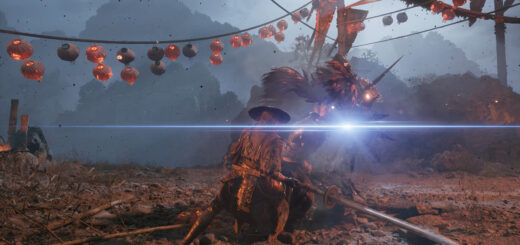
Surrounded? Not a problem for Soul.
Phantom Blade Zero‘s combat felt as good as it had looked in gameplay trailers, feeling smooth and responsive. Players can switch between two different primary weapons, consisting of blades, and secondary weapons, known as Phantom Edges, which can range from spears, axes, hammers, etc. Excelling in combat requires constantly switching weapons and executing combos with proper timing, all the while managing Sha-chi. Sha-chi functions sort of like stamina, but not in the traditional way one might expect out of a Soulslike or other action RPGs. Dodging and light attacks with primary weapons don’t drain Sha-chi, but heavy attacks and blocking do; losing all Sha-chi results in a stance break, leaving Soul or enemies wide open.
Players can dodge, block, and parry, and combining this with the attacks feels extraordinary. It’s a bit tricky to get down due to how many moving parts there are, but Phantom Blade Zero has a really special feel to the combat once it clicks. It’s a brilliant flow reminiscent of Sekiro: Shadows Die Twice, but with its own unique, deliberate rhythm and much more style. It doesn’t demand all-out aggression, but it also doesn’t require or encourage parrying everything, as in Sekiro. The game stood out most during multi-enemy encounters, which felt challenging yet also beautiful to navigate. Switching between multiple enemies has an incredibly gratifying, flawless elasticity, and it’s easy to identify when to parry or dodge due to a color-coded aura surrounding the enemy: blue for parry, red for dodge. As a small caveat and concern, I do hope this mechanic can be communicated to colorblind players; I was unfortunately unable to discern the game’s accessibility features due to time constraints. Nevertheless, to draw an allegory, Phantom Blade Zero felt like the Taoist principle of wu wei in action, with Soul seamlessly flowing like water around and between groups of enemies.
While I unfortunately was not able to reach the demo’s boss, Phantom Blade Zero‘s combat impressed me heavily, standing out for its fluidity, rhythm, and satisfying challenge. Paired with its impressive level design, the game looks set to deliver a wuxia experience with a distinct feel, tone, and style that could be one of the most unique action RPGs this year.





Recent Comments