Swords of Legends Interview
Swords of Legends is a brand new title in Aurogon Shanghai’s GuJian Chinese fantasy RPG franchise and is set for an international release. Drawing inspiration from Chinese literature and folklore, it puts players in the world of an Underworld Enforcer. The developer debuted a new gameplay video for the action RPG debuted during today’s Summer Game Fest Showcase, and RPGamer was given the opportunity to put some questions to the team about the gameplay shown in the video and the game in general.
Alex Fuller (RPGamer): For those unfamiliar with Swords of Legends, can you give a quick introduction to the game and its setting/premise?
Aurogon Shanghai: So first, for new players: don’t worry — you don’t need to have played our older games to get into this one. Every Swords of Legends game tells its own story, so it’s totally fine to start right here.
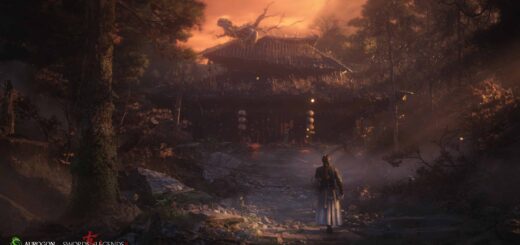
In this game, the protagonist is someone who’s been reborn (you can see it in last year’s Gamescom trailer). Appointed by Yama, Lord of the Underworld in Chinese mythology, he becomes a Sipan — like a ferryman of souls in Greek mythology — sent to guide back souls/spirits who refuse to move on. You’ll walk through lotus ponds, lonely inns hide in the mountains — places you’d only see in the Eastern environment.
RPGamer: What are some of the goals you’re aiming to achieve or aspects you’ve looked to focus on with the game’s combat?
Aurogon Shanghai: Combat in our game still leaves plenty of room to be the kind of fighter you want to be. Our enemies each have their own traits. You can lean on your summonable ally, you can lean on magic artifacts, you can lean on your weapons — but the core of it is cycling through those options and tactically combining them into a build.
One of the pillars we’ve focused on is — you can summon different allies to fight alongside you, and each one has a completely distinct combat identity. Take “Ox” from the trailer, for example. He’ll block incoming attacks for you and land these big, heavy hits.

RPGamer: Can you talk about the design of the boss shown in the video and some of the ideas behind it?
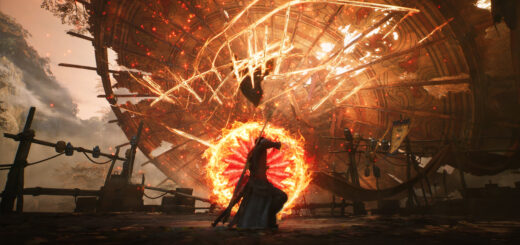
Aurogon Shanghai: Yes, there’s a fun story behind this one. The whole design grew out of a traditional Chinese art form called gucai xifa — what you might think of as Chinese close-up stage magic. Even today, you can still catch it at Chinese New Year Fairs out in some parts of the country.
It started in our concept phase. We got into Baixi, this ancient variety performance — acrobatics, animal taming, dance, music — and as we pulled on that thread, we found this one offshoot, gucai xifa, just hooked us. The bag of tricks goes so deep, every move transforms into something new — which is the dream brief for a boss that escalates phase to phase: ranged fire, then teleportation, then close-range pressure. So the team just clicked and went, “That’s the one!”.
We didn’t want to fake it, so we learned from the traditional artisan of a real performance troupe and put it through motion capture. You’ll see at least three classic tricks in the video: breathing fire, a halberd leaping out of a vase, and the finale — vanishing a living person. Honestly, they came through far better in-game than we expected.
The costume’s its own rabbit hole, too: we rebuilt it from the T-shaped silk painting from the Mawangdui Han tombs — 2nd century BC — and its patterns tie right back into the game’s themes.
RPGamer: The gameplay video shows the protagonist using an umbrella-like artifact to block an enemy attack. Are there multiple artifacts and do they have different uses in the game?
Aurogon Shanghai: Yes, there are plenty — and this is actually one of the core systems in our game. It ties directly into who the protagonist is: an emissary of the underworld, someone who moves between the worlds of the living and the dead. That role lets him wield all sorts of artifacts — and they’re his real edge against the bosses you’ll face.
Take the umbrella you saw in the video. It isn’t just for blocking — it pulls double duty as both a defensive tool and a way to close the gap and rush in. And in our Gamescom trailer, we showed off another one, the Bagua Mirror, you can use it to guard against attacks. There are more artifacts beyond these, too — we’ll let players discover the rest for themselves.

RPGamer: The protagonist can be seen switching between a sword and a guandao polearm. Can you describe some of the different weapon styles in the game and how they differ mechanically?
Aurogon Shanghai: So right now we’ve built well over a dozen weapon classes, and each one has its own dedicated moveset and combat style — they genuinely feel and flow differently in your hands. They unlock gradually as you progress, so there’s always something new to find and collect along the way.
Some of them — the sabers, spears, swords, greatswords — are carried over from the long-running tradition of the Swords of Legends series. And alongside those, we’ve designed a whole set of brand-new weapons, all drawn from traditional Chinese arms, that bring a fresh feel and some new possibilities to this entry.
RPGamer: Can players choose to equip different attack skills, or are these determined by the weapon?
Aurogon Shanghai: It’s a bit of both, really — but it depends on the player. How you combine them, comes down to your own habits and what you gravitate toward in a fight.
RPGamer: The video shows a summonable ally. Can you talk about how the summonable ally acts in combat and whether players will find multiple allies within the game?
Aurogon Shanghai: The companion you see in the video is Oxc — the “Ox-Head” from “Ox-Head and Horse-Face,” a pair of underworld guardians straight out of classic Chinese mythology. He’s a genuinely well-rounded fighter: he’ll link up with you for co-op finishers, and the moment enemies close in, he’ll throw himself in front to block and take the hits for you. And he just fights at your side like a partner who already knows your rhythm. And he’s not the only one. As you travel, you’ll run into all sorts of souls.

RPGamer: Can you talk a bit about the music in the video? It seems to make use of a lot of traditional instruments.
Aurogon Shanghai: For us, music carries the soul of a game — it’s what gives a fight its tension, its sense of rhythm, that feeling of breathing in and out. Take this particular battle: it opens on a flurry of small drum beats, and then layers in, one by one, a range of instruments you’d find in traditional Chinese opera. And that choice wasn’t an accident. It comes straight out of the same root as the Boss himself, so the sleight-of-hand you’re watching on screen and the opera music in your ears are woven together, both feeding into that distinctly Eastern, theatrical atmosphere.
RPGamer: Do you have any final messages for potential players?
Aurogon Shanghai: A huge thank you to everyone who’s read this far, and to RPGamer for having us. Our Steam page is live now, and we’d love for you to add the game to your wishlist. It means a lot to us, and it’s the best way to make sure you hear the moment the game’s out. We’re also bringing it to PlayStation and Xbox before long. And if you want to dig deeper, or just chat with other players and us, you’ll find our Discord through the official site. We can’t wait to see you all there.
RPGamer would like to thank the team at Aurogon Shanghai for taking the time to answer our questions and to Jordan Aslett and fortyseven communications for facilitating the interview. Swords of Legends is currently in development for PC, PlayStation 5, and Xbox Series X|S.





Recent Comments